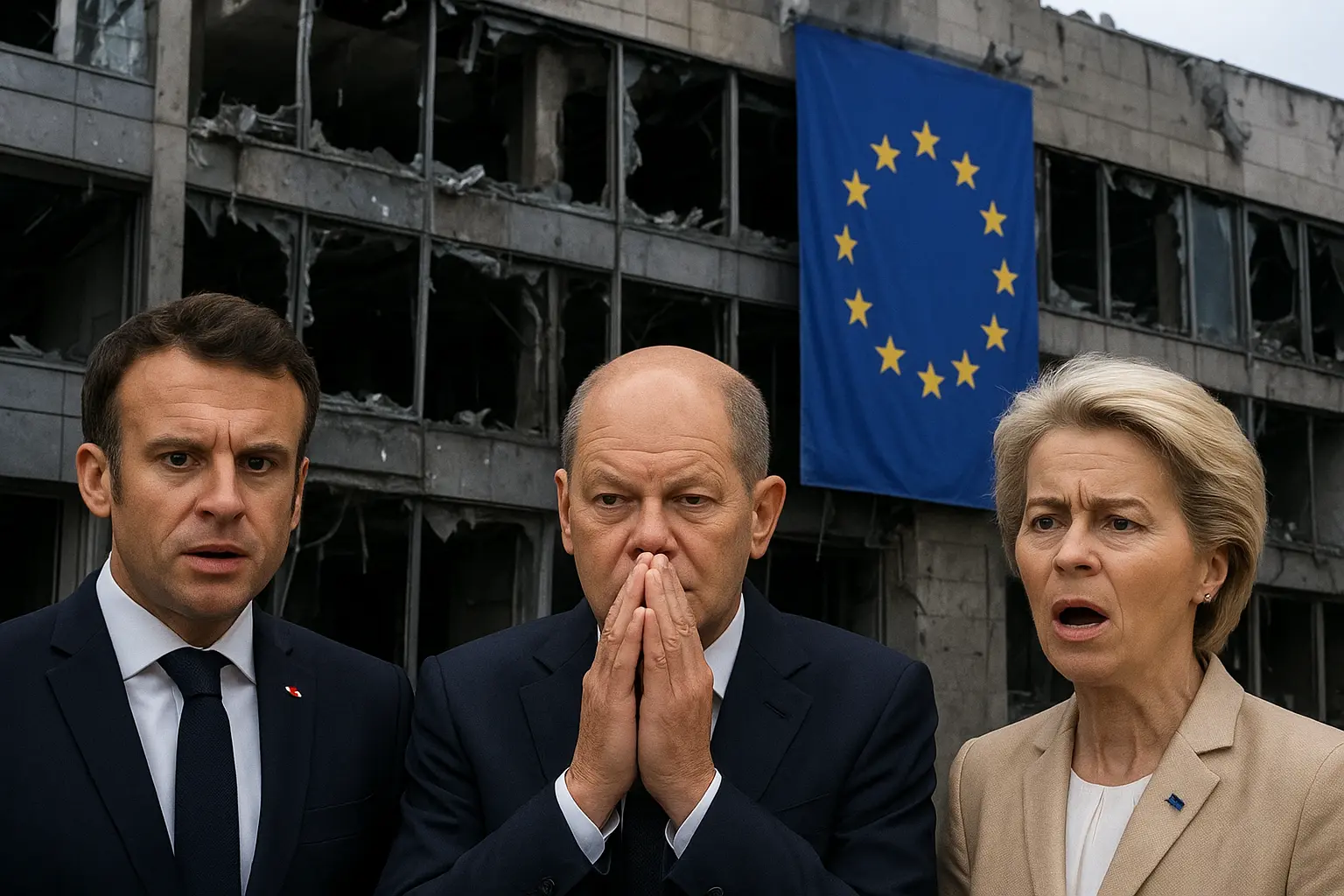
The European Union was thrown into shock and anger after Russian missile strikes killed 19 civilians and caused serious damage to the EU’s headquarters in Brussels. The incident, one of the most direct assaults on European soil since the start of the Ukraine war, has provoked widespread condemnation and escalated tensions between Moscow and the West.
According to initial reports, the strikes occurred late Tuesday night, targeting what Russia described as “strategic infrastructure.” However, missiles landed dangerously close to central Brussels, striking residential buildings, transport hubs, and partially damaging the EU headquarters complex. Emergency services confirmed that 19 people were killed and over 60 injured, many of them critically.
European leaders immediately condemned the attack as a deliberate act of aggression. European Commission President Ursula von der Leyen described it as “an unforgivable assault on European democracy and sovereignty.” She vowed that the EU would respond with “unprecedented unity and strength.” NATO officials also met urgently to discuss enhanced defense measures, while U.S. President Joe Biden called the strikes “a reckless escalation that endangers the entire continent.”
The damage to the EU’s headquarters carries not only physical but also symbolic weight. For decades, the building has stood as the heart of Europe’s political and diplomatic institutions. Analysts say that by striking so close to the EU’s power center, Russia appears intent on sending a warning signal to Europe about its continued support for Ukraine.
Moscow, however, denied intentionally targeting the EU headquarters. The Russian defense ministry claimed the missiles were aimed at military communication hubs and that any civilian casualties were “unintended consequences of Western provocation.” This explanation has been widely rejected by European leaders, who argue that Moscow has a long record of attacking civilian infrastructure in Ukraine and beyond.
The attack has already triggered calls for stronger sanctions on Russia. Several EU member states are urging an immediate embargo on remaining Russian energy imports and a fast-track delivery of advanced defense systems to Ukraine. Germany, France, and Poland issued a joint statement demanding “firm collective action” and pledged increased military aid to Kyiv.
Meanwhile, security in Brussels has been dramatically tightened. Thousands of residents have been evacuated from the vicinity of the EU quarter, and NATO forces have increased their presence across key European cities.
The strikes mark a dangerous turning point in the war, bringing the conflict directly into the European Union’s core. As anger grows, European leaders are now grappling with how far they are willing to go in confronting Moscow without triggering a wider war.
‘The most ingenious stunt since the Trojan Horse’: The Soviet artwork that spied on the US