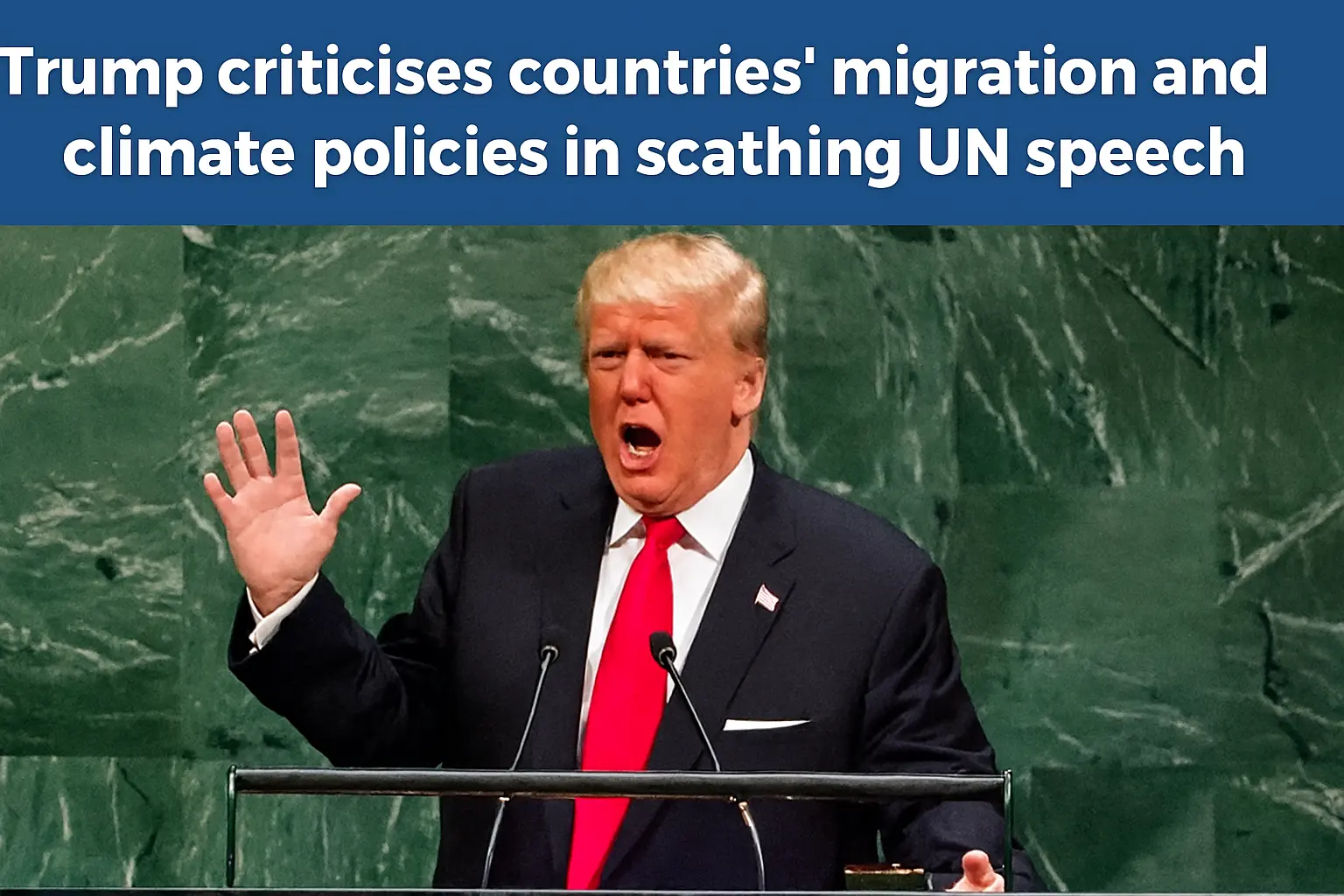
Former U.S. President Donald Trump delivered a fiery speech at the United Nations, sharply criticising global migration systems and international climate policies. His remarks, described as one of the most confrontational speeches in recent UN history, drew both applause from supporters and condemnation from critics who viewed his stance as a challenge to multilateral cooperation.
Trump accused several nations of failing to protect their borders, arguing that uncontrolled migration was undermining national sovereignty and stability. He claimed that open-border approaches had weakened cultural identity and placed unsustainable pressures on governments. “A nation that cannot control its borders ceases to be a nation,” Trump declared, reiterating a central theme of his political rhetoric.
The former president also took aim at international climate agreements, calling them “one-sided” and “economically destructive.” He argued that global climate frameworks placed an unfair burden on the United States while allowing other countries to expand industrial activity without comparable restrictions. Trump criticised the Paris Agreement in particular, suggesting it weakened U.S. competitiveness and forced American workers to pay the price for what he called “elitist environmental agendas.”
While his remarks were aligned with his longstanding “America First” doctrine, they resonated with leaders from a few nations who also expressed frustration with international migration pressures and climate commitments. However, many other delegates condemned the speech, accusing Trump of ignoring scientific consensus on climate change and undermining collective efforts to manage global challenges.
Observers noted that Trump’s combative tone stood in stark contrast to the cooperative messages delivered by other world leaders during the same UN session. European leaders emphasised solidarity on migration and the urgency of climate action, while representatives from developing nations warned that Trump’s rhetoric risked isolating the U.S. from the international community.
Analysts suggest the speech was aimed less at diplomatic consensus and more at reinforcing Trump’s political positioning at home. His comments on migration and climate policy closely mirror talking points he has raised in domestic rallies, appealing to voters who prioritise border security and energy independence over global accords.
Critics argue that Trump’s UN appearance further highlighted the growing divide between nationalist and multilateral approaches to international policy. Supporters, however, praised his willingness to confront what they see as flawed systems and to defend U.S. sovereignty against external pressures.
As the world grapples with mounting climate emergencies and complex migration crises, Trump’s remarks underscore the sharp disagreements over how nations should balance domestic priorities with global responsibilities. Whether his speech will influence policy shifts or simply deepen existing divides remains to be seen.
Clashes break out as Italians strike demanding action over Gaza