
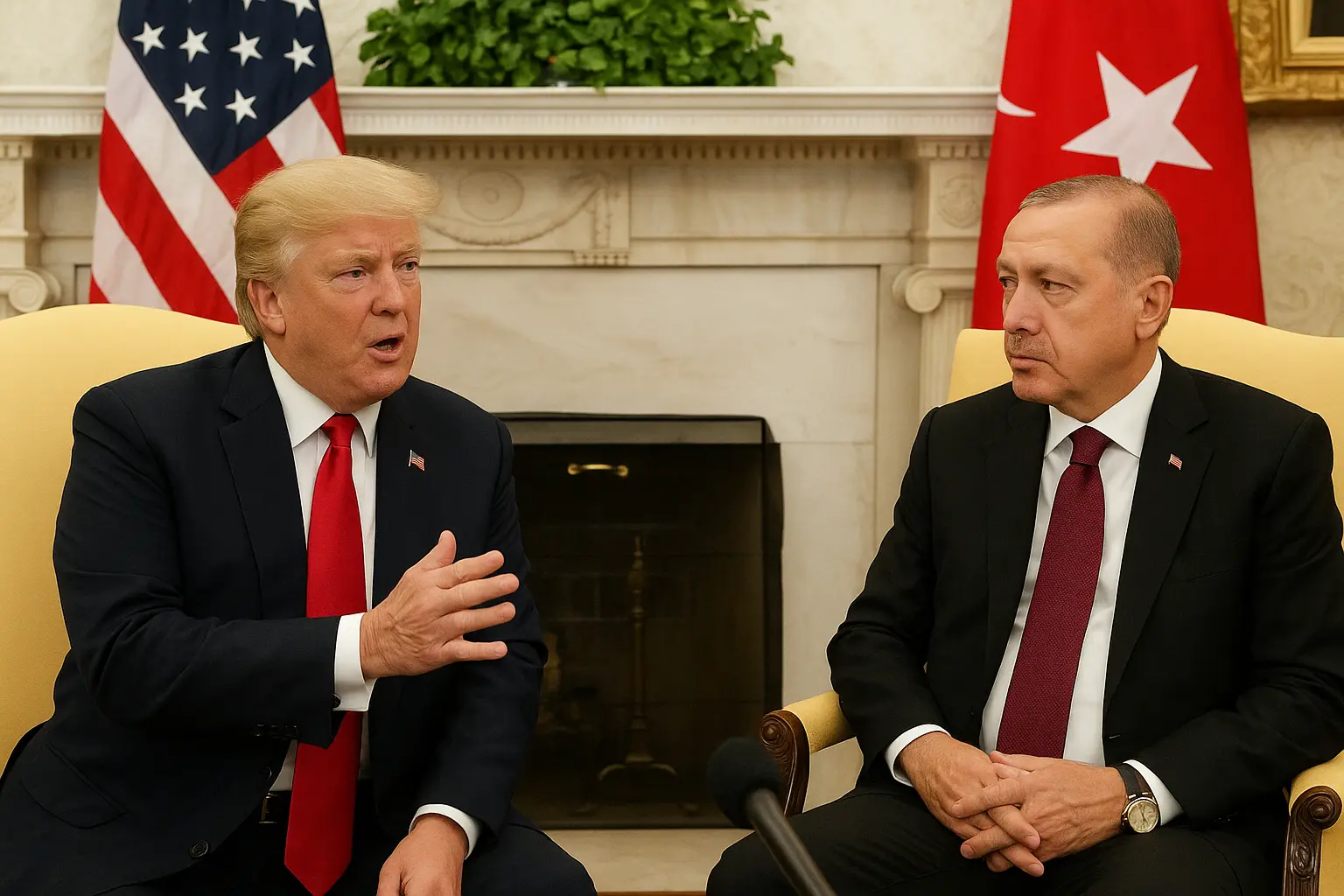
U.S. President Donald Trump pressed Turkish President Recep Tayyip Erdogan to halt Ankara’s continued purchase of Russian oil during a bilateral meeting at the White House on Wednesday. The talks, which were expected to cover defense cooperation, NATO commitments, and regional conflicts, quickly turned into a sharp exchange over Turkey’s energy ties with Moscow.
According to officials familiar with the discussions, Trump reiterated his administration’s growing frustration that a NATO ally like Turkey has deepened its economic relationship with Russia, particularly in the energy sector. He stressed that continued purchases of Russian crude directly undercut Western sanctions and weaken collective efforts to limit Moscow’s influence following its ongoing military actions in Ukraine.
“Turkey is an important ally, but allies must stand together,” Trump said during a brief press appearance alongside Erdogan. “The United States cannot look away when NATO countries help fund Russia’s war machine. We are asking Turkey to diversify its energy sources and stop buying Russian oil.”
Erdogan, while acknowledging the concerns, defended his country’s energy policy. He argued that Turkey’s heavy reliance on foreign imports leaves it with limited options and that stability in energy supply remains a national priority. “Our economy and our people depend on affordable energy,” Erdogan stated. “We are open to cooperation with the United States and other partners, but we cannot risk shortages that would harm Turkish households and businesses.”
Behind closed doors, U.S. officials reportedly offered Ankara greater access to American liquefied natural gas (LNG) and increased support for alternative energy infrastructure. Washington has also signaled that Turkey could face potential sanctions if it continues large-scale Russian purchases, though no formal measures were announced at the meeting.
The tense exchange underscores the widening fault lines within NATO, as Turkey often pursues an independent foreign policy that puts it at odds with Western allies. In addition to energy, disputes remain over Ankara’s acquisition of Russian S-400 missile systems and its military operations in northern Syria.
Still, both leaders emphasized the importance of maintaining dialogue. Trump praised Turkey’s role in regional stability and hinted at expanding trade ties if Ankara shifts its energy strategy. Erdogan, meanwhile, said Turkey values its partnership with the United States but must balance national interests.
Analysts believe the U.S. push is part of a broader campaign to isolate Russia economically, but they caution that Turkey’s geographic position and energy dependence make any sudden change unlikely. For now, Washington and Ankara appear locked in a delicate negotiation — one that could test the limits of their alliance in the months ahead.