
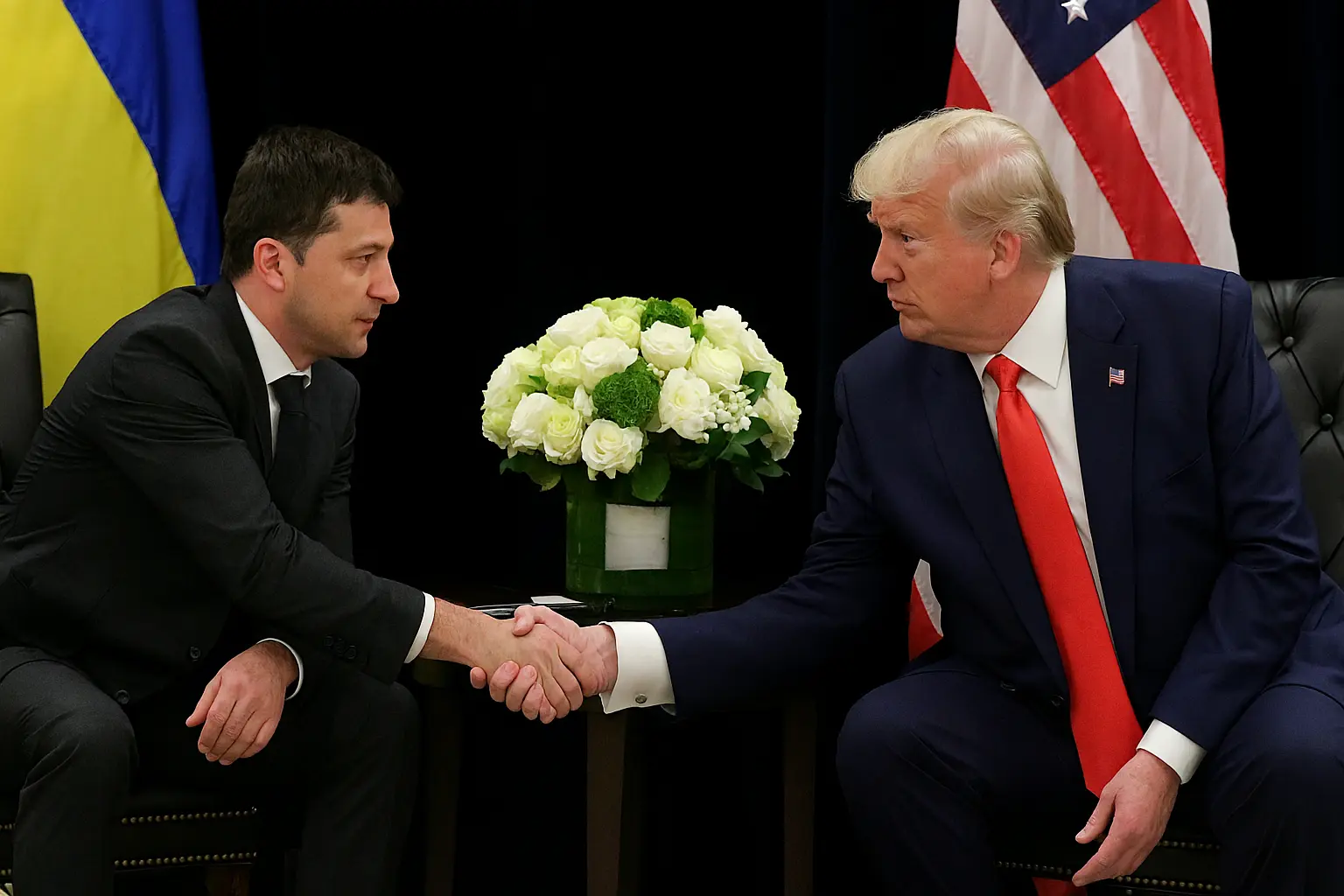
Ukrainian President Volodymyr Zelensky’s highly anticipated meeting with U.S. President Donald Trump at the White House has ended without an agreement on the transfer of Tomahawk cruise missiles, dealing a blow to Kyiv’s hopes of acquiring advanced long-range weaponry to bolster its defenses against Russian forces.
According to U.S. and Ukrainian officials, the discussions between the two leaders were “constructive but inconclusive.” Zelensky had arrived in Washington seeking approval for the sale or transfer of Tomahawk missiles, capable of striking targets up to 1,600 kilometers away, arguing that such systems were vital to Ukraine’s ability to deter Russian attacks on critical infrastructure and logistics hubs.
However, President Trump reportedly declined to approve the request, citing concerns that providing such high-precision, long-range weapons could escalate the conflict and draw the United States deeper into the war. Instead, Trump proposed increasing U.S. intelligence sharing and offering a new package of defensive systems, including Patriot interceptors and counter-drone technologies.
In a joint press conference following the meeting, Zelensky said he appreciated Washington’s continued support but admitted that “Ukraine had hoped for more tangible commitments.” He added that Kyiv would continue discussions with American defense officials and Congress in hopes of securing “the tools necessary to end the war on fair terms.”
Trump emphasized his administration’s focus on “peace through strength” and suggested that further negotiations between Russia and Ukraine could take place “under the right conditions.” He also reiterated his belief that a diplomatic settlement remains possible if both sides “show flexibility and put national interest above pride.”
Analysts say the outcome highlights the ongoing tension between Kyiv’s urgent battlefield needs and Washington’s cautious approach to escalation. While the U.S. remains Ukraine’s largest supplier of aid and weaponry, the Trump administration has increasingly framed its support in the context of a potential peace deal rather than open-ended military assistance.
The failure to secure Tomahawk missiles is likely to frustrate Ukrainian commanders, who argue that long-range precision weapons are essential for targeting Russian supply lines deep inside occupied territories. Without them, Ukraine remains largely dependent on shorter-range systems like ATACMS and Storm Shadow missiles provided by other Western allies.
Despite the setback, Zelensky vowed to keep pushing for stronger defense partnerships. “Ukraine will not stop fighting for its freedom and independence,” he said. “We will continue to work with our partners to ensure our country’s security and future.”
The talks mark a pivotal moment in U.S.-Ukraine relations, as Kyiv balances gratitude for continued support with growing pressure to achieve decisive results on the battlefield before winter sets in.