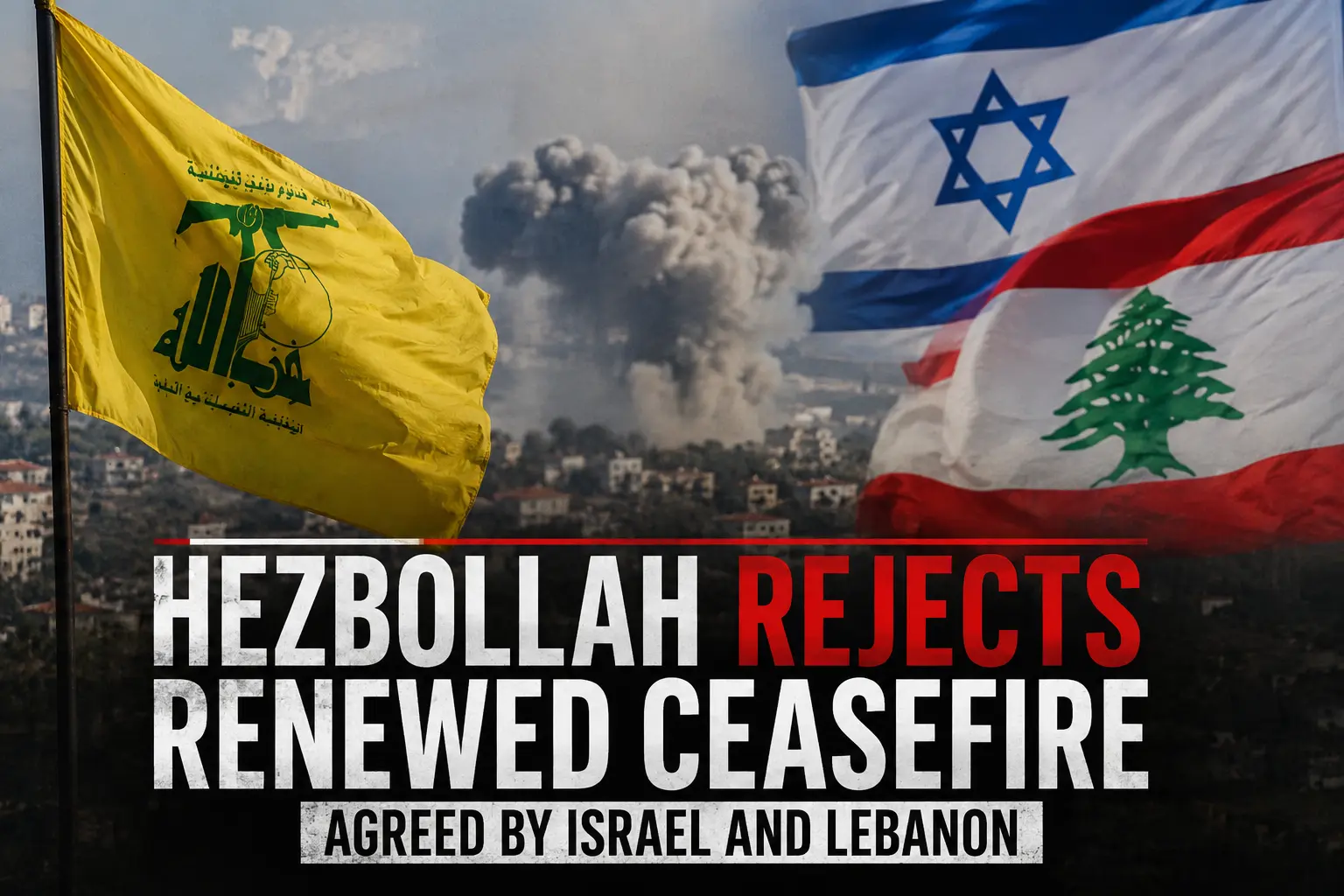
Hezbollah has rejected a renewed ceasefire agreement reached between Israel and Lebanon, casting doubt on efforts to end months of fighting along the border. The deal, brokered with strong support from the United States, aimed to halt hostilities and create conditions for broader peace negotiations. However, Hezbollah leaders dismissed the agreement, arguing that it fails to address what they describe as Israel’s continued military presence in southern Lebanon.
Hezbollah Secretary-General Naim Qassem said the group would not accept terms requiring its fighters to withdraw from southern Lebanon while Israeli forces remain in the area. He described the proposal as unacceptable and insisted that any ceasefire must include a complete Israeli withdrawal before Hezbollah considers ending its military operations.
The agreement had been endorsed by the governments of Israel and Lebanon. It called for a cessation of hostilities, the creation of security zones under the control of the Lebanese Armed Forces, and the removal of armed non-state groups from areas south of the Litani River. Lebanese President Joseph Aoun supported the deal, describing it as an opportunity to move toward lasting stability.
Despite the announcement, violence has continued. Israeli airstrikes reportedly targeted Hezbollah positions in southern Lebanon, while Hezbollah maintained rocket and drone attacks against Israeli forces. The ongoing clashes have resulted in additional casualties and further displacement of civilians on both sides of the border.
The rejection of the ceasefire highlights the challenges facing diplomatic efforts in the region. With Hezbollah refusing to accept the terms and Israel continuing military operations, prospects for a lasting peace remain uncertain. Regional and international mediators are expected to continue negotiations in hopes of preventing a wider escalation of the conflict.