US and Iran trade fire

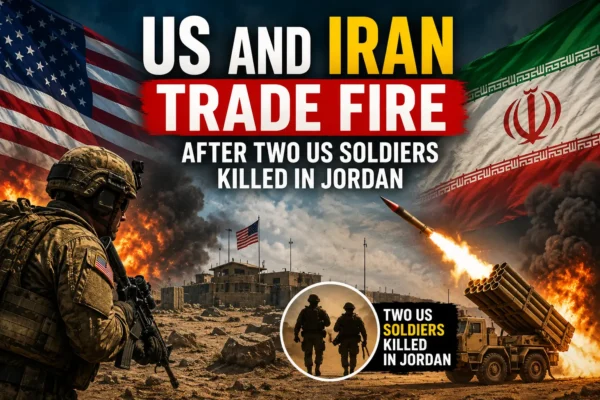
US and Iran trade fire after two US soldiers killed in Jordan

Tensions between the United States and Iran have sharply escalated after two American soldiers were killed in a drone attack on a military outpost in Jordan near the Syrian border. The deadly strike, which also injured several service members, has prompted a swift U.S. military response against targets linked to Iran-backed armed groups across the region. U.S. officials blamed the attack on an Iran-backed militia operating in the Middle East, describing it as a serious escalation that crossed a significant line. In retaliation, American forces launched a series of precision airstrikes targeting weapons depots, command centers, and logistical facilities used by militant groups in Syria and Iraq. Iran denied direct involvement in the attack, insisting that regional militias act independently and accusing Washington of fueling instability through its military presence in the Middle East. Iranian officials warned that any further attacks on their allies or interests would be met with a firm response. The exchange of fire has raised fears of a broader regional conflict involving multiple armed groups and neighboring countries. Analysts warn that continued retaliation from either side could destabilize an already volatile region, affecting international security, energy markets, and global diplomatic efforts. Jordan condemned the attack on its territory and reaffirmed its commitment to regional stability while working closely with allies to strengthen border security. Meanwhile, international leaders have urged both Washington and Tehran to exercise restraint and pursue diplomatic channels to prevent further escalation. The latest confrontation comes amid months of heightened tensions involving attacks on U.S. forces, shipping routes, and regional military installations. As both sides remain on high alert, the international community is closely watching whether diplomacy can prevent the crisis from developing into a larger military conflict.

Read More
US launches new strikes on Iran

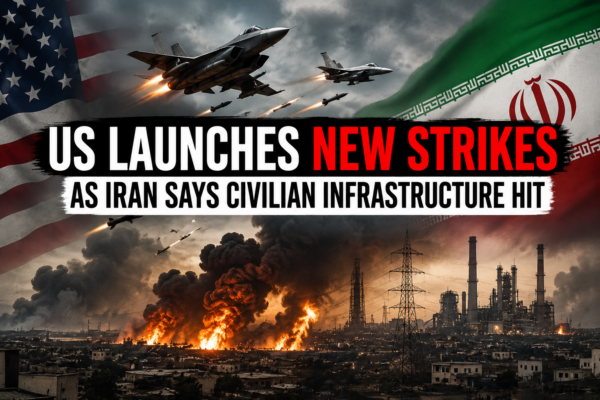
US launches new strikes as Iran says civilian infrastructure hit

The United States has launched a fresh wave of military strikes against targets in Iran, further escalating tensions between the two countries. Iranian officials claim the latest attacks damaged civilian infrastructure, including power facilities, transportation networks, and public service buildings, raising concerns about the humanitarian impact of the conflict. According to Iranian authorities, several populated areas were affected by the strikes, disrupting electricity and communication services in multiple regions. Emergency response teams were deployed to assess the damage and assist residents. Officials accused the United States of deliberately targeting infrastructure essential to civilian life, though independent verification of the claims remains unavailable. The Pentagon stated that the operation focused on strategic military sites allegedly linked to Iran’s missile and drone capabilities. US officials said the strikes were intended to weaken Iran’s ability to launch attacks against American forces and allies in the Middle East. They emphasized that every effort was made to avoid civilian casualties and minimize collateral damage. The renewed military action comes amid weeks of heightened regional instability, with both sides exchanging accusations over attacks on military installations and commercial shipping routes. Diplomatic efforts to ease tensions have so far failed, increasing fears that the conflict could expand beyond the two nations and draw in neighboring countries. International leaders have expressed alarm over the latest developments, urging both Washington and Tehran to exercise restraint and return to diplomatic negotiations. Humanitarian organizations have also called for the protection of civilians and critical infrastructure, warning that continued attacks could worsen living conditions for millions of people. Financial markets reacted cautiously to the escalation, with oil prices rising amid concerns over potential disruptions to global energy supplies. Analysts warned that prolonged hostilities could have significant economic consequences worldwide. As both governments maintain firm positions, the international community continues to monitor the situation closely, hoping diplomatic channels can prevent a broader regional conflict while addressing growing humanitarian concerns.

Read More
Strait of Hormuz

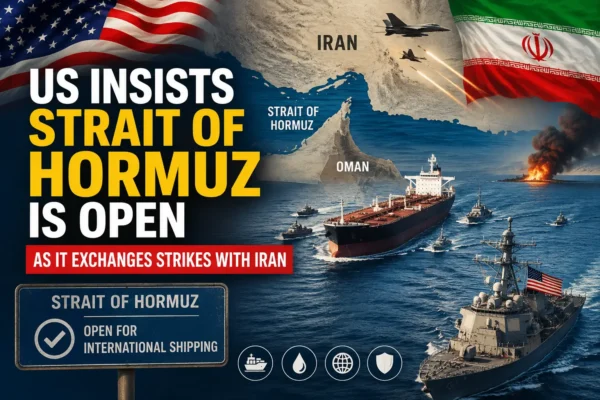
US insists Strait of Hormuz is open as it exchanges strikes with Iran

The United States has reaffirmed that the Strait of Hormuz remains open to international shipping despite a fresh exchange of military strikes with Iran, raising concerns about regional security and global energy supplies. Washington said it is committed to protecting freedom of navigation through one of the world’s most strategically important maritime routes. The latest escalation followed reported Iranian attacks targeting U.S. military assets in the Gulf, prompting retaliatory strikes by American forces against what officials described as military infrastructure linked to Iran. While both sides have exchanged forceful rhetoric, U.S. authorities stressed that commercial vessels continue to transit the Strait of Hormuz without disruption. The Strait of Hormuz handles roughly one-fifth of the world’s oil shipments, making any threat to the waterway a major concern for global markets. Energy traders are closely monitoring developments, with oil prices experiencing increased volatility amid fears that the conflict could expand. U.S. officials stated that naval assets remain deployed across the region to ensure the safe passage of merchant ships and deter further attacks. They emphasized that freedom of navigation is a core international principle and warned that any attempt to block or disrupt maritime traffic would face a coordinated response. Iran, meanwhile, has accused the United States of escalating tensions through its military presence and airstrikes, insisting that it will defend its territorial interests. Diplomatic efforts by regional and international partners continue in an attempt to prevent the conflict from spiraling into a broader confrontation. Despite the heightened military activity, shipping companies have not announced a widespread suspension of operations through the Strait. However, several firms are reviewing security protocols and monitoring official advisories before sending vessels through the area. Analysts warn that prolonged hostilities could have significant economic consequences, affecting global oil prices, shipping costs, and international trade. As tensions persist, governments worldwide are urging restraint while keeping a close watch on developments in the Strait of Hormuz, a vital artery for global commerce.

Read More

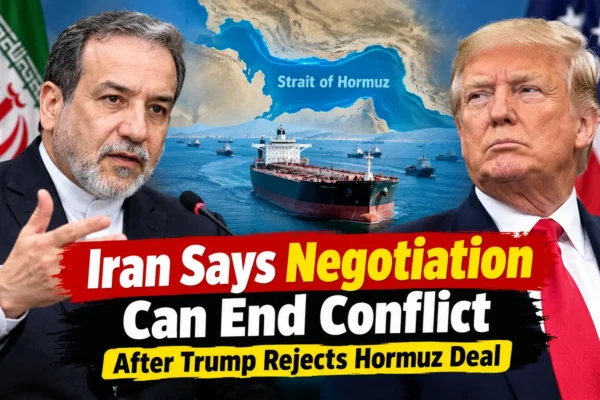
US wants Iran to pledge to stop shooting at ships in Strait of Hormuz

The United States is demanding that Iran publicly commit to ending attacks on commercial ships passing through the Strait of Hormuz, a vital maritime route that carries roughly one-fifth of the world’s oil supply. The request comes as Washington seeks to stabilize the region following renewed tensions and attacks that have threatened global shipping and energy markets. According to senior U.S. officials, Washington wants Tehran to issue a clear public statement confirming that all shipping lanes through the Strait of Hormuz will remain open, free of tolls, and safe for international vessels. U.S. officials argue that such a pledge is essential for rebuilding confidence after recent incidents involving attacks on commercial ships. The Trump administration has reportedly warned that failure to provide the commitment could lead to further diplomatic and economic consequences. While U.S. officials say recent discussions with Iranian representatives have been productive, they insist that words must be backed by a formal public commitment before negotiations can advance further. Iran has reportedly told U.S. officials that the recent attacks were carried out by rogue hardline elements rather than by the country’s central leadership. However, Washington maintains that the Iranian government is responsible for ensuring safe navigation through one of the world’s most strategically important waterways. The Strait of Hormuz remains a critical artery for global energy supplies, linking oil-producing Gulf nations to international markets. Any disruption to shipping in the narrow passage can quickly drive up oil prices and heighten geopolitical tensions. Diplomatic efforts are expected to continue through mediators in Oman, where officials hope to prevent further escalation and preserve negotiations over broader regional security and nuclear issues. Despite the fragile situation, both sides appear willing to keep communication channels open in an effort to avoid a wider conflict.

Read More
Iran's Supreme Leader Absent

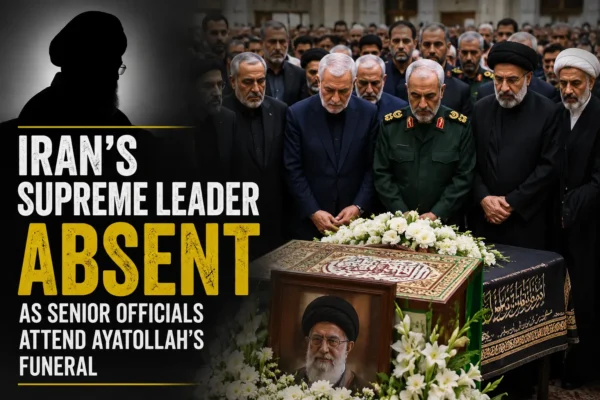
Iran’s supreme leader absent as senior officials attend ayatollah’s funeral

Iran’s political leadership drew widespread attention after Iran’s supreme leader was absent from the funeral ceremony of a prominent ayatollah, while several senior government and military officials attended the event. The absence has fueled speculation both inside and outside the country, although Iranian authorities have not provided an official explanation. The funeral was attended by high-ranking members of the government, senior clerics, military commanders, and representatives from various state institutions. The gathering highlighted the importance of the late ayatollah, who was regarded as an influential religious figure with strong ties to Iran’s clerical establishment. Despite the supreme leader’s absence, officials paid tribute to the ayatollah’s contributions to Islamic scholarship and his role in shaping Iran’s religious and political landscape. State media focused on the large turnout of mourners and the messages of condolence issued by leading officials. Political analysts have offered several possible reasons for the absence, including security considerations, health precautions, or scheduling conflicts. However, without an official statement, these remain speculative. Iran’s leadership has historically maintained strict security measures around the supreme leader’s public appearances, particularly during periods of heightened regional tensions. The funeral comes at a sensitive time for Iran, as the country continues to navigate domestic economic challenges, diplomatic negotiations, and ongoing tensions across the Middle East. Any public appearance—or absence—by the nation’s highest authority is closely scrutinized by observers seeking clues about the country’s political direction. International media have also highlighted the event, noting that the participation of senior officials demonstrated the government’s continued support for the religious establishment despite the supreme leader’s absence. The ceremony emphasized the enduring influence of Iran’s clerical leadership within the country’s political system. Until Iranian authorities clarify the reason behind the absence, questions are likely to persist. Nevertheless, the funeral proceeded with full state honors, reflecting the late ayatollah’s significant standing in Iran and the close relationship between the country’s religious institutions and political leadership.

Read More
Trump Iran Peace Deal

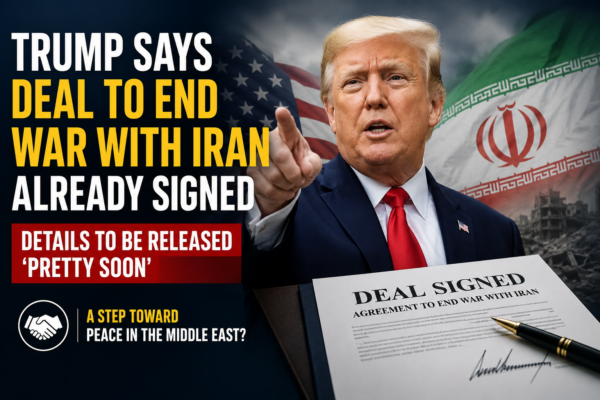
Trump says deal to end war with Iran already signed and details to be released ‘pretty soon’

U.S. President Donald Trump has announced that a deal aimed at ending the conflict with Iran has already been signed, with the full details expected to be released “pretty soon.” The announcement marks a significant development after months of tensions, military confrontations, and diplomatic negotiations between Washington and Tehran. Speaking ahead of the G7 summit in France, Trump said the agreement had been digitally signed and that a formal signing ceremony is expected later this week in Geneva. According to U.S. officials, the deal takes the form of a memorandum of understanding that establishes a framework for ending hostilities and opening the door to further negotiations. Vice President JD Vance confirmed that the agreement was signed electronically and stressed that no funds have yet been transferred to Iran. He noted that any future economic benefits or sanctions relief would depend on Tehran meeting its commitments under the agreement. Reports indicate that the framework includes measures to reopen the strategically important Strait of Hormuz and maintain a ceasefire while both sides continue discussions on broader issues, including Iran’s nuclear program. A 60-day negotiation period is expected to follow the formal signing. While Trump has described the agreement as a major step toward peace and regional stability, some details remain unclear. Iranian officials have acknowledged progress but previously expressed caution regarding the timing and final terms of the deal. Critics in both the United States and the Middle East have also questioned aspects of the proposed arrangement. The release of the full text is expected in the coming days, which should provide a clearer picture of the commitments made by both sides and the prospects for a lasting peace.

Read More
Trump Iran helicopter response

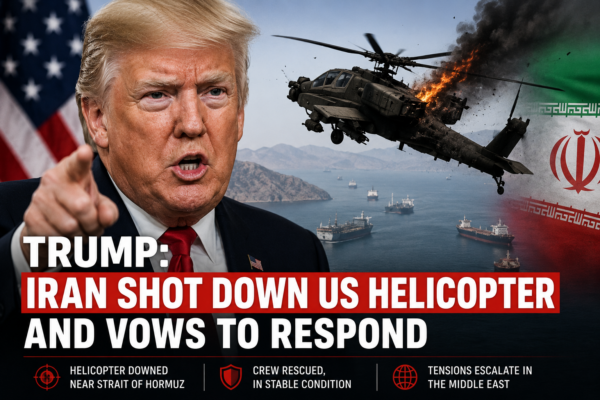
Trump says Iran shot down US helicopter and vows to respond

U.S. President Donald Trump has accused Iran of shooting down a U.S. Army Apache helicopter near the Strait of Hormuz and pledged that the United States will respond to what he described as a direct attack. The incident marks a significant escalation in tensions between Washington and Tehran at a time when diplomatic efforts to reduce regional conflict remain fragile. According to Trump, the helicopter was conducting a patrol mission over the strategically important Strait of Hormuz when it was allegedly targeted by Iranian forces. In a statement posted on social media, Trump said he had been informed by the U.S. military that Iran was responsible for the downing of the aircraft. He added that the United States “must, of necessity, respond to this attack.” Despite the dramatic claim, details surrounding the incident remain limited. U.S. military officials confirmed that the helicopter went down near the Strait of Hormuz and that both crew members were safely rescued. Reports indicate the pilots are in stable condition and suffered no major injuries. The event comes amid heightened tensions in the Middle East following recent clashes involving Iran, Israel, and U.S. forces. Analysts warn that any American military response could further destabilize the region and threaten shipping routes through the Strait of Hormuz, one of the world’s most important energy corridors. Iran has not publicly provided a detailed response to Trump’s accusation, and investigations into the circumstances of the helicopter’s loss are ongoing. Meanwhile, global markets are closely watching developments, with oil prices showing signs of volatility as concerns about regional security grow. As Washington considers its next steps, the incident has raised fresh questions about the future of U.S.-Iran relations and the possibility of a broader confrontation in the Gulf region.

Read More
Hezbollah rejects renewed ceasefire

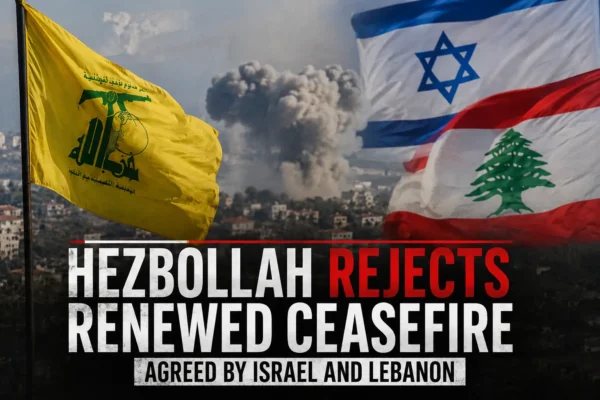
Hezbollah rejects renewed ceasefire agreed by Israel and Lebanon

Hezbollah has rejected a renewed ceasefire agreement reached between Israel and Lebanon, casting doubt on efforts to end months of fighting along the border. The deal, brokered with strong support from the United States, aimed to halt hostilities and create conditions for broader peace negotiations. However, Hezbollah leaders dismissed the agreement, arguing that it fails to address what they describe as Israel’s continued military presence in southern Lebanon. Hezbollah Secretary-General Naim Qassem said the group would not accept terms requiring its fighters to withdraw from southern Lebanon while Israeli forces remain in the area. He described the proposal as unacceptable and insisted that any ceasefire must include a complete Israeli withdrawal before Hezbollah considers ending its military operations. The agreement had been endorsed by the governments of Israel and Lebanon. It called for a cessation of hostilities, the creation of security zones under the control of the Lebanese Armed Forces, and the removal of armed non-state groups from areas south of the Litani River. Lebanese President Joseph Aoun supported the deal, describing it as an opportunity to move toward lasting stability. Despite the announcement, violence has continued. Israeli airstrikes reportedly targeted Hezbollah positions in southern Lebanon, while Hezbollah maintained rocket and drone attacks against Israeli forces. The ongoing clashes have resulted in additional casualties and further displacement of civilians on both sides of the border. The rejection of the ceasefire highlights the challenges facing diplomatic efforts in the region. With Hezbollah refusing to accept the terms and Israel continuing military operations, prospects for a lasting peace remain uncertain. Regional and international mediators are expected to continue negotiations in hopes of preventing a wider escalation of the conflict.

Read More
Iran-US deal talks

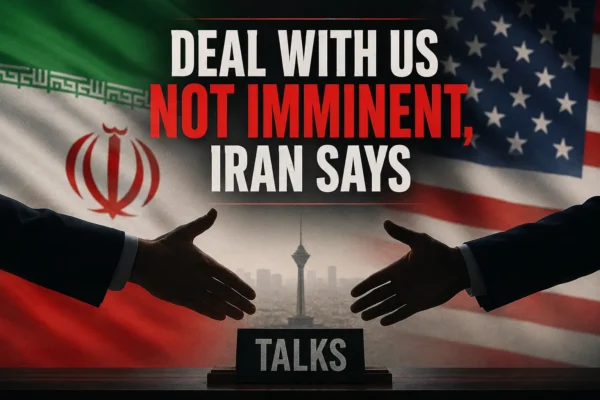
Deal with US not imminent, Iran says

Iran has said that a final agreement with the United States is “not imminent,” despite reports of progress in ongoing negotiations aimed at easing regional tensions and ending months of conflict in the Middle East. Iranian Foreign Ministry spokesperson Esmaeil Baghaei stated that Tehran and Washington had reached understandings on several major issues, but warned that significant differences still remain between the two sides. The comments came after senior US officials, including Secretary of State Marco Rubio, suggested that a breakthrough could happen soon. However, Iranian officials accused Washington of sending mixed signals and changing positions during negotiations, making it difficult to finalize a deal quickly. The discussions are believed to involve extending the current ceasefire, reopening the Strait of Hormuz to global shipping, and creating a framework for future talks over Iran’s nuclear programme. Iran has insisted that the current negotiations are focused mainly on ending hostilities and reducing military tensions, not directly on nuclear matters. The Strait of Hormuz remains one of the key issues in the talks because it is a vital route for global oil shipments. Continued uncertainty over the waterway has already pushed energy markets into volatility and increased concerns about global supply disruptions. Analysts say any delay in reaching a deal could keep oil prices elevated and prolong instability across the region. US President Donald Trump has also said negotiators should not rush into an agreement, stressing that Washington would only accept a “strong and meaningful” deal. Meanwhile, regional powers including Qatar, Oman and Pakistan continue diplomatic efforts to mediate between Tehran and Washington.

Read More
Trump Taiwan independence warning

Trump warns Taiwan against declaring independence, hours after summit with China’s Xi

Former US President Donald Trump warned Taiwan against making any formal declaration of independence, just hours after holding a high-level summit with Chinese President Xi Jinping. The remarks have intensified global attention on growing tensions between the United States, China, and Taiwan. Speaking after the meeting, Trump emphasized that stability in the Taiwan Strait was essential for global security and economic growth. He stated that any unilateral move toward independence could trigger “serious consequences” and increase the risk of military confrontation in the region. Trump also repeated his view that dialogue and negotiation should remain the primary path forward between Beijing and Taipei. China has long viewed Taiwan as a breakaway province and has consistently opposed any foreign support for Taiwanese independence. Beijing welcomed Trump’s comments, with Chinese officials describing them as a sign that Washington understands the sensitivity of the issue. The summit between Trump and Xi reportedly focused on trade relations, military tensions in the Indo-Pacific, and regional security concerns. Taiwanese leaders reacted cautiously to Trump’s statement. Officials in Taipei reaffirmed their commitment to democracy and self-governance while stressing the importance of maintaining peace across the Taiwan Strait. Some political analysts in Taiwan expressed concern that the remarks could be interpreted as increased pressure from both Washington and Beijing. The summit comes at a time of rising geopolitical competition between the US and China. Military exercises near Taiwan and growing diplomatic disputes have raised fears of a potential conflict involving major global powers. International observers say Trump’s warning could influence future US-China relations and shape discussions about security in Asia for months to come.

Read More