
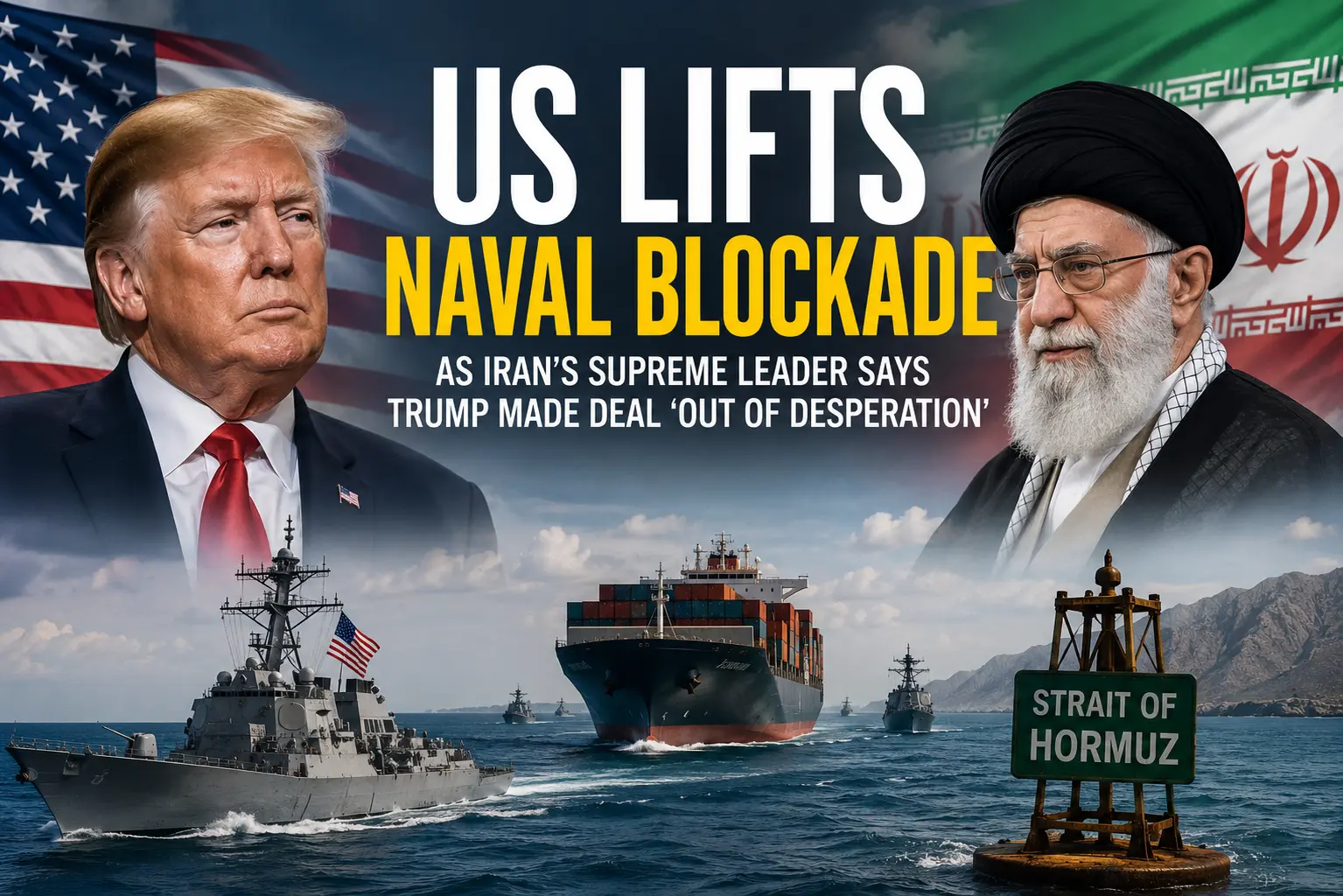
The United States has begun lifting its naval blockade on Iranian ports and shipping routes following a newly negotiated peace agreement between Washington and Tehran, marking a significant shift in tensions that have gripped the Middle East for months. The move comes after President Donald Trump announced that a deal had been reached to end hostilities and reopen the strategically vital Strait of Hormuz.
Under the agreement, the U.S. will gradually remove restrictions on Iranian maritime traffic and allow commercial vessels to access Iranian ports. American officials said the decision is part of a broader framework aimed at restoring stability in the Gulf and preventing further disruptions to global energy markets. More than a dozen ships have already been allowed through under the initial phase of the arrangement.
However, the deal has sparked political debate in both countries. Iran’s Supreme Leader, Mojtaba Khamenei, reportedly criticized the agreement, claiming that Trump pursued the deal “out of desperation” after economic pressures and concerns over global oil supplies mounted. Iranian officials have argued that the U.S. was forced to negotiate after the blockade failed to achieve its broader strategic goals.
Trump has defended the agreement, describing it as a diplomatic breakthrough that will reopen the Strait of Hormuz, reduce the risk of further military conflict, and stabilize international markets. The memorandum of understanding includes commitments from Iran to support safe maritime navigation and refrain from pursuing nuclear weapons, while the U.S. has agreed to ease sanctions and provide access to frozen Iranian assets.
The agreement is expected to be formally signed in Switzerland, with negotiators hoping it will pave the way for a broader and more permanent settlement between the two longtime adversaries. Despite ongoing skepticism from critics, the reopening of shipping routes has already eased concerns about global oil supplies and regional security.