
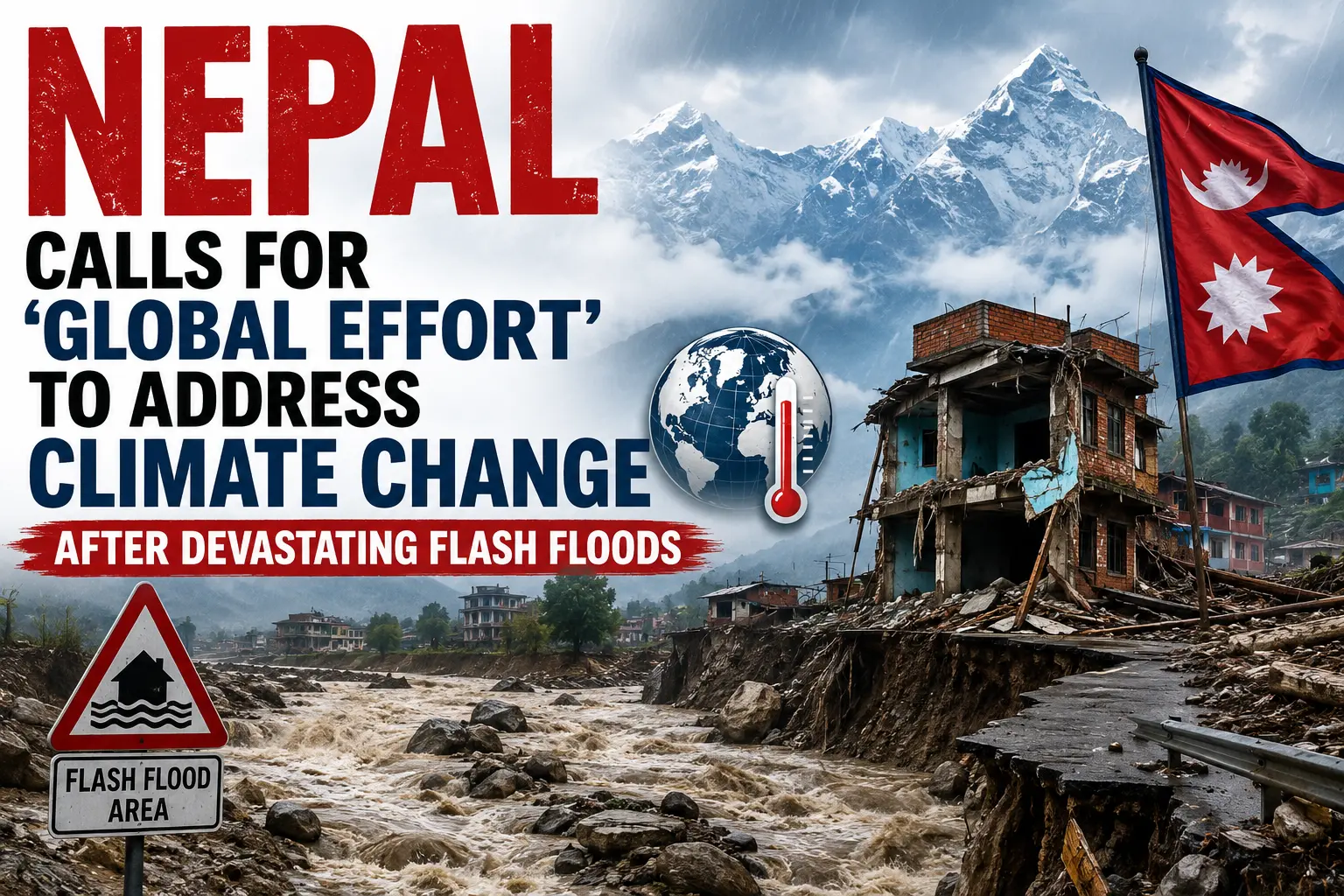
Nepal has called on the international community to take stronger collective action against climate change after devastating flash floods caused widespread destruction in the Himalayan nation. The disaster has highlighted the growing vulnerability of mountain communities as glaciers melt and extreme weather becomes increasingly unpredictable.
The recent catastrophe was triggered by a massive collapse of ice and rock in the Himalayan region, unleashing destructive floods that swept through communities, damaged roads and bridges, and severely affected critical infrastructure. Hundreds of people have been killed, while many others remain missing as rescue and recovery operations continue.
Nepal’s leaders have stressed that the country contributes only a tiny share of global greenhouse gas emissions but faces some of the most serious consequences of a warming planet. The government has urged nations around the world to work together to protect the fragile Himalayan ecosystem and reduce the risks posed by melting glaciers and unstable mountain environments.
The tragedy has also renewed calls for greater international cooperation in climate research, early-warning systems, disaster preparedness and the sharing of real-time environmental data across borders. Because Himalayan rivers and glaciers affect several countries, experts say regional and global collaboration is essential to protect vulnerable populations downstream.
As Nepal begins the difficult task of rebuilding, the disaster serves as a powerful warning that climate change is not a distant threat. For communities living beneath the world’s highest mountains, its consequences are already being felt. Nepal’s appeal for a global effort reflects a growing demand for meaningful climate action, stronger adaptation measures and support for countries suffering the harshest impacts of a crisis