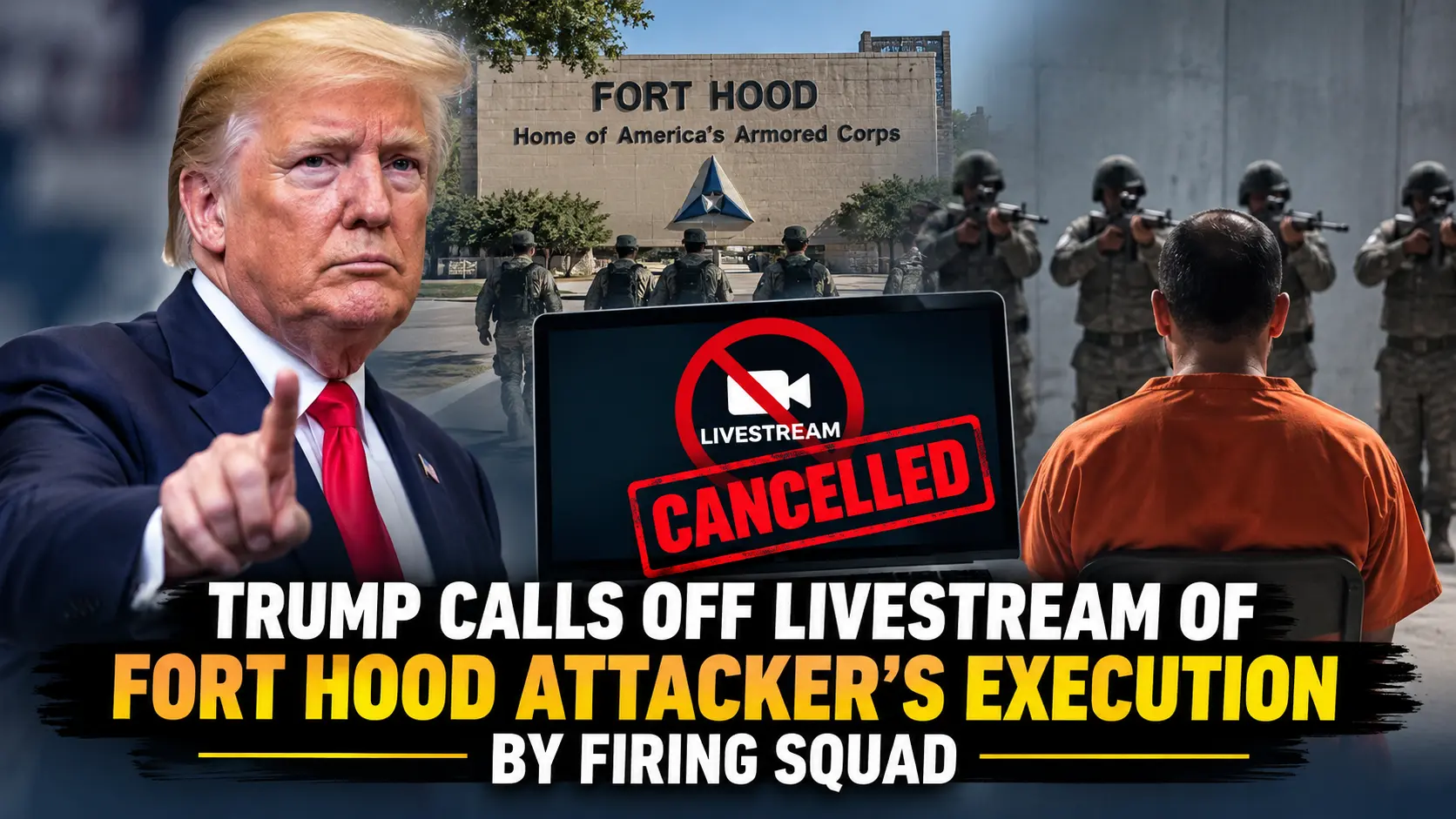
President Donald Trump has called off plans to livestream the execution by firing squad of the attacker responsible for the deadly Fort Hood shooting, a decision that has drawn attention to the administration’s approach to capital punishment and the public broadcasting of executions.
The Fort Hood attack remains a significant event in American military history, raising lasting concerns about security, accountability and the protection of military personnel. The case has also prompted debate over how the government should handle the punishment of individuals responsible for deadly attacks against military communities.
The decision to cancel the livestream has raised questions about the reasons behind the change. Publicly broadcasting an execution can create legal, ethical and practical challenges, particularly when the case involves a high-profile crime and victims’ families. Concerns about the dignity of those involved, the impact on relatives and the wider public reaction can all influence decisions surrounding the handling of executions.
Firing squads are among the methods of execution permitted in certain US jurisdictions under specific legal circumstances. However, their use remains controversial, with supporters arguing that capital punishment provides justice for the most serious crimes, while opponents question its morality, fairness and effectiveness as a deterrent.
The Fort Hood case has also highlighted the difficult relationship between military security, criminal justice and public accountability. Any decision involving an execution requires careful consideration of legal requirements, established procedures and the rights of those affected.
Although the livestream has reportedly been called off, the circumstances surrounding the decision and any further developments will be important in understanding the administration’s position. The issue is likely to continue generating discussion about transparency, the limits of public access to state punishment and the role of the presidency in high-profile criminal justice matters.
The case remains a reminder of the lasting consequences of violence within military communities and the continuing national debate over how justice should be administered in the most serious criminal cases.