Ukrainian President Volodymyr Zelensky has accused Russia of attacking Ukraine’s energy infrastructure shortly after US President Donald Trump announced an alleged energy ceasefire between the two countries. The incident has raised fresh questions about whether Moscow and Kyiv have genuinely agreed to suspend attacks on energy facilities.
On October 11, Trump announced that Russia and Ukraine had agreed to an immediate energy ceasefire. However, he provided few details about the arrangement, and neither side had publicly confirmed a formal agreement at the time of the announcement
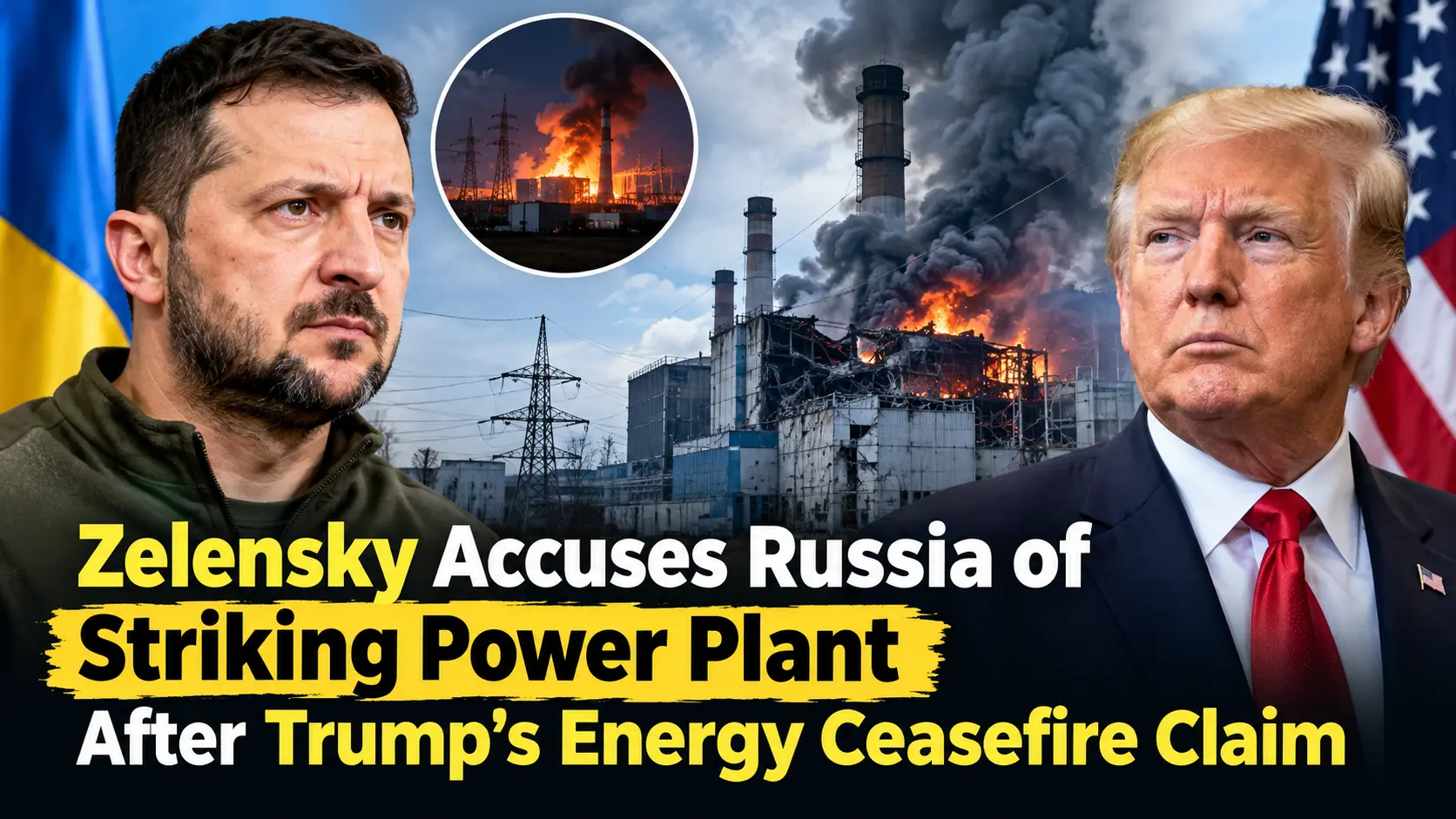
Zelensky said Russian forces struck a power plant in Kyiv using a Shahed drone shortly before his conversation with European Commission President Ursula von der Leyen. He added that several districts experienced power outages following the attack.
According to the Ukrainian president, additional strikes targeted energy facilities in the Kharkiv region. Zelensky criticised the attacks, pointing out that they occurred after the US president announced the proposed ceasefire.
The attacks have intensified concerns about the security of Ukraine’s electricity and heating infrastructure as the country prepares for colder weather. Damage to power facilities could disrupt essential services and create further difficulties for civilians already affected by the prolonged war.
Zelensky said Ukraine was prepared to support an energy ceasefire but insisted that Russia must also stop attacking Ukrainian energy infrastructure. Kyiv has repeatedly maintained that any agreement must involve commitments from both sides rather than requiring Ukraine to halt its operations unilaterally.
The Ukrainian leader also called for clarification regarding when the ceasefire would begin and what conditions it would include. Meanwhile, Russia had not publicly confirmed Trump’s announcement in the initial reports.
The latest developments highlight the challenges facing diplomatic efforts to reduce hostilities between Moscow and Kyiv. Although an energy ceasefire could help protect power stations and reduce civilian suffering, its success would depend on both countries respecting the agreement.
For now, uncertainty surrounds Trump’s announcement, while continued attacks on energy facilities threaten to undermine hopes for a temporary reduction in fighting. International attention remains focused on whether diplomatic pressure can produce a verifiable commitment from both sides.