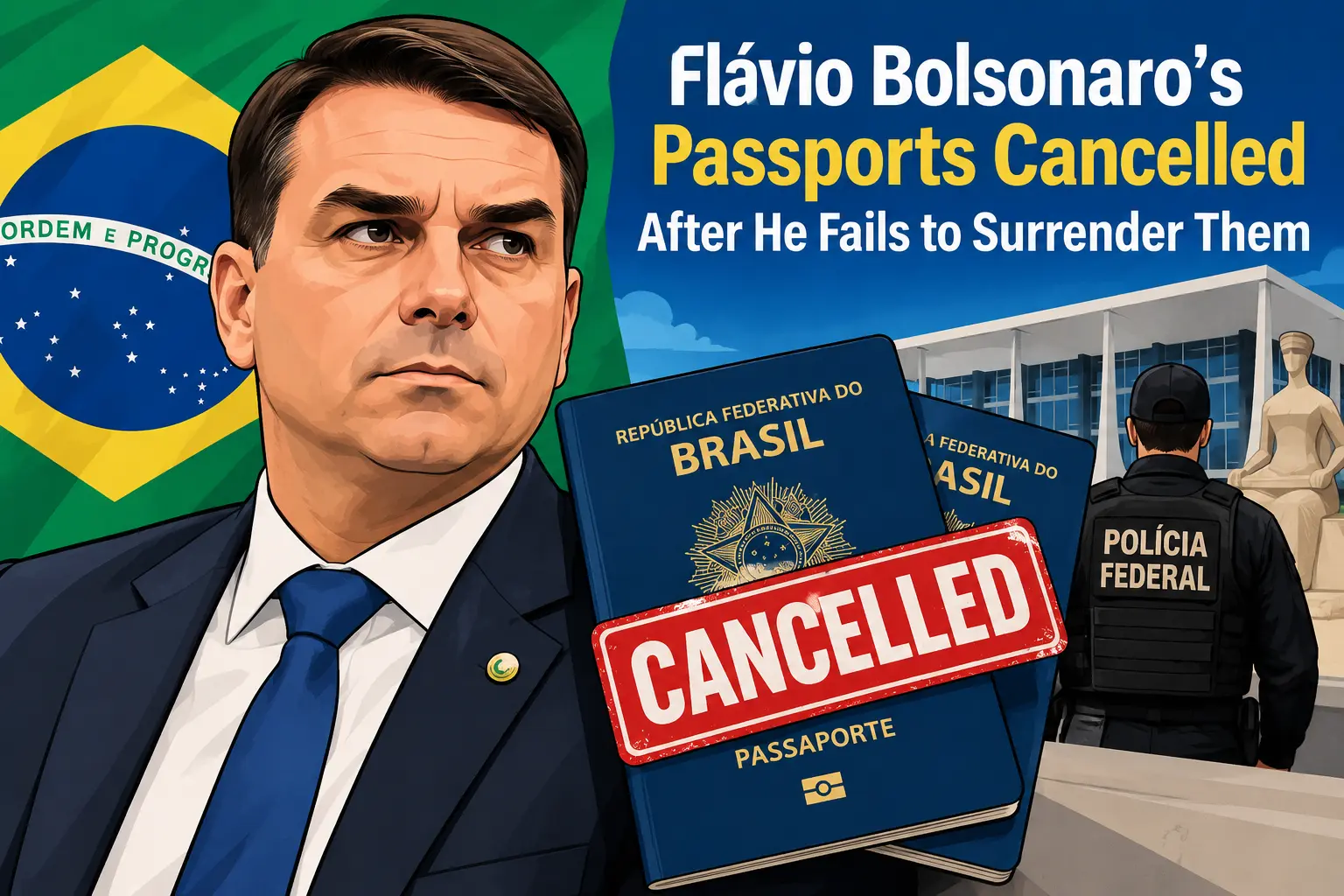
Brazilian political figure Flávio Bolsonaro has reportedly had his passports cancelled after failing to surrender them as required, raising fresh questions about the legal and political challenges facing the Bolsonaro family.
Flávio Bolsonaro, a senator and the eldest son of former Brazilian president Jair Bolsonaro, is a prominent figure in Brazil’s conservative political movement. His political activities and legal controversies have attracted considerable public attention, particularly as the country remains deeply divided over the legacy of his father’s presidency.
Passport cancellation is a significant measure because it can restrict international travel and signal that authorities are enforcing a legal or judicial order. However, the precise legal grounds for the reported cancellation, the authority responsible, and the circumstances surrounding the failure to surrender the documents require confirmation from official records.
The development could have implications for Flávio Bolsonaro’s political activities and his standing among supporters. Members of the Bolsonaro family have remained influential in Brazilian politics, with their supporters presenting them as representatives of conservative values and their critics questioning their conduct and political influence.
Brazil’s judicial and political institutions have faced intense scrutiny in recent years, particularly over investigations involving prominent political figures. Actions involving travel documents can become politically sensitive when they affect individuals connected to major political movements.
According to reports published on October 27, 2026, Brazil’s Federal Police cancelled both his ordinary and diplomatic passports after the deadline expired. Authorities also planned to inform Supreme Court Justice Alexandre de Moraes about his failure to comply with the order.w
Speculation about Bolsonaro’s whereabouts intensified after Argentine media reported that he might have crossed the border into Argentina. However, Brazilian authorities had found no formal record of his departure, and reports of his presence in Argentina remained unconfirmed.
The case highlights the continuing tensions between Brazil’s conservative political movement and its judicial institutions. Further developments will depend on the court’s response and the outcome of the ongoing investigations.