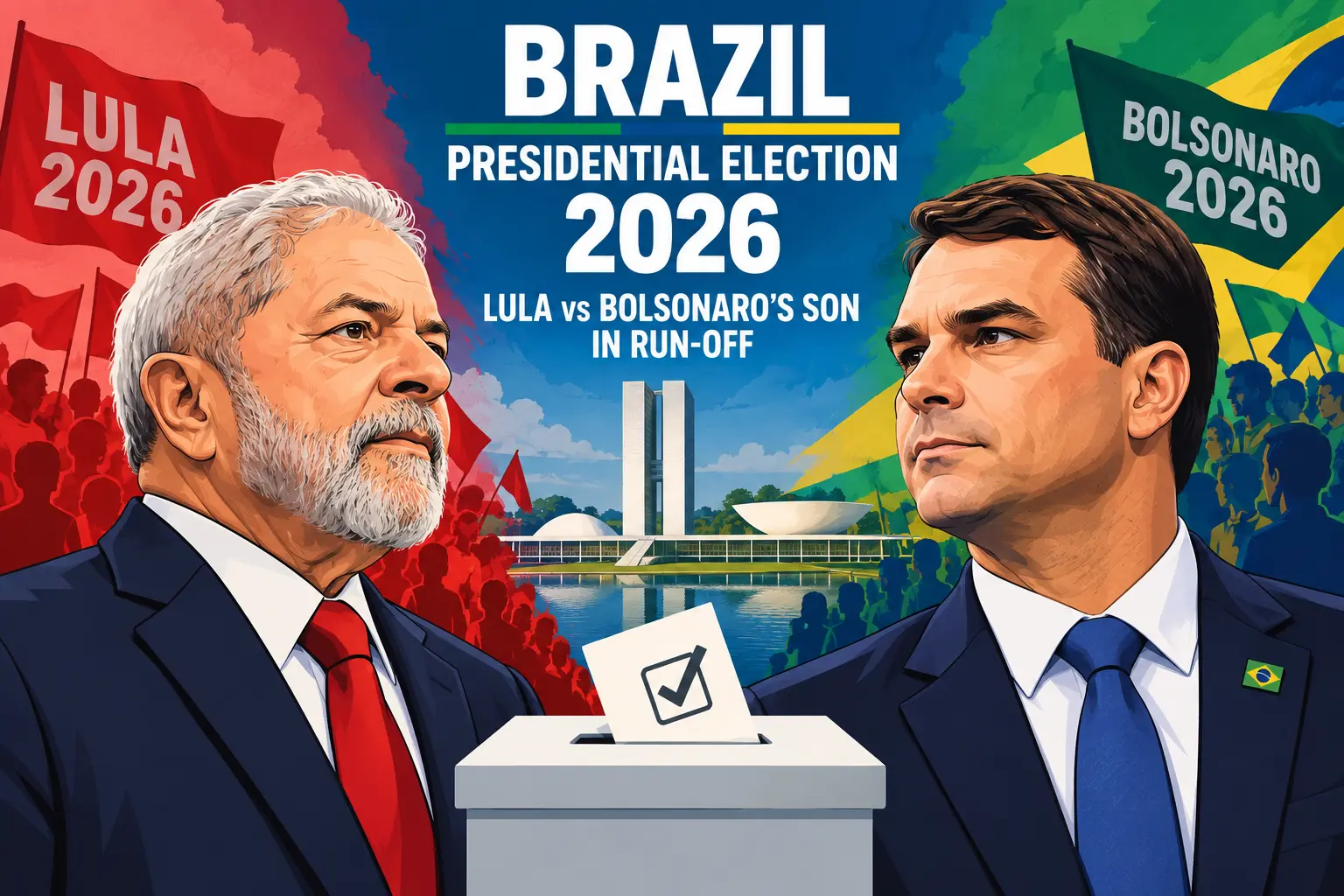
Brazil’s political landscape is facing another major test as voters weigh a potential presidential run-off between left-wing President Luiz Inácio Lula da Silva and a candidate from the family of former far-right president Jair Bolsonaro. The contest reflects deep political divisions in Latin America’s largest country, where economic concerns, social policies and the future direction of democracy remain central issues.
Lula, a veteran politician who previously served as president from 2003 to 2010, has built his political identity around reducing poverty, expanding social welfare programmes and protecting workers’ rights. His supporters credit his government with prioritising vulnerable communities and strengthening Brazil’s international role. However, critics question his economic policies, government spending and ability to address persistent concerns about crime and public services.
On the other side, the prospect of Bolsonaro’s son entering the presidential race represents an effort to maintain the political influence of Brazil’s conservative movement. The Bolsonaro family has a substantial following among many right-wing voters, particularly those who support traditional values, tougher security policies and a more conservative approach to government.
A run-off between Lula and Bolsonaro’s son would likely turn the election into a direct confrontation between competing visions for Brazil’s future. The campaign could focus on inflation, employment, taxation, public safety, environmental protection and the country’s position in international affairs.
Brazil’s large electorate makes the outcome significant beyond its borders. As a major agricultural producer and one of the world’s largest economies, Brazil plays an important role in global food markets, climate negotiations and relations with major powers.
The election could also influence the future of the Amazon rainforest, with environmental protection and economic development likely to remain important subjects during the campaign.
For voters, the decision would involve more than choosing between two political figures. It would represent a choice between contrasting economic priorities, social policies and political ideologies.
As the campaign develops, candidates will face pressure to convince undecided voters that their plans can improve living standards, strengthen public institutions and address the country’s long-standing challenges. The final result could shape Brazil’s domestic policies and international relationships for years to come.