
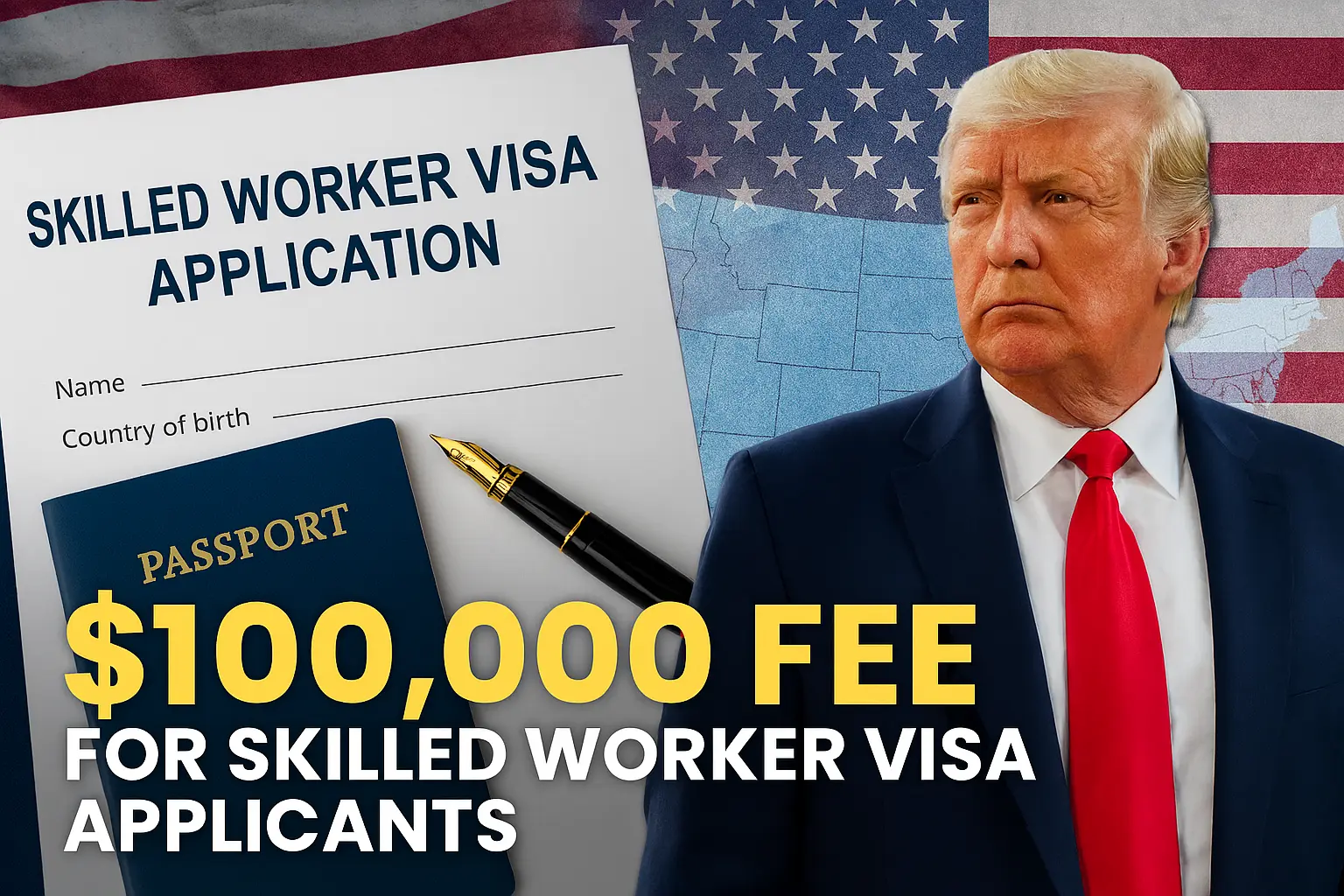
In a dramatic policy shift, former U.S. President Donald Trump has announced the introduction of a $100,000 fee for skilled worker visa applicants, sparking intense debate both at home and abroad. The measure, aimed at what Trump describes as “protecting American workers,” represents one of the most restrictive steps taken in the U.S. immigration system in recent years.
According to Trump, the new fee will apply to high-skilled visas, such as the H-1B program, which is widely used by technology firms, medical institutions, and research organizations to bring in global talent. Proponents argue that the fee will reduce dependency on foreign workers, encourage companies to prioritize American employees, and generate significant revenue for the federal government.
However, critics warn that the policy could severely damage the U.S. economy. The $100,000 visa fee is far higher than any existing immigration charge in the world, and experts believe it will deter talented professionals from applying. Companies in Silicon Valley, Wall Street, and leading universities rely heavily on international expertise, and many business leaders fear this move will drive talent toward other global hubs such as Canada, the United Kingdom, and Australia.
Immigration advocates also caution that the measure unfairly targets skilled professionals who contribute billions to the U.S. economy annually. A coalition of tech firms and advocacy groups has already signaled plans to challenge the fee in court, arguing it is discriminatory and unconstitutional.
Trump, however, defended the plan as part of his broader “America First” strategy. At a rally, he claimed that the fee would “make foreign workers pay their fair share” and ensure that U.S. citizens do not lose jobs to overseas professionals willing to work for less. He added that the revenue from the new fees would be invested in training programs for American workers, especially in the technology and healthcare sectors.
International reaction has been swift. India, one of the largest sources of H-1B applicants, expressed “deep concern” over the impact of the new rule. Industry groups in India estimate that thousands of skilled workers, particularly in IT and engineering, will be priced out of the U.S. market. Similarly, European leaders warned that such policies could isolate the U.S. from global innovation networks.
The policy, if fully implemented, could reshape global migration patterns. Analysts suggest that Canada and other nations with more welcoming immigration systems may emerge as beneficiaries, attracting talent that the U.S. risks losing.
For now, the $100,000 skilled worker visa fee remains one of Trump’s most controversial immigration moves, with long-term consequences that could redefine America’s role in the global workforce.