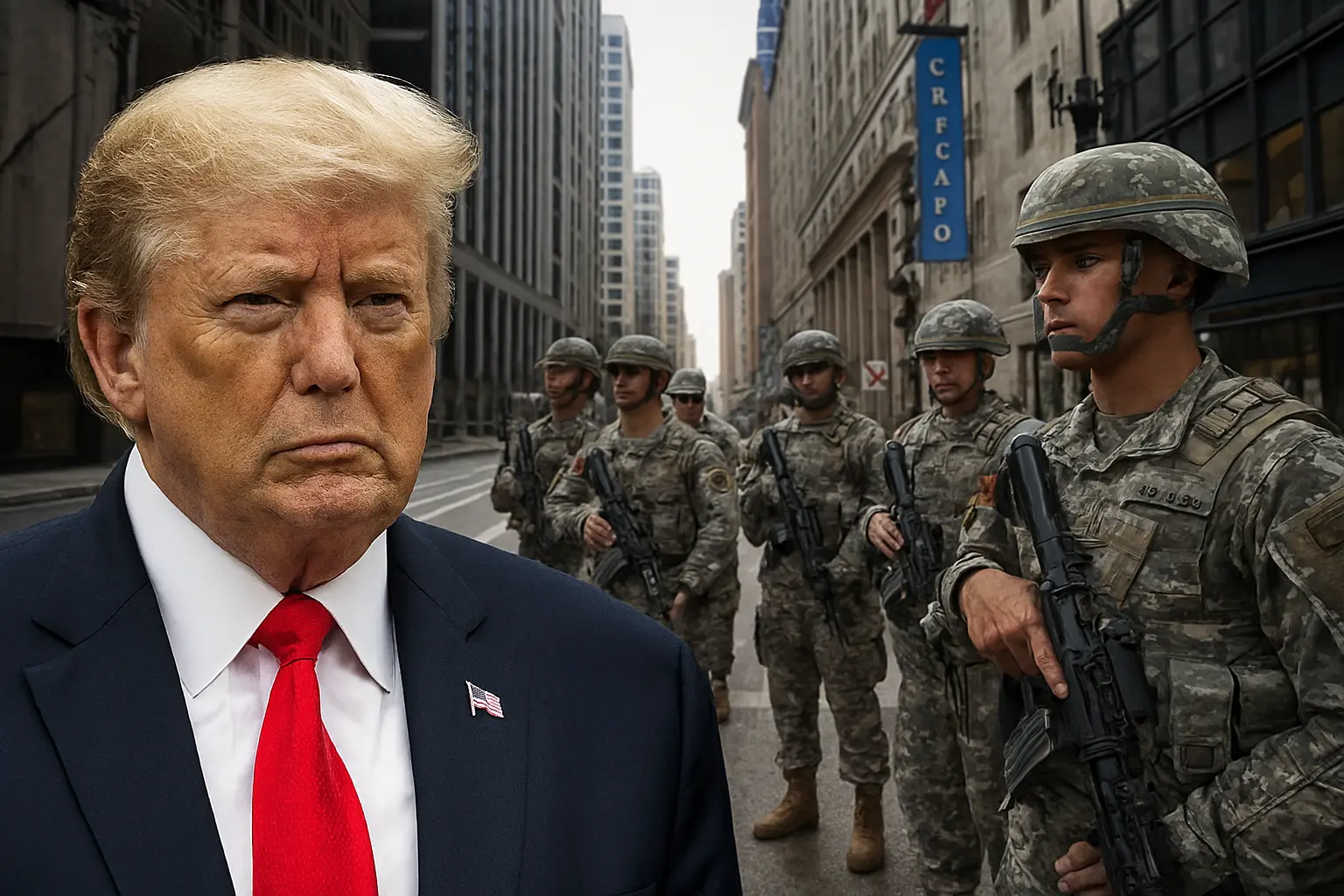
In a move aimed at curbing escalating violence and unrest, former U.S. President Donald Trump has authorised the deployment of 300 National Guard troops to Chicago, citing a “breakdown of law and order” in the city. The decision, announced from his Florida residence, comes after weeks of mounting pressure from local leaders, police unions, and community groups alarmed by rising gun violence and social tensions.
According to White House officials, the National Guard units will assist Chicago police in “stabilising critical areas” and protecting public infrastructure. Trump described the move as “a necessary step to restore peace and protect innocent lives,” adding that federal support was essential in cities “where local leadership has failed to maintain security.”
Chicago has faced a surge in violent incidents over the past month, with several neighbourhoods reporting record numbers of shootings. City officials have struggled to contain the unrest, which has been linked to gang-related crime, economic hardship, and political discontent. Although some local leaders welcomed the deployment as a short-term measure, others criticised it as federal overreach that could inflame tensions further.
Mayor Brandon Johnson responded cautiously, stating that while the city appreciates federal assistance, the focus must remain on addressing the root causes of violence. “What Chicago needs is investment in communities, not just boots on the ground,” Johnson said. He emphasised the importance of collaboration between federal, state, and local agencies to prevent further escalation.
The National Guard troops are expected to begin operations within 48 hours, focusing primarily on transportation hubs, commercial districts, and areas identified as high-risk. Officials stressed that the deployment is temporary and will operate under strict coordination with local law enforcement to avoid clashes or confusion.
This is not the first time Trump has used the National Guard to address urban unrest. During his presidency, he authorised similar deployments in cities such as Portland and Minneapolis amid protests and violence. Supporters argue that these measures demonstrated decisive leadership, while critics view them as political theatre intended to project strength during moments of domestic crisis.
Analysts suggest that the move could have broader political implications as Trump continues to position himself as a “law-and-order” figure ahead of the next election cycle. By highlighting violence in major cities, he reinforces his campaign narrative that Democratic-led urban centres have failed to maintain safety and discipline.
For many Chicago residents, however, the immediate concern is whether this latest federal intervention will bring relief or further strain community relations. As the National Guard prepares to take to the streets, the city remains on edge—caught between the need for security and the fear of deeper division.