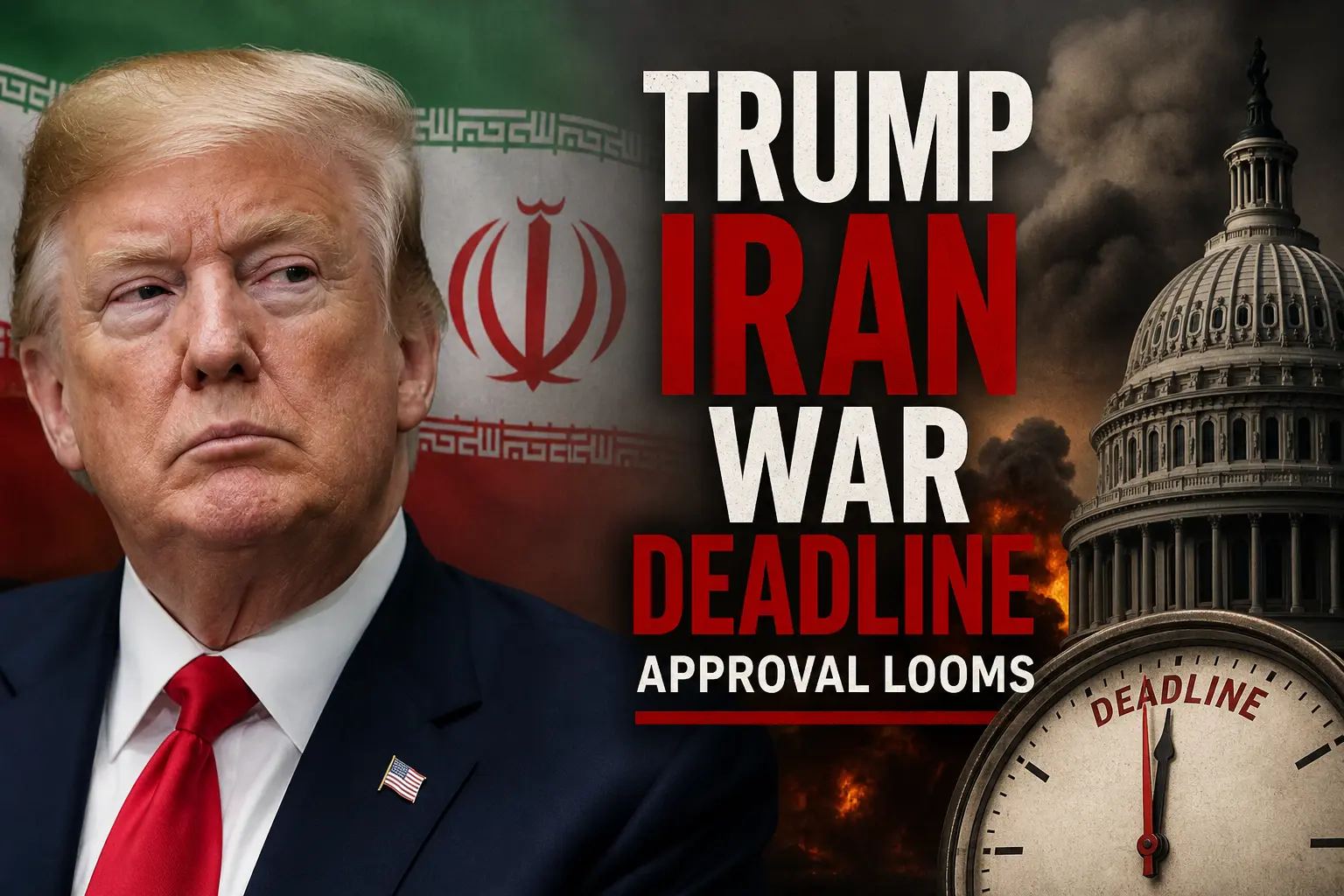
U.S. President Donald Trump has reiterated that he is “not happy” with Iran as a కీల moment approaches in Washington: the legal deadline requiring congressional approval for continued military involvement. The statement underscores rising tension between diplomatic efforts and domestic legal constraints tied to the ongoing conflict.
Trump’s dissatisfaction centers on Iran’s latest proposals to end hostilities, which he has described as unacceptable and insufficient. According to recent reports, he believes Tehran’s leadership remains divided and unwilling to meet core U.S. demands, particularly on abandoning nuclear ambitions. Despite indirect negotiations through mediators, progress has stalled, leaving the situation in a fragile ceasefire rather than a lasting resolution.
At the same time, the administration faces pressure under the War Powers Resolution, which mandates that a president must seek congressional authorization within 60 days of initiating military action. That deadline is now looming, placing Trump in a politically sensitive position. Rather than seeking approval, the White House argues that hostilities have effectively “terminated” due to an earlier ceasefire, a legal interpretation widely disputed by lawmakers and experts.
Congress remains deeply divided. Efforts by Democrats to force a vote on ending or authorizing the war have repeatedly failed, while many Republicans continue to back Trump’s approach. This impasse increases the likelihood that the deadline will pass without clear legislative action, further intensifying constitutional questions over executive war powers.
Meanwhile, Trump has kept military options open, signaling that further strikes remain possible if Iran does not shift its stance. His remarks suggest a dual-track strategy: maintaining pressure through both diplomacy and the threat of force.
With no breakthrough in negotiations and legal uncertainty mounting, the coming days are critical. Whether the administration seeks authorization, ignores the deadline, or escalates tensions will significantly shape the trajectory of the U.S.–Iran conflict and broader regional stability.