
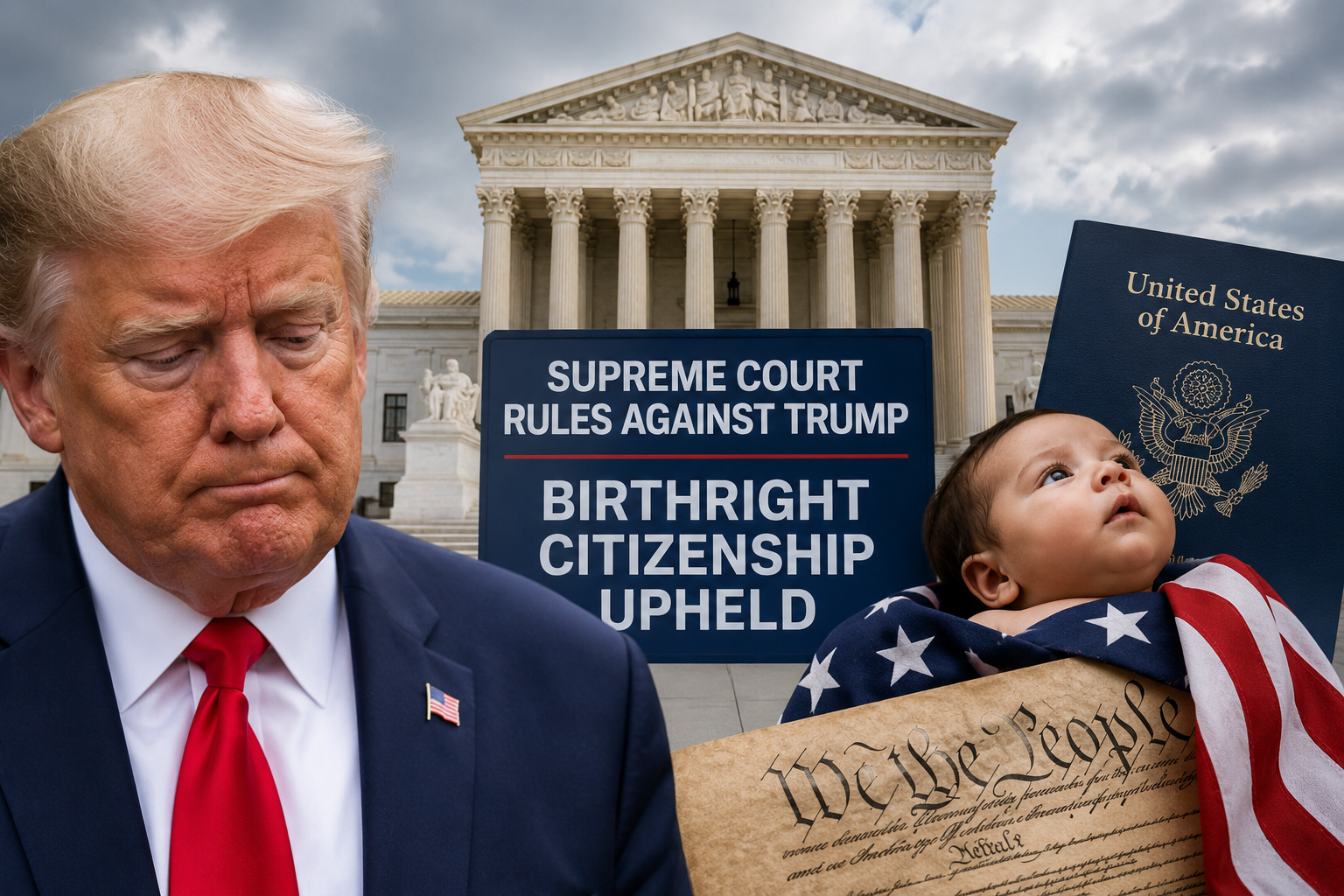
A major legal setback for former U.S. President Donald Trump has reignited the national debate over immigration and constitutional rights after the Supreme Court rejected efforts to end birthright citizenship. The ruling preserves the long-standing interpretation of the 14th Amendment, which grants U.S. citizenship to nearly all individuals born on American soil, regardless of their parents’ immigration status.
The decision marks a significant defeat for Trump and his supporters, who have argued that birthright citizenship encourages illegal immigration and should be restricted. During his presidency and subsequent political campaigns, Trump repeatedly called for changes to the policy, claiming it was being abused and placed unnecessary pressure on public resources.
Legal experts, however, have maintained that birthright citizenship is firmly rooted in the Constitution. The Supreme Court’s ruling reinforces decades of legal precedent and signals that any major change to the policy would likely require a constitutional amendment rather than executive action or ordinary legislation.
Immigration advocates and civil rights groups welcomed the decision, describing it as a victory for constitutional protections and equal rights. They argued that ending birthright citizenship could create uncertainty for millions of families and undermine a fundamental principle of American law.
The ruling is expected to have significant political implications as immigration remains a central issue in U.S. politics. Supporters of stricter immigration controls expressed disappointment with the outcome, while opponents viewed the decision as an important safeguard against efforts to limit citizenship rights.
As the debate continues, the Supreme Court’s judgment ensures that birthright citizenship remains intact for the foreseeable future. The case highlights the enduring importance of the Constitution in shaping U.S. immigration policy and underscores the judiciary’s role in resolving some of the nation’s most contentious legal disputes.
The ruling is likely to remain a focal point in future discussions about immigration reform, citizenship, and constitutional interpretation across the United States.