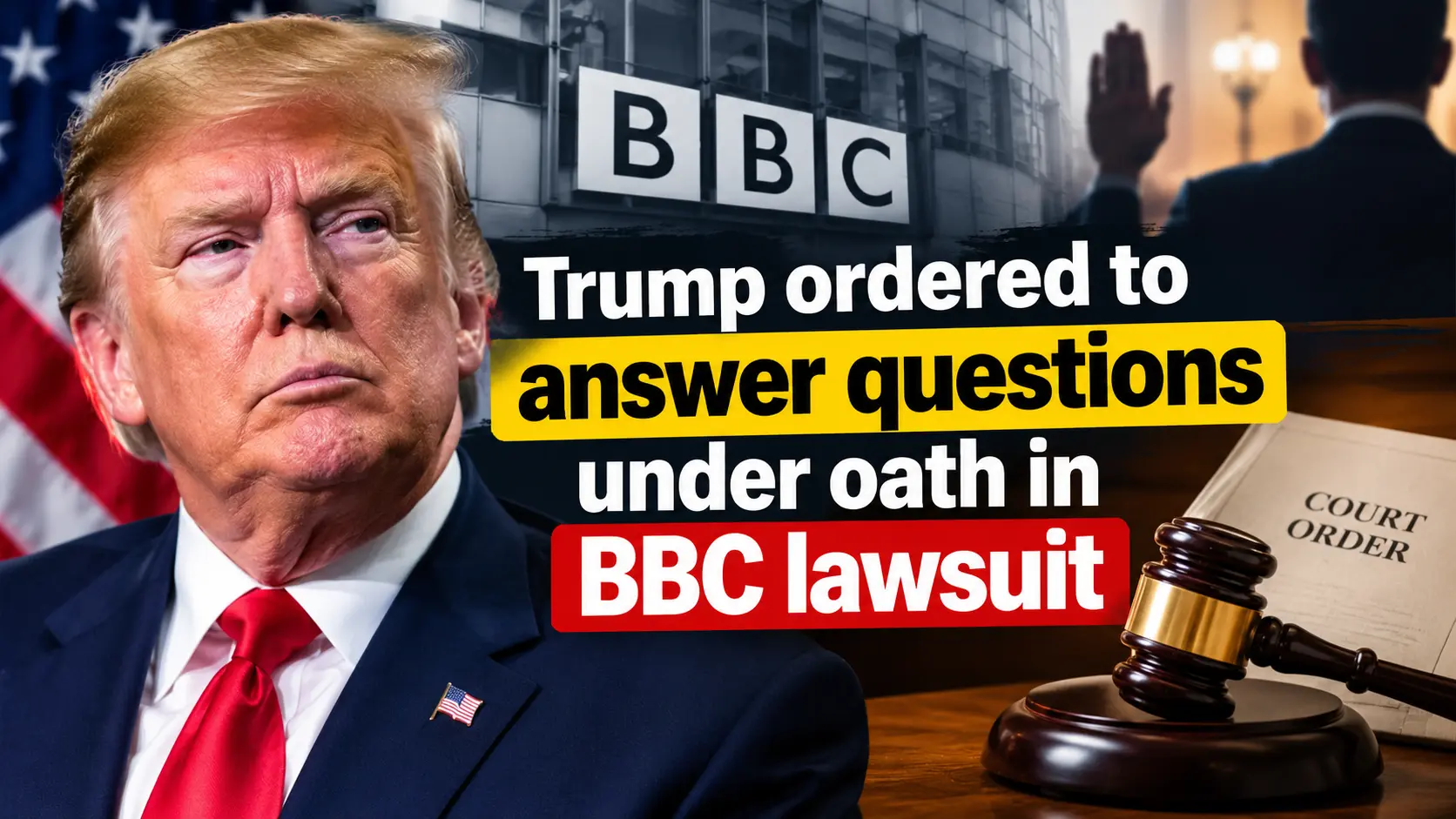
U.S. President Donald Trump has reportedly been ordered to answer questions under oath in a legal dispute involving the BBC, bringing renewed attention to the ongoing tensions between the president and the international broadcaster. The case raises important questions about media responsibility, political reporting, and the legal consequences of statements made about public figures.
The central issue in the lawsuit concerns allegations surrounding the BBC’s reporting and whether the broadcaster’s coverage caused harm to Trump’s reputation. Legal disputes involving public figures and major media organizations often focus on whether published material was accurate, whether it created a misleading impression, and whether the necessary legal standards for defamation have been met.
A requirement to answer questions under oath means that a person must provide testimony under a formal legal process. Such testimony can help lawyers establish relevant facts, clarify disputed statements, and examine the circumstances surrounding the publication of the material at the centre of a case.
According to reports published on October 22, 2026, a federal judge in Florida ordered Trump to attend a deposition by December 11. The judge also warned that failure to comply could lead to sanctions, potentially including dismissal of his lawsuit
The lawsuit seeks at least $10 billion in damages. Trump argues that the BBC’s editing of his January 6, 2021, speech falsely suggested that he directly encouraged supporters to engage in violence before the attack on the U.S. Capitol. The edited footage appeared in a Panorama documentary ahead of the 2024 presidential election.
The BBC has apologised for the misleading edit but denies that it is legally responsible for defamation. The controversy also triggered a major internal crisis at the broadcaster, including the resignations of senior figures.
Trump’s testimony could become an important part of the legal proceedings, allowing BBC lawyers to question him about his allegations and the damages he claims to have suffered. The case remains unresolved, and the court’s order does not determine whether either side will ultimately win.
The dispute highlights the complex relationship between political leaders, media organizations, and defamation law. Its outcome could have implications for how broadcasters edit and present political speeches, particularly during election campaigns.