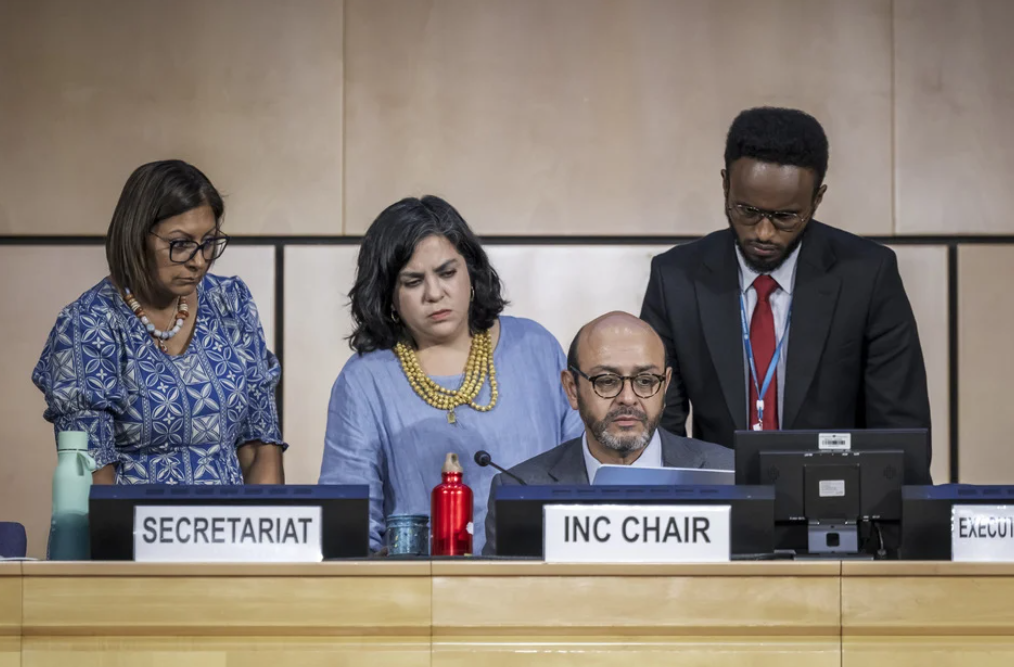
After nearly three years of effort, the sixth round of UN-led negotiations aiming to forge a legally binding global treaty on plastic pollution ended in failure in Geneva. Delegates from approximately 180 countries exhausted nights of talks but failed to find common ground.
At the heart of the impasse lay a fundamental disagreement: Should the treaty tackle plastic pollution urgently through binding limits on production—or focus narrowly on waste management? The High Ambition Coalition—comprising the EU, many African, Latin American nations, and small island states—pushed for bold measures to cap plastic production and phase out toxic chemicals. In stark contrast, the Like-Minded Group, made up of oil-producing countries such as Saudi Arabia, Russia, Iran, and supported by the U.S., insisted that the treaty remain limited to waste-related issues.
The U.S., under the Trump administration, played a particularly obstructive role—aligning with petrostates and rejecting key provisions on production caps, additives, and chemical regulation. The Washington Times This alliance intensified criticism from environmental advocates and undercut hopes for binding commitments.
Observers described the final plenary sessions as chaotic and disorganized—delegates adjourned late at night, only to reconvene at dawn with no resolution. Two draft texts were circulated, but neither was accepted, and no future dates for negotiations were finalized.
Reacting to the collapse, several countries voiced disappointment, particularly small island states. Tuvalu warned of the dire consequences: “Millions of tons of plastic waste will continue to be dumped in our oceans, affecting our ecosystem, food security, livelihood and culture.” Cuba lamented a “historic opportunity” lost, while France’s environment minister denounced petrostates for prioritizing short-term financial interests over planetary wellbeing.
The failure underscored the limitations of the UN’s usual consensus-based decision-making, which allowed a minority of nations to block action despite widespread support for more ambitious goals. Some groups are now advocating for alternative pathways—like voting mechanisms or coalitions of willing nations—to push the agenda forward.
Wildfires rage across southern Europe as temperatures top 40C
What Lies Ahead?
- Rescheduling Future Sessions? While the meeting was formally adjourned, no dates or venues for a restart have been announced.
- Alternative Forum or Group Action: Some propose moving forward with smaller groups of ambitious countries, bypassing stalled multilateral mechanisms.
- Urgent Continuation Needed: Environmental leaders emphasize that despite this setback, the urgency of the plastics crisis remains—and momentum must not falter.
This collapse marks a critical diplomatic setback—and a reminder that without unity and political will, the global plastics crisis will only escalate. Wabstalk