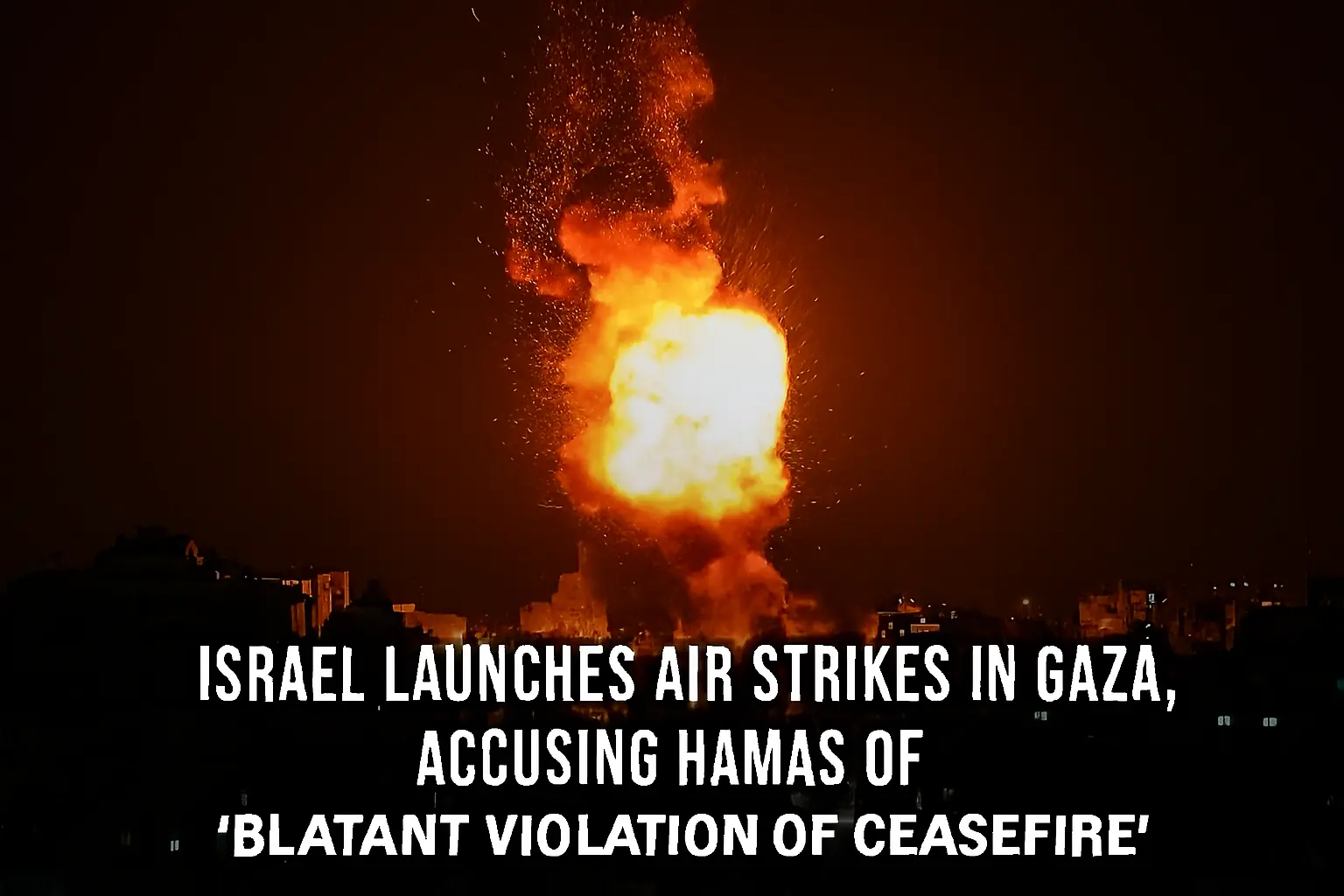
Israel launched a series of air strikes on the Gaza Strip late Sunday, accusing Hamas of breaching the fragile ceasefire that has held since the end of major hostilities earlier this year. The Israeli military said the strikes targeted what it described as “terror infrastructure” belonging to Hamas, following what it called “a blatant violation of the ceasefire agreement.”
According to the Israel Defense Forces (IDF), the strikes hit several sites across northern and central Gaza, including alleged rocket manufacturing facilities and command posts. “Hamas fired multiple projectiles toward Israeli territory in clear violation of the ceasefire terms,” the IDF said in a statement. “In response, we have targeted key sites used by the organization to prepare further attacks.”
Local sources in Gaza reported multiple explosions overnight, with plumes of smoke rising above residential areas. The Gaza Health Ministry said at least eight people were injured, including two children, though there were no immediate reports of fatalities. Hospitals in Gaza, already under strain due to shortages of medical supplies, struggled to treat the wounded.
Hamas condemned the strikes as an “unprovoked act of aggression” and denied responsibility for any rocket fire. In a statement, the group said, “The Israeli occupation bears full responsibility for the escalation and its consequences. This aggression is part of Israel’s ongoing attempts to undermine the stability of Gaza and impose new conditions on the ceasefire.”
The ceasefire, brokered by Egypt and supported by the United States and Qatar, had largely held since July, following months of indirect talks between Israel and Hamas. It was seen as a crucial step toward easing humanitarian conditions in Gaza and allowing reconstruction efforts to continue. However, tensions have remained high, particularly over the slow pace of aid delivery and restrictions on imports.
Regional mediators expressed concern over the renewed violence. Egyptian officials reportedly contacted both sides overnight, urging restraint and warning that further escalation could unravel months of diplomatic progress. “The situation is extremely fragile,” one Egyptian diplomat said. “Both parties must avoid actions that could reignite a broader conflict.”
The United Nations also called for calm, emphasizing that civilians should not pay the price of renewed hostilities. “We urge all sides to return to dialogue and respect the ceasefire commitments,” said a spokesperson for the UN Middle East envoy.
Analysts say the latest flare-up underscores the difficulty of maintaining long-term stability in Gaza, where recurring cycles of violence have repeatedly derailed peace efforts. Whether this incident leads to another full-scale conflict will depend on the coming days and the willingness of both sides to step back from confrontation.