
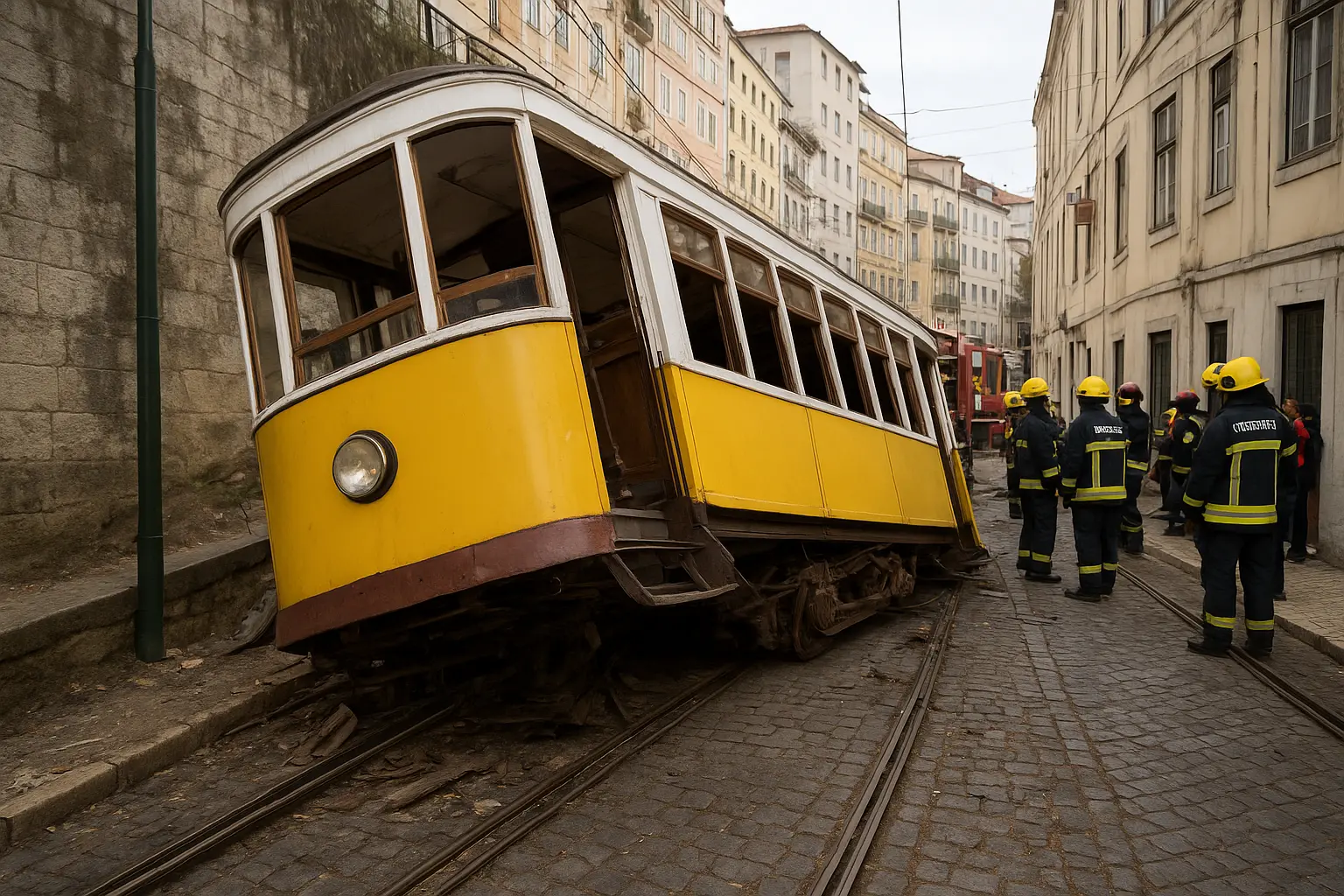
A tragic accident struck the Portuguese capital on Wednesday when a historic funicular railway in Lisbon derailed, leaving three people dead and several others injured. The incident occurred on one of the city’s most popular tourist attractions, shaking both locals and visitors who often rely on these iconic cable-driven carriages to navigate Lisbon’s steep hills.
According to local authorities, the derailment happened in the afternoon near the upper station of the railway. Emergency services were quickly dispatched, with firefighters, paramedics, and police arriving within minutes to assist victims and secure the site. Eyewitnesses described scenes of panic as the carriage suddenly jolted off the track, throwing passengers against the wooden interiors and shattering parts of the historic structure.
The funicular, which had been in operation for over a century, is considered a cultural landmark in Lisbon. Built in the late 19th century, it was designed to help residents and tourists easily travel up and down the city’s steep inclines. Over the decades, it has become not just a means of transport but also a major symbol of Lisbon’s heritage, drawing thousands of visitors every year.
Investigators are now working to determine the cause of the derailment. Preliminary reports suggest that mechanical failure or issues with the braking system may have contributed to the tragedy. Officials have confirmed that the funicular railway had undergone regular maintenance checks, though questions are now being raised about whether those inspections were sufficient and up to modern safety standards.
Lisbon Mayor Carlos Moedas expressed his condolences to the victims’ families, calling the accident a “devastating day for our city.” He also assured the public that a full investigation would be launched to ensure accountability and prevent future incidents. Portugal’s Prime Minister, António Costa, echoed these sentiments, stating that safety must remain the highest priority, especially for transport systems that carry both residents and international visitors daily.
Tourists who were nearby at the time of the accident described the shock of seeing emergency crews pull survivors from the wreckage. Many had gathered to take photographs of the funicular, which is widely featured in guidebooks and travel blogs as a quintessential Lisbon experience. Some said the accident would change the way they perceived what had always been considered a charming and safe ride.
This tragedy has sparked wider debates about the balance between preserving historic infrastructure and ensuring modern safety. While Lisbon’s funicular railways are cherished symbols of the city’s identity, experts warn that aging transport systems can pose hidden risks if not regularly upgraded. Calls are now growing for the government to conduct comprehensive inspections on all similar attractions across Portugal.
For the people of Lisbon, the derailment is not only a human tragedy but also a blow to the city’s cultural heritage. The funicular was more than a transport system—it was a living monument to Lisbon’s history. As the city mourns the lives lost, officials face pressure to ensure that such a disaster never happens again.
Reeling from Trump’s tariffs, India and China seek a business reboot