
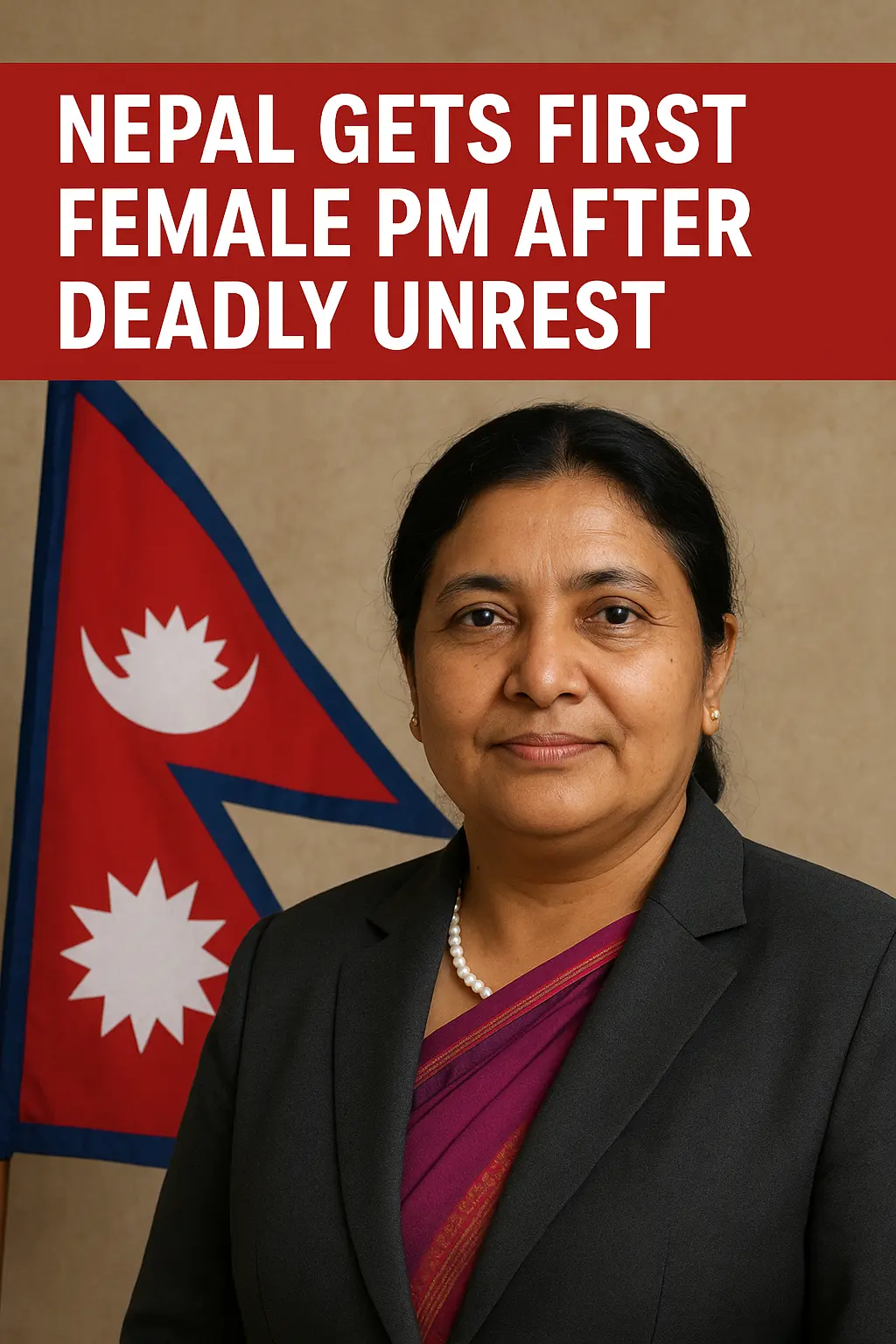
Nepal has witnessed a historic political shift as the country appointed its first female Prime Minister, following weeks of violent unrest that left dozens dead and hundreds injured. The appointment marks both a symbolic breakthrough in gender representation and a response to growing demands for stability after escalating political and social tensions.
The newly appointed Prime Minister, long regarded as a reformist and advocate for democratic values, takes office at a moment of intense national crisis. Protests erupted across the country in recent weeks, sparked by allegations of corruption, poor governance, and deepening economic hardship. Demonstrations, which began peacefully, soon turned violent, with security forces clashing with protesters in Kathmandu, Pokhara, and other major cities.
Human rights groups reported excessive use of force, while the government argued it was trying to restore order amid widespread arson, vandalism, and attacks on public offices. The unrest claimed at least 47 lives and left several regions in turmoil, forcing parliament to convene an emergency session to address the crisis.
In a surprise move, lawmakers rallied behind the female leader, who emerged as a consensus candidate after major parties failed to agree on a male successor to the outgoing Prime Minister. Analysts say her election was not only historic for gender equality but also a strategic decision aimed at calming public anger and projecting a new image of inclusivity.
Addressing the nation after her swearing-in, the new Prime Minister pledged to prioritize peace, accountability, and economic recovery. She promised independent investigations into the violence and vowed to hold both protesters and security forces accountable for unlawful actions. “Nepal cannot move forward if our people are divided by fear and bloodshed,” she declared. “My government’s first duty is to restore trust and rebuild hope.”
International reactions poured in, with neighboring India and China congratulating Nepal on the historic milestone. The United Nations called the appointment “a step forward for democracy and representation,” while urging the government to ensure justice for victims of the unrest.
Despite the optimism, challenges remain enormous. The country is grappling with rising inflation, youth unemployment, and political polarization. Critics argue that symbolic milestones alone will not solve Nepal’s structural problems. However, supporters believe her leadership could usher in a new chapter of governance, blending reform with reconciliation.
Also Read Protests hit France as new PM takes office
For ordinary Nepalis, the hope is that this appointment signals the beginning of a more inclusive and accountable political era. Whether the first female Prime Minister can overcome entrenched challenges and deliver stability remains to be seen, but her rise already marks a defining moment in the nation’s democratic journey.