
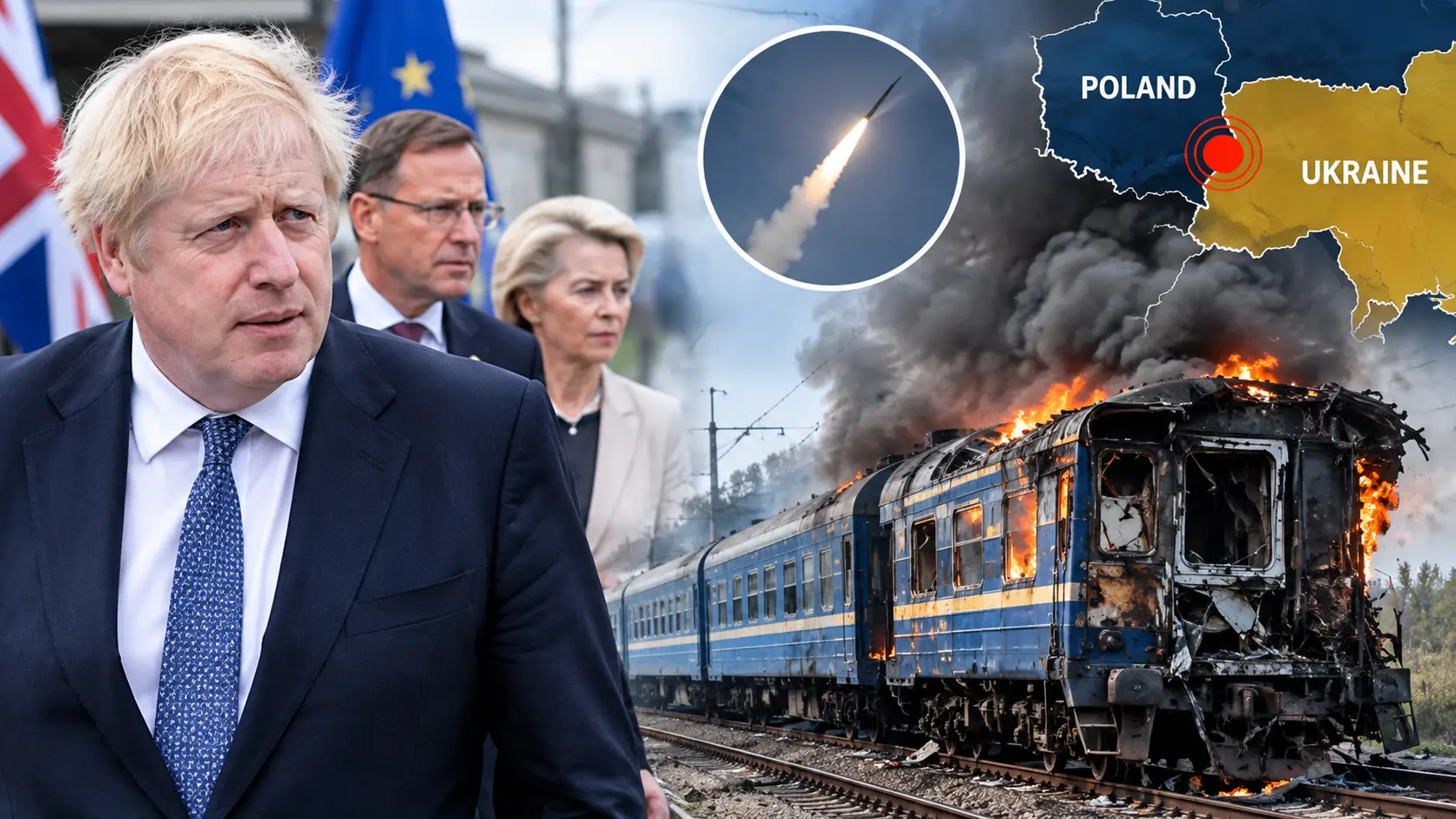
Russia struck a train near Poland’s border shortly after former British Prime Minister Boris Johnson and senior European officials had traveled through the area, raising fresh concerns about the security of transport routes close to Ukraine’s western frontier.
The incident occurred amid heightened tensions across the region as Russia continues its military campaign against Ukraine. The railway network in western Ukraine remains strategically important, carrying passengers, humanitarian supplies and other essential goods while also serving as a key connection to neighboring European countries.
The timing of the strike has attracted particular attention because Johnson and other European figures had recently passed through the region. However, the reported proximity in timing does not by itself establish that the train was deliberately targeted because of their presence. Ukrainian authorities are expected to investigate the circumstances and assess whether the railway infrastructure was specifically targeted.
Western Ukraine has generally been viewed as safer than areas closer to the front line, but Russian missile and drone attacks have increasingly reached infrastructure far from the main battlefield. Railway facilities have previously been targeted because of their importance to Ukraine’s military and civilian logistics.
The incident also highlights the continuing risks faced by European officials visiting Ukraine. International leaders have regularly traveled by rail because of security and logistical considerations, particularly when visiting Kyiv and other Ukrainian cities.
European governments are closely monitoring developments as Russia continues to strike Ukrainian infrastructure. Any evidence that a foreign delegation’s movements were intentionally targeted could significantly increase diplomatic tensions.
For Ukraine, protecting railway connections remains a major priority as the country depends heavily on its rail system during wartime. The latest strike is likely to renew discussions about air-defense coverage, infrastructure protection and the security of international visitors traveling through the country