
Iran sanctions

Iran faces ‘greatest financial offensive ever’, says US treasury secretary

Iran is facing what US Treasury Secretary Scott Bessent has described as “the single greatest financial offensive ever marshalled against an adversary,” as Washington intensifies its economic pressure on Tehran. The new campaign signals a major escalation in the Trump administration’s efforts to isolate Iran and cut off the financial resources supporting its government. Bessent described the strategy as an “economic D-Day,” aimed at severing Iran’s economic lifelines and increasing pressure on the country’s leadership. The United States has focused its attention not only on Iran’s domestic economy but also on foreign companies and countries that continue to conduct significant trade with Tehran. The measures could include expanded secondary sanctions, potentially forcing international businesses to choose between access to the US financial system and continued economic ties with Iran. The announcement comes at a time when Iran’s economy is already under severe strain. Its currency has fallen to record lows, while inflation and the wider economic impact of the continuing conflict have added further pressure on ordinary citizens. US officials believe greater financial isolation could weaken Iran’s ability to sustain its current policies and potentially reduce the need for further military action. However, Tehran has strongly rejected the US approach, arguing that decades of sanctions have failed to force Iran into submission. Iranian officials have warned of retaliation against countries that cooperate with Washington’s new measures, raising concerns about further instability across the Middle East and possible disruption to global energy markets. As tensions continue to rise, the economic confrontation between Washington and Tehran could have consequences far beyond the two countries, affecting international trade, oil supplies and diplomatic relations across the region.


Read More
Mark Carney tariffs

Carney calls Trump’s fresh tariffs a ‘miscalculation’ after trade talks collapse

Canadian Prime Minister Mark Carney has described new U.S. tariffs imposed by President Donald Trump as a “miscalculation” after last-minute trade negotiations between Canada and the United States collapsed. The talks had raised hopes of a broader agreement after both governments reported progress earlier this week. However, negotiations broke down late Friday after Canada objected to changes in the U.S. position that Carney said were unfair and economically damaging. The United States has now imposed 50% tariffs on a range of Canadian goods, escalating an already tense trade dispute. The new measures affect billions of dollars in Canadian exports, while important sectors such as steel, automobiles, lumber and other strategic industries remain caught in the wider tariff conflict. In a televised address, Carney said Canada had been negotiating in good faith but was unwilling to accept an agreement that compromised its economic interests or sovereignty. He argued that Washington had “asked too much and offered too little.” Canada has responded by preparing dollar-for-dollar retaliatory tariffs on selected U.S. products, including steel, dairy products, appliances, agricultural equipment, pulp and paper, and electronics. The new Canadian measures are scheduled to take effect after Labour Day. Carney warned that the dispute could increase costs for consumers and businesses on both sides of the border. However, he said Canada would focus on strengthening domestic industries and diversifying its international trading relationships. The collapse marks another major deterioration in the traditionally close economic relationship between Canada and the United States. With no immediate new negotiations scheduled, businesses are facing increased uncertainty over supply chains, investment and future market access.

Read More
Russia strikes

Russia ‘purposefully’ hit critical infrastructure in latest strikes, Kyiv mayor says

Russia deliberately targeted critical infrastructure in Kyiv during its latest wave of attacks, according to Kyiv Mayor Vitali Klitschko, as the Ukrainian capital continues to recover from one of the heaviest Russian bombardments in recent months. Klitschko said on Thursday that a critical infrastructure facility in Kyiv had been “purposefully” attacked, marking the first such strike on the capital in several months. The attack could disrupt hot-water supplies in parts of the Desnianskyi and Dniprovskyi districts, officials warned. The infrastructure strike came after a large overnight Russian missile and drone barrage that killed at least 16 people and injured more than 40 across Kyiv and surrounding areas, according to Ukrainian officials. Residential buildings, a school, a children’s hospital and a kindergarten were among the sites damaged. Ukraine’s authorities said the attacks involved a combination of ballistic, cruise and hypersonic missiles alongside a large number of drones. Ukrainian air defenses intercepted many of the incoming weapons, but officials said ballistic missiles remain particularly difficult to stop because of shortages of Patriot interceptor missiles. President Volodymyr Zelenskyy described the assault as calculated and called for stronger international support for Ukraine’s air-defense capabilities. Russia, meanwhile, said its strikes targeted Ukrainian military-related facilities, including drone-component production sites, a military depot and a logistics hub. The latest attacks have increased concerns over the safety of Kyiv’s civilian population and essential services. Ukrainian officials say the deliberate targeting of infrastructure could put additional pressure on residents, particularly as the country prepares for another difficult winter. The strikes also underline the continuing intensity of the Russia-Ukraine war, despite ongoing diplomatic efforts to seek an eventual resolution.

Read More
Trump Canada tariffs

Trump pauses new tariffs on Canada for three days, saying deal close

US President Donald Trump has paused planned new tariffs on Canadian imports for three days, saying the United States and Canada are close to reaching a trade agreement. The temporary suspension came just hours before the proposed 50% tariffs were due to take effect. Trump said the two countries had made significant progress toward a deal and that the additional time would allow officials to finalize the agreement. Canadian Prime Minister Mark Carney also confirmed that substantial progress had been made, although Canadian officials indicated that important issues still need to be resolved. The proposed tariffs would affect around $20 billion worth of Canadian goods, raising concerns among businesses on both sides of the border. Industries including dairy, alcohol, lumber and other sectors have been closely watching the negotiations because higher tariffs could increase costs and disrupt established supply chains. The latest development represents another attempt by Washington and Ottawa to prevent their trade dispute from escalating. The United States and Canada maintain one of the world’s largest bilateral trading relationships, making tariff decisions particularly important for manufacturers, exporters and consumers. Trump has also suggested that the long-discussed Keystone XL oil pipeline could potentially return to the negotiating table, adding another economic issue to the broader discussions. For now, the three-day pause provides both governments with a limited window to complete negotiations. If an agreement is finalized, it could prevent the immediate introduction of the steep tariffs and ease pressure on Canadian exporters. However, with several major issues still under discussion, the outcome remains uncertain.

Read More
Trump decoy plane

Members of Trump’s cabinet remained on decoy plane, after president’s quiet exit

President Donald Trump was secretly moved to another aircraft during his recent departure from Turkey, while several senior officials, White House staff and journalists remained aboard the plane they believed was carrying him. The unusual security operation was reportedly designed to protect the president from a credible threat linked to Iran. After attending a NATO summit in Ankara, Trump publicly boarded the older Air Force One, creating the impression that he would leave Turkey on the aircraft. However, security officials had arranged a covert switch. Trump was reportedly taken from the aircraft using an airport catering vehicle and transported to a smaller C-32A military jet. Defense Secretary Pete Hegseth also traveled separately with Trump. Meanwhile, members of Trump’s administration and the press corps stayed on the original aircraft. Reports identified senior officials including Secretary of State Marco Rubio, Treasury Secretary Scott Bessent and deputy White House chief of staff Stephen Miller as being among those aboard the decoy plane. The aircraft then departed Turkey without Trump, helping create uncertainty about his actual location. The operation reportedly followed intelligence indicating a potential threat against Trump. Security officials were concerned that the president’s movements could be monitored and that a recognizable aircraft might become a target. Trump later acknowledged that he had been moved because of security concerns, saying he faced serious threats. The revelation has raised questions about the risks faced by officials and journalists who unknowingly remained on the decoy aircraft. Supporters of the operation argue that presidential security can require deception and secrecy, while critics have questioned whether everyone aboard the aircraft was adequately informed about the potential danger. The incident highlights the extraordinary security measures surrounding presidential travel and the continuing concerns over threats against Trump.

Read More
Colombia earthquake

Dozens reported dead as buildings collapse in Colombia after magnitude 7.4 earthquakeDozens reported dead as buildings collapse in Colombia after magnitude 7.4 earthquake

A powerful 7.4-magnitude earthquake struck western Colombia on Monday, causing widespread destruction, collapsing buildings and leaving dozens of people dead. The earthquake hit at around 7:34 a.m. local time, with its epicentre near San José del Palmar in the Chocó region, according to reports. The strong tremor was felt across several parts of the country, including Pereira, Cali, Manizales and Quibdó. Buildings collapsed in several affected areas, trapping people beneath rubble and prompting emergency crews to launch urgent search-and-rescue operations. Hospitals were also placed under severe pressure as large numbers of injured residents arrived for treatment. At least 79 people had been reported dead in the latest accounts, although authorities warned that the number could rise as rescuers reach damaged buildings and isolated communities. Children were among those reported killed, while many others suffered injuries. Pereira was among the hardest-hit cities, with dozens of structures reportedly collapsing. Infrastructure was also damaged, including airports, creating additional challenges for emergency response teams. Residents were advised to remain outdoors because of the possibility of further aftershocks. The earthquake was followed by additional tremors, increasing fears that already weakened structures could collapse. Rescue workers, police, firefighters and medical teams have been deployed to affected areas as authorities assess the full scale of the disaster. Colombia’s newly inaugurated president, Abelardo de la Espriella, called for an emergency response and pledged government assistance to victims and affected communities. International support has also been offered as Colombia begins dealing with the extensive destruction. Officials continue to search collapsed buildings for survivors while assessing damage to homes, roads and public infrastructure. The final death toll is expected to remain uncertain until rescue operations are completed.

Read More
Israel rejects Gaza plan

Israel rejects Trump’s 15-point plan for Gaza, Netanyahu says

Israel has rejected a 15-point Gaza peace plan backed by US President Donald Trump, with Prime Minister Benjamin Netanyahu saying Israeli forces will not withdraw from the territory until Hamas is fully disarmed. The rejection creates a significant obstacle to Washington’s latest attempt to advance a political and security settlement in Gaza. The Trump-backed proposal seeks to establish a phased process in which Hamas would surrender its weapons while Israel gradually withdraws its forces from parts of Gaza. The plan also envisions an international stabilization force and a transition toward Palestinian civilian administration as part of longer-term reconstruction efforts. Netanyahu, however, has made clear that Israel’s position remains unchanged. He said there would be no Israeli military withdrawal before Hamas undergoes what he described as genuine and complete disarmament. Israeli officials have expressed concerns that withdrawing troops before Hamas gives up its weapons could allow the militant group to rebuild its military capabilities. The disagreement highlights growing tensions between the Trump administration and the Israeli government over how to implement the Gaza peace process. Although Trump has presented the proposal as an important step toward ending the conflict, Netanyahu’s opposition means negotiations face a major hurdle. Hamas has indicated that it remains committed to the broader roadmap but has demanded that Israel halt military operations and withdraw its forces as part of the process. The conflicting positions leave the key issue of sequencing unresolved: whether Hamas should disarm before an Israeli withdrawal or whether the two steps should happen simultaneously. The dispute could determine the future of the ceasefire, Gaza’s reconstruction and efforts to establish a new political and security framework for the territory. For now, Netanyahu’s rejection leaves Trump’s latest Gaza initiative facing serious uncertainty.

Read More
Todd Blanche Attorney General

Trump’s ex-lawyer Todd Blanche narrowly confirmed as US attorney general

Todd Blanche, a former personal lawyer for President Donald Trump, has been narrowly confirmed by the US Senate as the new Attorney General, giving the Trump administration a significant victory after weeks of political uncertainty. The Senate approved Blanche’s nomination by a 50-49 vote in an overnight session. Two Republican senators, Susan Collins of Maine and Lisa Murkowski of Alaska, joined Democrats in opposing his confirmation. Blanche previously served as Trump’s personal criminal defense lawyer before joining the Justice Department. He became deputy attorney general in 2025 and later took over as acting attorney general after Trump removed Pam Bondi from the position in April 2026. Trump formally nominated Blanche for the permanent position in June. His confirmation faced strong opposition from Democrats and concerns from some Republicans over his close relationship with Trump and questions about the independence of the Justice Department. During his confirmation hearing, Blanche rejected claims that he would simply follow Trump’s instructions, insisting that his responsibilities as attorney general would come before his previous role as the president’s lawyer. The nomination also drew controversy over a proposed $1.8 billion settlement and fund connected to Trump and his allies. Under pressure from Republican senators, Blanche agreed to withdraw the arrangement and address concerns surrounding its structure. As Attorney General, Blanche will oversee the Department of Justice, including federal law enforcement, national security investigations and major criminal prosecutions. His appointment is expected to keep the Justice Department closely aligned with Trump’s broader policy agenda. The narrow vote highlights the continuing political divisions surrounding the Trump administration and places Blanche under intense scrutiny as he begins his tenure as the country’s top federal law enforcement official.

Read More
make a feature image

Seven killed after Thai student opens fire at home and school

A deadly shooting in Thailand has left at least seven people dead and more than a dozen injured after a student allegedly opened fire first at a family home and later at a school in Nonthaburi province, north of Bangkok. The incident has shocked the country and renewed concerns over gun access and school safety. According to reports, the 14-year-old student first shot his grandparents at their home before travelling to Debsirin Nonthaburi School. He then opened fire on the school grounds, killing several members of staff. The gunman later shot himself and died from his injuries. Emergency services rushed to the school as students and teachers fled or sought shelter. At least 15 people were initially reported wounded, while other reports said more than 30 people suffered injuries of varying severity. Several of those hurt were reportedly in critical condition. Police said the weapon used in the attack was a handgun belonging to the teenager’s grandfather. Investigators are now working to establish what led to the shooting and whether the attack was planned in advance. Reports have pointed to possible academic and personal pressures, although authorities have not established a definitive motive. The tragedy has prompted fresh discussion about Thailand’s gun laws. The country has relatively high levels of civilian firearm ownership, and previous mass shootings have raised repeated questions about access to weapons and the effectiveness of existing restrictions. Prime Minister Anutin Charnvirakul has pledged to consider tougher gun-control measures following the latest attack. Authorities are also expected to examine security arrangements at schools and the availability of support for students facing severe stress. The shooting has left families, teachers and communities mourning as investigators continue to piece together the events surrounding one of Thailand’s latest school shooting tragedies.

Read More
Russia beach drone attack

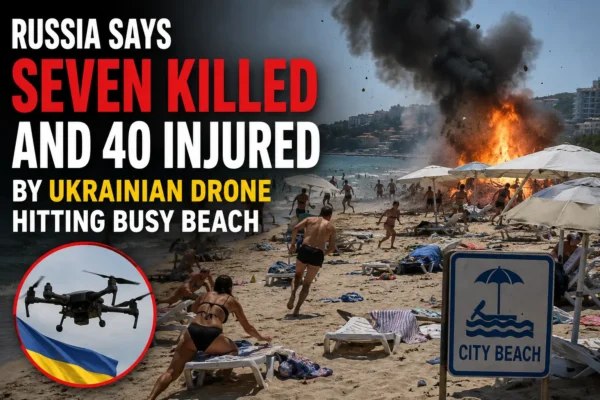
Russia says seven killed and 40 injured by Ukrainian drone hitting busy beach

Russia has said that at least seven people were killed and around 40 others injured after what officials described as a Ukrainian drone struck a busy public beach. The incident reportedly occurred during a crowded period, with families and tourists gathered along the shoreline when the attack took place. According to Russian authorities, the drone hit near a popular beach area, triggering explosions and widespread panic. Emergency services rushed to the scene to evacuate the injured, while firefighters and medical teams worked to secure the area and assist victims. Officials said several of the wounded were taken to nearby hospitals, with some reported to be in serious condition. Russian officials condemned the strike, accusing Ukraine of targeting civilians and public spaces. Authorities have launched an investigation into the incident and are assessing the full extent of the damage. Security measures in nearby coastal areas have also been increased following the attack. Ukraine had not immediately commented on Russia’s claims. Throughout the conflict, both Russia and Ukraine have exchanged accusations over attacks on civilian infrastructure and populated areas, while both sides have denied deliberately targeting civilians. The reported drone strike comes as aerial attacks continue to play a significant role in the ongoing war. Both countries have increasingly relied on drones for reconnaissance and long-range strikes, making air defense systems a critical part of the conflict. International observers continue to urge both sides to protect civilians and comply with international humanitarian law. The latest incident is expected to draw renewed attention from global leaders concerned about the escalating use of drones and the growing risks to non-combatants. As rescue operations continue, authorities are working to identify all victims and determine the precise circumstances surrounding the explosion. The incident highlights the continuing human toll of the war and the dangers faced by civilians living far from the front lines.

Read More