
Nigeria village attack

At least 30 killed in attack on Nigeria village

At least 30 people have been killed in a deadly attack on a village in Nigeria, underscoring the persistent insecurity affecting parts of the country. The assault reportedly took place in a rural community where gunmen stormed the area, opening fire on residents and setting homes ablaze, according to local officials and community leaders. Witnesses described scenes of chaos as attackers arrived in large numbers, moving from house to house in the early hours. Many victims were civilians, including women and children, who were caught off guard while sleeping or attempting to flee. Survivors said the attackers used automatic weapons and acted with apparent coordination, suggesting a well-organised assault rather than a random act of violence. Local authorities confirmed that at least 30 bodies have been recovered so far, though the death toll may rise as search and rescue operations continue in surrounding areas. Several people were also injured and taken to nearby medical facilities, many of which are poorly equipped to handle mass casualty situations. Dozens of homes were destroyed, leaving families displaced and in urgent need of shelter, food, and medical assistance. The Nigeria village attack has renewed concerns about the government’s ability to protect vulnerable rural communities. In recent years, villages across different regions have faced repeated attacks linked to armed groups, banditry, and long-standing communal tensions. These incidents often occur in remote areas where security presence is limited and response times are slow. Security forces have been deployed to the affected area, and officials say an investigation is underway to identify and apprehend those responsible. Authorities have also promised increased patrols to prevent further violence. However, residents remain fearful, warning that without sustained security measures, similar attacks could happen again. The tragedy highlights the broader challenge Nigeria faces in addressing insecurity, restoring public confidence, and ensuring that civilians in rural communities are protected from escalating violence.

Read More
US security guarantee for Ukraine

US offered Ukraine 15-year security guarantee, Zelensky says

The United States offered Ukraine a 15-year security guarantee as part of ongoing discussions over long-term support and post-war stability, President Volodymyr Zelensky has said. The proposal, according to Zelensky, is intended to provide Kyiv with sustained military, political, and strategic backing as the country continues to defend itself against Russia’s invasion and plan for future security arrangements. Zelensky described the offer as a significant signal of Washington’s commitment to Ukraine’s sovereignty and territorial integrity. He noted that the guarantee would extend well beyond the immediate conflict, covering a period in which Ukraine would focus on rebuilding its armed forces, strengthening institutions, and integrating more deeply with Western security frameworks. While the precise legal and military details have not been made public, Zelensky emphasized that the duration itself reflects a shift toward longer-term thinking among Ukraine’s partners. Ukrainian officials have consistently argued that temporary aid packages are not sufficient to deter future aggression. From Kyiv’s perspective, a multi-year security guarantee could help ensure continuity of military assistance, intelligence cooperation, and training, while also reassuring investors and allies that Ukraine will not be left exposed once active hostilities subside. Zelensky said such guarantees are critical for preventing a repeat of past scenarios in which Ukraine found itself without enforceable security assurances. The proposed 15-year framework is also seen as a bridge toward broader security integration, including eventual NATO membership, which remains Ukraine’s strategic objective. Zelensky reiterated that any guarantees offered now should complement, not replace, Ukraine’s long-term goal of joining the alliance. Discussions over the guarantee come amid intensified diplomatic efforts to shape Ukraine’s future security architecture. While negotiations are ongoing and no final agreement has been announced, Zelensky said the US proposal demonstrates growing recognition that Ukraine’s security is closely linked to wider European and transatlantic stability.

Read More
Zelensky Trump talks

Zelensky plans to meet Trump on Sunday for talks on ending Russian war

Ukrainian President Volodymyr Zelensky has announced plans to meet former U.S. President Donald Trump on Sunday for high-level discussions aimed at ending the ongoing Russian war against Ukraine. The proposed meeting comes at a critical moment in the conflict, as fighting continues along multiple фронts and diplomatic efforts intensify ahead of key political developments in the United States and Europe. According to officials close to Kyiv, the talks will focus on potential pathways toward a negotiated settlement, security guarantees for Ukraine, and the future role of the United States in supporting Kyiv militarily and economically. Zelensky has repeatedly stressed that any peace initiative must respect Ukraine’s sovereignty and territorial integrity, signaling that Kyiv will not accept compromises that legitimize Russian control over occupied regions. The planned Zelensky Trump talks are significant because Trump has publicly claimed that he could end the war quickly if returned to office, though he has not provided detailed proposals. His statements have sparked concern among some Western allies, who fear a possible reduction in U.S. support for Ukraine. At the same time, Trump’s influence within American politics makes the meeting strategically important for Zelensky, who is seeking assurances that bipartisan backing for Ukraine will continue regardless of future political shifts in Washington. For Zelensky, the meeting also serves a broader diplomatic purpose. Ukraine is attempting to maintain momentum behind international efforts to pressure Moscow through sanctions while keeping open the possibility of dialogue under conditions acceptable to Kyiv. Ukrainian officials argue that Russia must demonstrate genuine willingness to end hostilities, including halting missile attacks and withdrawing troops, before meaningful negotiations can proceed. Trump, for his part, has positioned himself as a deal-maker capable of leveraging U.S. influence to bring both sides to the table. Supporters of his approach argue that prolonged war risks further destabilizing global energy markets and European security. Critics, however, warn that pushing for a rapid settlement without firm guarantees could leave Ukraine vulnerable to future aggression. The outcome of the Zelensky Trump talks remains uncertain, but analysts agree the meeting underscores the growing intersection between global diplomacy and domestic U.S. politics. With the war entering another protracted phase, Ukraine is working to ensure that its interests remain central to any discussion involving major powers. As Sunday’s meeting approaches, expectations are cautious. Ukrainian officials emphasize that dialogue does not equal concession, while observers note that any credible plan to end the Russian war will require coordination with European allies and clear terms that uphold international law. Regardless of immediate results, the talks highlight Ukraine’s continued efforts to engage all influential actors in pursuit of a just and lasting peace.

Read More
Imran Khan state gift fraud case

Imran Khan and wife given further jail terms after state gift fraud case

Former Pakistan Prime Minister Imran Khan and his wife Bushra Bibi have been handed additional jail sentences in the Imran Khan state gift fraud case, deepening the legal troubles facing the former leader amid an already volatile political climate. The verdict was delivered by a special accountability court, which found Imran Khan and Bushra Bibi guilty of illegally retaining and selling state gifts received during Khan’s tenure as prime minister. The court ruled that the couple violated established rules governing the declaration, purchase, and disposal of gifts received from foreign dignitaries, causing financial loss to the national exchequer. According to prosecutors, Imran Khan failed to properly disclose several high-value gifts and did not pay the required amount to retain them legally. Bushra Bibi was charged as an accomplice for her alleged role in facilitating the concealment and sale of these items. The court rejected defense arguments that the gifts were lawfully obtained and dismissed claims that the case was politically motivated. The latest sentences will run alongside Khan’s existing prison terms in other cases, further reducing any immediate prospect of his release. Imran Khan has been incarcerated since 2023 and faces multiple convictions related to corruption, misuse of authority, and breaches of official conduct. His legal team has announced plans to challenge the ruling in higher courts, arguing that due process was not followed and evidence was selectively presented. The decision has sparked strong reactions from Khan’s Pakistan Tehreek-e-Insaf party, which condemned the judgment as part of a broader campaign to sideline the former prime minister ahead of future political developments. Supporters staged protests in several cities, while authorities increased security to prevent unrest. The Imran Khan state gift fraud case is widely seen as a significant chapter in Pakistan’s ongoing accountability drive, highlighting the strict scrutiny faced by former officeholders. As appeals proceed, the case is expected to remain a focal point in Pakistan’s legal and political discourse. Former EU top diplomat Mogherini accused in fraud investigation WabsTalk Spoken English and Public Speaking Institute

Read More
Putin vows no more wars

Putin vows no more wars if West treats Russia with respect

Russian President Vladimir Putin has declared that Russia would have no need to engage in further wars if Western nations treated Moscow with what he described as “basic respect” and acknowledged its security interests. Speaking at a public forum, Putin framed Russia’s recent confrontations with the West as the result of prolonged disregard for Russian concerns rather than deliberate expansionism. Putin argued that Russia has repeatedly sought dialogue on European security, NATO enlargement, and strategic stability, but said those efforts were dismissed or ignored. According to him, the continued expansion of Western military alliances toward Russia’s borders created an environment in which conflict became inevitable. He insisted that Moscow’s actions should be viewed as defensive responses to pressure rather than aggressive ambitions. The Russian leader emphasized that his government does not seek perpetual confrontation. He stated that Russia’s primary goal is stability, economic development, and predictable relations with major powers. “If Russia is respected and its interests are taken seriously, there will be no reason for wars,” Putin said, adding that cooperation would benefit both Russia and the wider international system. Western governments, however, remain skeptical of such assurances. Many argue that Russia’s actions in Ukraine and its broader military posture contradict claims of purely defensive intent. They maintain that respect in international relations must be grounded in adherence to sovereignty, territorial integrity, and international law. Despite these differences, Putin signaled that Moscow remains open to renewed dialogue, particularly on arms control and regional security arrangements. He suggested that a multipolar world order, where no single bloc dominates global decision-making, could reduce tensions and lower the risk of future conflicts. The remarks come at a time of heightened geopolitical strain, with relations between Russia and the West at their lowest point in decades. Whether Putin’s statement marks a genuine opening for diplomacy or a rhetorical effort to shift responsibility remains uncertain. Still, the message underscores Russia’s consistent position that recognition and respect, rather than pressure and isolation, are key to avoiding further wars.

Read More
Australian PM announces crackdown on hate speech after Bondi shooting

Australian PM announces crackdown on hate speech after Bondi shooting

Australian Prime Minister Anthony Albanese has announced a sweeping crackdown on hate speech following the deadly Bondi Junction stabbing, as authorities continue to investigate the attack and its broader social impact. The move reflects growing concern within the government about rising extremist rhetoric, misinformation, and online abuse, particularly in the aftermath of violent incidents that risk inflaming community tensions. Speaking after high-level security briefings, Albanese said the government would not allow acts of violence to be exploited to spread hatred or division. He emphasized that Australia’s multicultural society depends on mutual respect and that hate speech, whether online or offline, poses a direct threat to social cohesion and public safety. The prime minister stressed that freedom of expression does not extend to inciting violence or targeting communities based on race, religion, or ethnicity. The proposed crackdown is expected to involve tougher enforcement of existing laws alongside potential legislative reforms. These may include expanded powers for regulators to act against online platforms that fail to remove harmful content quickly, as well as stronger penalties for individuals and groups found to be promoting hate-based narratives. Government officials indicated that technology companies would be required to take greater responsibility for monitoring and moderating extremist material circulating on their services. The Bondi shooting has reignited debate in Australia over the role of social media in amplifying misinformation and hateful commentary during crises. In the hours following the attack, false claims and inflammatory posts spread rapidly, prompting police and community leaders to urge the public to rely on verified information. Albanese said such behavior not only disrespects victims but also risks inspiring further violence. Community leaders and advocacy groups have broadly welcomed the government’s stance, arguing that decisive action is necessary to protect vulnerable communities. However, some civil liberties organizations have cautioned that any new measures must be carefully designed to avoid overreach and to safeguard legitimate free speech. The prime minister acknowledged these concerns, stating that consultations would be held to ensure a balanced approach. In parallel with the hate speech crackdown, the government reaffirmed its commitment to mental health support, community policing, and counter-extremism programs. Albanese noted that preventing violence requires addressing underlying social issues, including isolation, radicalization, and access to support services. As investigations into the Bondi attack continue, the government’s response signals a broader effort to reinforce national unity and resilience. Albanese concluded that moments of tragedy must not be allowed to fracture society, adding that Australia’s strength lies in standing together against hatred, fear, and division.

Read More
Bondi shooting

Naveed Akram charged with 15 counts of murder over Bondi shooting

Australian authorities have formally charged Naveed Akram with 15 counts of murder in connection with the deadly Bondi shooting, marking a major development in one of the country’s most shocking acts of mass violence. Prosecutors allege that the attack unfolded in a crowded public area, triggering widespread panic and a rapid emergency response as police moved to secure the scene and protect civilians. According to investigators, the charges stem from a single, sustained incident in which multiple victims were killed. Law enforcement officials say extensive forensic work, witness testimony, and surveillance analysis were used to reconstruct the sequence of events and support the prosecution’s case. The scale of the charges reflects the number of victims involved and underscores the seriousness with which authorities are pursuing accountability. The Bondi shooting has reignited national debate over public safety, counter-terrorism preparedness, and the adequacy of existing threat-assessment mechanisms. Security experts note that incidents of this nature place extraordinary strain on emergency services and require seamless coordination between police, medical responders, and local authorities. In the immediate aftermath, hospitals were placed on high alert while specialized units conducted area sweeps to rule out additional threats. Legal analysts caution that the case will likely be complex and closely scrutinized, given the gravity of the allegations and the public interest involved. If convicted on all counts, Akram would face the most severe penalties available under Australian law. Court proceedings are expected to examine motive, intent, and the chain of events leading up to the shooting, as well as the response by authorities. For the Bondi community, the charges represent a step toward justice, though the emotional impact of the tragedy remains profound. Memorials and calls for reform continue as families seek answers and assurances that lessons will be learned to prevent future attacks.

Read More
Trump criticism

Trump criticises ‘decaying’ European countries and ‘weak’ leaders

Former U.S. President Donald Trump has launched a fresh round of criticism at European nations, accusing them of being “decaying societies” led by “weak and visionless leaders.” His remarks, delivered during a rally-style event in Florida, have reignited debate over the future of transatlantic relations and the growing divide between Washington and its traditional allies. Trump argued that several European countries have “lost their way,” describing them as economically stagnant and politically fractured. He claimed that European leaders had allowed their nations to “decline through uncontrolled migration, crumbling infrastructure, and failed energy policies.” According to him, these issues reflect a broader “collapse of leadership” across the continent. Supporters at the event applauded as he issued warnings that America must not “follow Europe down the same path.” Throughout his speech, Trump framed Europe as an example of what the United States should avoid, rather than a model to emulate. He stated that Europe’s economic struggles, inflation pressures, and political turmoil demonstrate a “system that no longer works.” He directly criticised several unnamed European heads of government, calling them “timid, weak and incapable of defending their own people.” While he did not specify individual leaders, observers believe his comments were aimed at governments that have clashed with him over policy in the past. Trump also condemned European defence spending, arguing that many nations remain overly dependent on the United States for military protection. He insisted that NATO allies still “take advantage of America,” renewing his long-standing claim that European countries fail to carry their share of the security burden. He further suggested that if Europe continues “failing to defend itself,” the U.S. will eventually reconsider its commitments. These remarks come at a time when Europe faces a complex geopolitical landscape, including war in Ukraine, rising far-right movements, and economic uncertainty. European officials have not yet responded directly to Trump’s latest statements, but analysts say such comments could deepen mistrust between the two sides. Some experts noted that Trump’s rhetoric may influence Republican foreign-policy direction, especially as debates intensify around funding for Ukraine, NATO contributions, and broader Western unity. Meanwhile, Trump’s critics argue that his comments undermine longstanding alliances and weaken America’s strategic position. They warn that labeling European nations as “decaying” risks alienating key partners at a time when global cooperation is essential. Others see the remarks as an effort to appeal to voters who distrust international institutions and prefer a more isolationist vision. As Trump continues to shape political discourse, his harsh critique of Europe underscores the potential for renewed tension in U.S.–EU relations, particularly if he plays a significant role in future American policymaking.

Read More
US asylum pause

US halts all asylum claim decisions after National Guard shooting

The United States has announced a nationwide halt on all asylum claim decisions following the fatal shooting of two National Guard soldiers near the White House. The move marks one of the most sweeping pauses in the country’s modern asylum system and comes as federal officials launch an extensive security review into how the suspect — reportedly an asylum recipient — was vetted before entering the country. According to officials, the US asylum pause affects every category of affirmative asylum processing. Asylum officers have been instructed to continue reviewing files but may not approve, deny, or close any cases until further notice. All upcoming decision-related appointments have been canceled, leaving thousands of applicants in legal limbo. The freeze extends to individuals from all nationalities, including those who arrived through special programs created for vulnerable populations. Authorities say the temporary suspension is intended to ensure that vetting and background-check procedures meet the “highest security standards.” The shooting has intensified political debate in Washington, with lawmakers demanding tougher immigration controls and clearer screening protocols for individuals seeking protection through the asylum system. For applicants, the pause introduces uncertainty into an already backlogged process. Many asylum seekers rely on timely decisions to secure work authorization, reunite with family members, and stabilize their lives in the United States. Advocacy groups have raised concerns that the indefinite nature of the freeze could result in prolonged hardship and undermine protections for those fleeing persecution. Trump says US will pause migration from ‘third-world countries’ The federal government has not indicated when the pause will be lifted. Officials have stated only that decisions will resume once the review is complete and new guidance is in place. As the investigation into the shooting continues, the announcement signals a broader shift toward tightened immigration policies and heightened scrutiny of asylum claims nationwide.

Read More
Zelensky

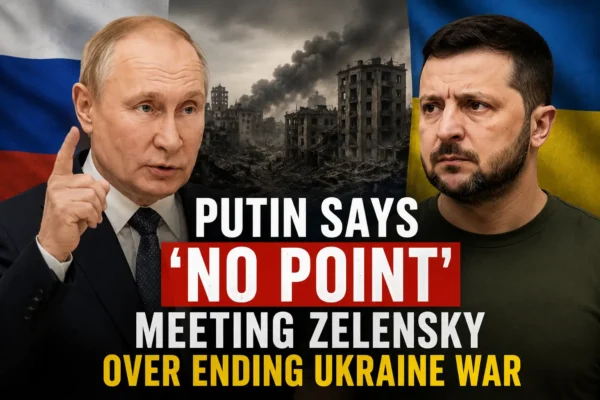
Zelensky warns against giving away territory as latest Ukraine talks end

Ukrainian President Volodymyr Zelensky has issued a firm warning against any proposals that involve surrendering territory to Russia, as the latest round of diplomatic discussions concluded without major breakthroughs. Speaking after the talks, Zelensky emphasized that Ukraine’s sovereignty and territorial integrity are non-negotiable, underscoring that no peace plan can succeed if it compromises the nation’s internationally recognized borders. The talks, which brought together Ukrainian officials and a coalition of international mediators, focused on exploring new frameworks for a potential ceasefire and long-term security guarantees. While some participants suggested considering territorial concessions as part of a broader compromise, Kyiv firmly rejected this approach. Zelensky stressed that accepting such terms would not only undermine Ukraine’s future security but also set a dangerous precedent for global norms surrounding territorial aggression. Despite the lack of concrete progress, diplomats described the negotiations as “constructive,” noting that all sides remain committed to pursuing a peaceful resolution. Ukraine reiterated that any sustainable peace agreement must include the full withdrawal of Russian forces, the return of all occupied regions, and binding security assurances to prevent future escalations. Zelensky also called on international partners to maintain strong political and military support for Ukraine, warning that weakening assistance would embolden Russian aggression and prolong the conflict. He highlighted the importance of unity among allies, especially as winter approaches and fighting continues on multiple fronts. While the talks ended without major advancements, the Ukrainian government said discussions would continue in the coming weeks. For Kyiv, the stance remains clear: peace is possible, but not at the cost of territorial loss or national sovereignty.

Read More