Trump Nato troops Afghanistan remarks

Trump remarks about Nato troops in Afghanistan are ‘insulting’, says Starmer

UK Labour leader Sir Keir Starmer has condemned remarks by former US president Donald Trump about Nato troops in Afghanistan, describing them as “insulting” and disrespectful to allied forces who served and died alongside American soldiers during the conflict. Starmer said Trump’s comments undermined the sacrifices made by British and other Nato personnel over two decades of operations in Afghanistan. He stressed that the mission was conducted collectively, under Nato command, and involved shared decision-making and shared risk. “British troops stood shoulder to shoulder with US forces,” Starmer said. “Any suggestion that allied contributions were secondary or unworthy is deeply offensive to the families of those who lost their lives.” Trump, who has repeatedly criticised the Afghanistan war and the chaotic withdrawal in 2021, has in recent remarks questioned the value of Nato involvement and accused allies of failing to meet their responsibilities. While Trump did not single out the UK by name, his broader comments about allied performance prompted a strong reaction in London. The UK lost 457 service personnel during the Afghanistan campaign, making it the second-largest contributor of troops after the United States. British forces played key roles in combat operations, training Afghan security forces, and reconstruction efforts, particularly in Helmand province. Starmer said it was legitimate to debate the political decisions that led to the war and the manner of the withdrawal, but argued that criticism should never be directed at the troops themselves. He warned that dismissive rhetoric risked damaging trust within Nato at a time of heightened global insecurity. The comments also drew criticism from senior military figures and veterans’ groups, who said allied unity was essential for the credibility of the alliance. With Trump campaigning for a return to the White House and questioning long-standing US security commitments, the row is likely to fuel further debate in Europe about the future of Nato and the reliability of US leadership within the alliance.

Read More
Ukraine peace talks

US optimistic on end to war as Zelensky says Ukraine to talk to US and Russia

The United States has expressed cautious optimism that the war in Ukraine could move closer to an end, as President Volodymyr Zelensky confirmed that Kyiv is preparing to engage in talks involving both Washington and Moscow. The comments signal a potential diplomatic opening after months of intense fighting, stalled negotiations, and growing international concern over the long-term costs of the conflict. US officials say recent diplomatic contacts and behind-the-scenes discussions have created a window for dialogue, even as military operations continue on the ground. Washington has stressed that any peace process must respect Ukraine’s sovereignty and territorial integrity, while also being grounded in realistic security guarantees that can prevent a renewed conflict in the future. American officials have framed their optimism carefully, acknowledging that previous attempts at talks have failed and that trust between the parties remains extremely low. Zelensky, speaking to reporters, said Ukraine is ready to participate in discussions that include both the United States and Russia, but made clear that Kyiv’s core principles have not changed. He emphasized that Ukraine will not accept any settlement imposed without its consent and that talks must focus on ending hostilities while ensuring long-term stability. According to Zelensky, US involvement is critical to balancing negotiations and ensuring that Ukraine’s interests are fully represented. Russia has not publicly detailed its position on the proposed talks, though officials in Moscow have repeatedly said they are open to dialogue under what they describe as “new realities” on the ground. Analysts warn that this gap in expectations could complicate negotiations, particularly on sensitive issues such as territorial control, sanctions, and security arrangements. For now, the prospect of Ukraine peace talks has raised cautious hopes among allies and international observers. While major obstacles remain, the willingness of Kyiv, Washington, and potentially Moscow to re-engage diplomatically suggests that efforts to end the war are entering a new, if uncertain, phase.

Read More
Trump Greenland negotiations

Trump wants ‘immediate negotiations’ to acquire Greenland but insists he ‘won’t use force’

Former US President Donald Trump has renewed his controversial interest in Greenland, calling for “immediate negotiations” to acquire the strategically vital Arctic island while insisting that the United States would not use military force to achieve the goal. The remarks have reignited international debate over sovereignty, security, and the future balance of power in the Arctic region. Trump framed his position as a matter of national and global security, arguing that Greenland’s location and natural resources make it critical at a time of rising competition among major powers. He stressed that his approach would rely on diplomacy and economic engagement rather than coercion, saying that negotiations could bring mutual benefits to both the United States and Greenland’s population. According to Trump, closer ties would lead to investment, infrastructure development, and enhanced security cooperation. Greenland, an autonomous territory within the Kingdom of Denmark, has repeatedly rejected the idea of being sold or transferred to another country. Danish officials have reaffirmed that Greenland is not for sale, while Greenlandic leaders have emphasized the island’s right to self-determination. Trump’s latest comments nevertheless place renewed pressure on Copenhagen and Nuuk, particularly as Arctic shipping routes open and interest in rare earth minerals intensifies. Analysts note that Trump’s insistence on non-forceful methods appears designed to soften criticism that his proposal undermines international norms. However, critics argue that even pushing for acquisition risks destabilizing relations with allies and sets a troubling precedent. Supporters counter that strategic realities require bold thinking and that negotiations do not automatically imply an outcome. The episode highlights the growing geopolitical importance of the Arctic, where climate change, security concerns, and resource competition intersect. Whether Trump’s call for talks gains traction or fades as diplomatic resistance hardens, the renewed focus on Greenland underscores how Arctic politics are moving closer to the center of global strategic discussions.

Read More
Pakistan shopping mall fire

Six killed in Pakistan shopping mall fire

A deadly Pakistan shopping mall fire has left at least six people dead and many others injured after a massive blaze tore through a busy commercial complex in Karachi, underscoring persistent concerns over fire safety in urban centers. The fire broke out late at night in a multi-storey shopping plaza located in the densely populated Saddar area, one of the city’s oldest and busiest districts. According to local authorities, the blaze spread rapidly through the building due to the presence of highly flammable materials stored inside shops, including textiles, plastics, and cosmetics. Thick smoke quickly filled the mall, trapping people inside and making evacuation extremely difficult. Firefighters battled the flames for several hours, facing intense heat and poor visibility as parts of the structure became unstable. Officials confirmed that six people lost their lives, including at least one firefighter who died while attempting to contain the fire and rescue those trapped. Several others were injured and rushed to nearby hospitals, with some reported to be in serious condition. Rescue teams continued search operations well into the next day amid fears that more victims could be buried under debris following partial structural collapse. Preliminary investigations suggest that an electrical short circuit may have triggered the fire, though authorities have stated that a full inquiry is underway to determine the exact cause. Government officials expressed condolences to the families of the victims and praised emergency responders for their efforts under dangerous conditions. The Pakistan shopping mall fire has reignited debate over inadequate fire safety measures, poor enforcement of building codes, and overcrowded commercial spaces in major cities. Safety experts warn that without stricter inspections, functional fire exits, and modern firefighting systems, similar tragedies are likely to recur. The incident serves as a grim reminder of the urgent need for improved safety standards to protect lives in Pakistan’s urban commercial hubs.

Read More
European military personnel in Greenland

European military personnel arrive in Greenland as Trump says US needs island

European military personnel have arrived in Greenland amid rising geopolitical tension after former US President Donald Trump reiterated claims that the United States needs control of the strategically located Arctic island. The deployment, involving forces from several European nations, is being framed as a defensive and cooperative measure aimed at reinforcing security and stability in the High North. Greenland, an autonomous territory of Denmark, has long been viewed as critical due to its position between North America and Europe, its proximity to Arctic shipping routes, and its growing importance in missile defense and surveillance systems. European officials say the presence of military personnel is intended to strengthen joint training, intelligence sharing, and preparedness in response to increasing activity by global powers in the Arctic region. Trump’s renewed remarks have reignited debate over Greenland’s strategic value. He has argued that US control of the island would be essential to counter the influence of Russia and China, both of which have expanded their Arctic ambitions in recent years. While Washington already maintains a military presence at Pituffik Space Base, formerly Thule Air Base, Trump’s comments suggest a far broader vision for American involvement. European leaders, however, have stressed respect for Greenlandic self-rule and Danish sovereignty. They argue that enhanced European military cooperation on the island demonstrates a collective commitment to security without undermining political autonomy. Danish authorities have welcomed allied support, noting that the Arctic is becoming an increasingly contested space as climate change opens new sea lanes and access to natural resources. For Greenland’s government, the situation highlights the delicate balance between security interests and self-determination. Local officials have emphasized that decisions about the island’s future must involve Greenlanders themselves, not be dictated by external powers. As great power competition intensifies in the Arctic, the arrival of European military personnel in Greenland underscores how the island has become a focal point of global strategic calculations, with implications far beyond the frozen north.

Read More
Iran warns it will retaliate if US attacks

Iran warns it will retaliate if US attacks as protesters defy crackdown

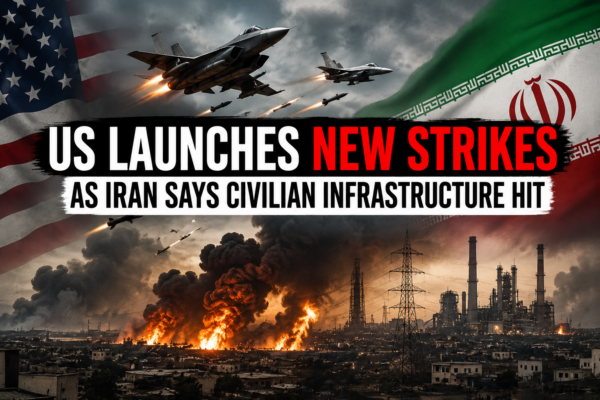
Iran issued a stark warning that it will retaliate if the United States attacks, as nationwide protests continued despite an increasingly severe government crackdown. The warning came from Parliament Speaker Mohammad Baqer Qalibaf, who told lawmakers that any U.S. military strike on Iranian territory would be met with force against U.S. and allied interests, including regional military bases and Israel, which Tehran labels “legitimate targets” in such an event. This threat underscores the heightened tension between Tehran and Washington amid one of the most sustained protest movements in years. The demonstrations began in late December in response to deepening economic hardship, especially soaring inflation, and have spread to more than 100 cities and towns. Protesters are demanding systemic change, even as state authorities escalate their response with lethal force, mass arrests, and a widespread internet blackout that limits outside reporting. Verified videos show fierce clashes between protesters and security forces in major cities. U.S. President Donald Trump has publicly expressed support for the demonstrators, saying the United States “stands ready to help” and warning Iran that any further killings could provoke a strong response. In parliament, some Iranian lawmakers responded to the U.S. rhetoric with chants of “Death to America,” reflecting hardline sentiment within the regime. Iranian authorities have also toughened domestic rhetoric, with the attorney general declaring participants in the protests as “enemies of God,” a designation under Iranian law that carries the death penalty. Despite escalating violence and significant casualties, protesters continue to defy the crackdown, pressing ahead with demonstrations that show widespread public discontent with the clerical establishment. The situation remains volatile, with the potential for international military escalation if diplomatic or political solutions are not pursued.

Read More
US ownership of Greenland

Trump says US needs to ‘own’ Greenland to prevent Russia and China from taking it

Former US President Donald Trump has once again reignited controversy by arguing that the United States needs to “own” Greenland in order to prevent Russia and China from expanding their influence in the Arctic. Speaking during a campaign-style appearance, Trump framed Greenland as a strategic necessity, claiming its location and resources make it vital to US national security in an increasingly competitive global environment. Trump said the Arctic is becoming a new frontline of great-power rivalry, with Russia strengthening its military presence in the region and China seeking greater access through economic and scientific initiatives. In this context, he argued that US ownership of Greenland would provide Washington with a decisive advantage, ensuring control over critical shipping routes, natural resources, and missile defense positioning. According to Trump, failing to act could allow rival powers to gain a foothold that would threaten long-term American interests. WABSTALK Greenland, an autonomous territory within the Kingdom of Denmark, has previously rejected any notion of being sold, and Danish leaders have described such proposals as unrealistic. However, Trump has maintained that the issue is not about real estate, but about geopolitics. He portrayed Greenland as central to Arctic security, highlighting its proximity to North America and its importance in monitoring activities in the North Atlantic and Arctic regions. The comments have drawn mixed reactions. Supporters say Trump is raising legitimate concerns about Arctic competition and the need for the US to think strategically about future threats. Critics, however, argue that the rhetoric oversimplifies complex diplomatic relationships and risks straining ties with key allies, particularly Denmark and other NATO partners. Despite the backlash, Trump’s remarks underscore how the Arctic has moved from a peripheral concern to a major strategic priority. As climate change opens new sea lanes and access to resources, competition among major powers is intensifying. Whether or not US ownership of Greenland is realistic, the debate reflects broader anxieties about maintaining influence in a rapidly changing global landscape. Trump says US will ‘run’ Venezuela until ‘safe transition can take place’

Read More
Vance criticises Denmark over Greenland

Vance criticises Denmark and Europe’s handling of ‘critical’ Greenland

US Vice President JD Vance has criticised Denmark and other European countries over what he described as a failure to adequately manage and protect the “critical” strategic interests surrounding Greenland, reigniting debate over Arctic security and transatlantic responsibility. Speaking at a policy forum in Washington, Vance argued that Europe has underestimated Greenland’s growing importance at a time of rising geopolitical competition in the Arctic. Vance said Greenland occupies a central position in global security, citing its location between North America and Europe and its relevance to missile defence, satellite tracking, and emerging Arctic shipping routes. He warned that increased Russian and Chinese activity in the region demands a more serious and coordinated response, adding that “complacency from European capitals” risks leaving strategic gaps that adversaries could exploit. While stressing that the United States respects Denmark’s sovereignty over Greenland, Vance questioned whether Copenhagen and its European partners have invested sufficiently in defence infrastructure and economic resilience on the island. He pointed to ageing military facilities, limited surveillance capacity, and social challenges in Greenlandic communities as issues that, in his view, require urgent attention rather than symbolic commitments. European officials pushed back on the remarks, with Danish representatives noting that Denmark has increased defence spending in the Arctic and works closely with NATO allies, including the US, on security planning. They argued that Greenland’s future must be shaped with the consent of its population and warned against framing the issue solely through a military lens. Greenland’s government responded cautiously, welcoming international cooperation but emphasising autonomy and local development. Leaders in Nuuk reiterated that economic investment, climate adaptation, and respect for indigenous priorities are as important as defence considerations. WABSTALK Vance’s comments reflect a broader shift in US foreign policy rhetoric, which increasingly links Arctic strategy to global power competition. As climate change accelerates ice melt and opens new routes and resources, Greenland is likely to remain a focal point of debate between Washington, Copenhagen, and European allies over how to balance sovereignty, security, and regional stability. Trump says US will ‘run’ Venezuela until ‘safe transition can take place’

Read More
Berlin power outage sabotage vulnerability

Berlin power outage highlights German vulnerability to sabotage

A recent power outage in Berlin has drawn renewed attention to Germany’s vulnerability to sabotage and the growing risks facing critical infrastructure across Europe. Although electricity was restored within hours, the disruption affected thousands of households, transport systems, and public services, underscoring how even brief interruptions can have wide-ranging consequences in a major capital. German authorities said initial assessments pointed to a technical failure, but the incident quickly reignited debate about whether aging infrastructure and rising geopolitical tensions have made the country more exposed to deliberate attacks. In recent years, security agencies have repeatedly warned that power grids, telecommunications networks, rail systems, and data centers are increasingly attractive targets for both state and non-state actors seeking to cause disruption without engaging in direct military confrontation. Berlin, as Germany’s political and economic hub, represents a particularly sensitive target. The outage highlighted how densely interconnected systems amplify risk: when electricity fails, traffic signals, public transport, mobile communications, and even emergency response capabilities can be affected almost simultaneously. Experts argue that such cascading effects are precisely what make infrastructure sabotage an effective tool for hostile actors. The incident has also raised questions about preparedness and resilience. While Germany has invested heavily in renewable energy and digitalization, critics say insufficient attention has been paid to physical security, redundancy, and rapid-response mechanisms. Older substations, limited backup capacity, and fragmented responsibility between federal, state, and private operators are often cited as structural weaknesses. In response, officials have reiterated calls for stronger protection of critical infrastructure, including enhanced surveillance, stricter security standards for operators, and closer coordination between intelligence agencies and utility companies. There is also growing emphasis on stress-testing systems against worst-case scenarios, including coordinated cyber and physical attacks. The Berlin power outage may prove to be a warning rather than an isolated event. As Europe navigates an era of heightened security risks, Germany faces mounting pressure to ensure that its infrastructure is not only efficient and sustainable, but also resilient against sabotage and disruption.

Read More
Maduro court hearing

‘I’m a prisoner of war’ – In the room for Maduro’s dramatic court hearing

Venezuela’s political tensions reached a dramatic peak as President Nicolás Maduro appeared before a court in a hearing that quickly became a stage for defiance, symbolism, and international messaging. Declaring “I’m a prisoner of war,” Maduro framed the proceedings not as a legal process but as part of a broader geopolitical confrontation, casting himself as a target of foreign pressure rather than a defendant subject to judicial scrutiny. Inside the courtroom, the atmosphere was tightly controlled. Security was heavy, access was restricted, and the audience was carefully selected, underscoring the sensitivity of the moment. Maduro, composed yet combative, used his remarks to reinforce a narrative long central to his leadership: that Venezuela is under siege from external forces seeking regime change. His words were clearly aimed beyond the room, intended for supporters at home and observers abroad. The Maduro court hearing unfolded against a backdrop of economic strain, sanctions, and ongoing disputes over legitimacy and governance. For critics, the spectacle reinforced concerns about the independence of Venezuela’s judiciary and the blurring of lines between political power and legal institutions. For supporters, Maduro’s rhetoric reaffirmed his image as a leader resisting what he describes as imperial interference. Observers noted that the hearing was less about legal arguments and more about political positioning. Maduro’s “prisoner of war” statement echoed past claims that sanctions and diplomatic isolation amount to collective punishment, a theme frequently invoked by his government to rally domestic backing and justify hardline policies. International reaction has been cautious but attentive. The courtroom drama is likely to influence ongoing negotiations, sanctions discussions, and regional diplomacy. Whether the hearing marks a turning point or merely another chapter in Venezuela’s prolonged crisis remains unclear. What is certain is that the Maduro court hearing was designed to be seen and remembered—not just as a legal event, but as a political message crafted for a global audience.

Read More