Trump Iran warning

Trump says world has 10 days to see if Iran deal reached

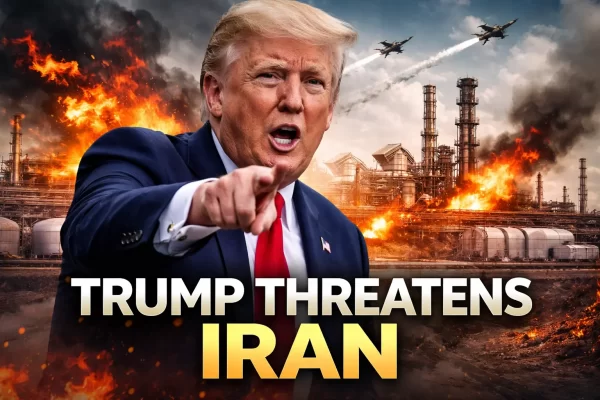
Donald Trump has said the world has roughly 10 days to determine whether a new agreement can be reached with Iran, warning that failure to secure a deal could lead to serious consequences, including potential military escalation. His remarks come as tensions rise over Tehran’s nuclear program and ongoing diplomatic efforts involving the United States and international partners. Speaking after recent negotiations, Trump described the discussions as “productive but complicated,” emphasizing that Washington is seeking a comprehensive agreement that would permanently prevent Iran from obtaining nuclear weapons. He stressed that any deal must include strict limitations on uranium enrichment, expanded international inspections, and constraints on Iran’s missile development capabilities. According to Trump, previous diplomatic frameworks were inadequate, and the new proposal must deliver stronger guarantees. Indirect talks between American and Iranian officials have reportedly taken place in Geneva, where mediators are attempting to bridge longstanding disagreements. Iran continues to maintain that its nuclear activities are intended for civilian energy purposes, while rejecting demands to scale back certain defense programs it considers essential to national sovereignty. These conflicting positions remain a major obstacle to a breakthrough. Meanwhile, the United States has increased its military readiness in the Middle East, deploying additional naval and air assets to the region. Analysts view the buildup as both a pressure tactic in negotiations and a contingency measure should diplomacy fail. The possibility of confrontation has raised global concern, with several governments urging restraint and renewed diplomatic engagement to avoid a wider conflict. Despite his warning, Trump reiterated that his preferred outcome is a peaceful resolution. However, his 10-day timeframe underscores the urgency of the situation and signals that the coming days could be decisive for regional stability and international security.

Read More
EU adds Iran’s Revolutionary Guards to terrorist lis

EU adds Iran’s Revolutionary Guards to terrorist list

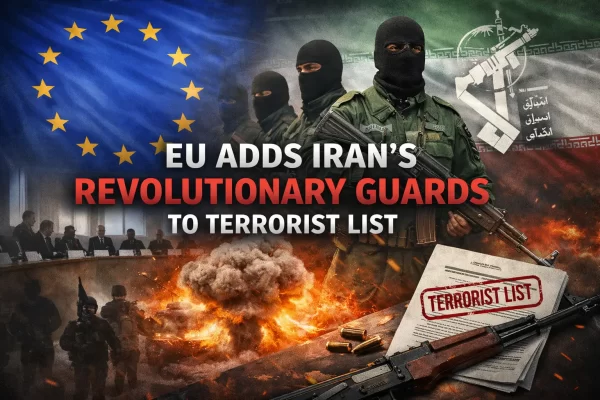
EU adds Iran’s Revolutionary Guards to terrorist list — On 29 January 2026, the European Union (EU) formally added Iran’s Islamic Revolutionary Guard Corps (IRGC) to its official terrorist organizations list, marking a major escalation in the bloc’s response to Tehran’s domestic repression and regional conduct. The decision was made unanimously by the 27 EU member states’ foreign ministers during a meeting in Brussels, with support from traditionally cautious capitals including France, Germany, and Italy. The move reflects growing concern within the EU over the IRGC’s role in violently suppressing widespread protests inside Iran. Human rights groups say the crackdown led to thousands of deaths and mass arrests, drawing strong international condemnation. EU foreign policy chief Kaja Kallas said the designation was justified because “repression cannot go unanswered,” adding that labeling an organization accused of killing its own citizens as terrorist sends a clear political signal. By placing the IRGC alongside extremist groups such as al-Qaida and ISIS, the EU now criminalizes material support or cooperation with the Guard within its jurisdiction. The listing triggers asset freezes, travel bans, and legal penalties under EU law. Member states also gain stronger legal authority to investigate networks tied to the IRGC and enforce financial restrictions against individuals or entities linked to the group. Iran swiftly condemned the decision, warning of destabilizing consequences and possible retaliation. Tehran accused the EU of politicizing counterterrorism measures and interfering in Iran’s internal affairs. While some analysts argue the step is largely symbolic given existing sanctions imposed by the United States, Canada, and Australia, the designation represents a significant political rebuke. The move aligns European policy more closely with Western partners critical of Iran’s domestic crackdown and regional activities. It also signals a tougher EU stance toward Tehran at a time of heightened tensions, reinforcing pressure on Iran over human rights and security concerns.

Read More
Trump warns Iran time is running out

Trump warns Iran ‘time is running out’ for nuclear deal as US military builds up in Gulf

President Donald Trump has issued a stark warning to Iran that “time is running out” for Tehran to negotiate a fresh nuclear deal, intensifying one of the most serious diplomatic standoffs between Washington and Tehran in years. Trump used his Truth Social platform to demand that Iran return to negotiations on its nuclear programme under terms that would completely bar nuclear weapons development. He framed the ultimatum as urgent, urging Tehran to “come to the table” before diplomatic avenues close and military action becomes unavoidable. Alongside this warning, the United States has deployed a significant military buildup in the Persian Gulf region, centred on a “massive armada” led by the aircraft carrier USS Abraham Lincoln. Trump described the force as “ready, willing, and able to rapidly fulfil its mission with speed and violence, if necessary,” underscoring that diplomatic pressure is being backed by a credible military posture. In his message, Trump referenced past U.S. strikes on Iranian nuclear facilities during the 2025 conflict and warned that “the next attack will be far worse” if Iran refuses to negotiate. Tehran has rebuffed what it calls diplomacy under threat, insisting that negotiations must occur without military pressure and that it will defend itself if attacked. Iranian officials have rejected recent U.S. overtures and described Washington’s approach as ineffective and confrontational. The current crisis is unfolding amid broader regional and global concern over Iran’s nuclear trajectory, internal unrest, and the growing risk that further escalation could ignite a wider Middle East conflict. U.S. allies in the region have urged restraint while quietly strengthening their own defences. Some governments remain reluctant to host American military operations, complicating Washington’s strategic options. With tensions rising, Trump has made clear that his administration prefers a negotiated settlement — but only on strict terms. As military forces gather in the Gulf and rhetoric hardens on both sides, the coming weeks may prove decisive in determining whether diplomacy prevails or the standoff slides toward open confrontation.

Read More
Iran warns it will retaliate if US attacks

Iran warns it will retaliate if US attacks as protesters defy crackdown

Iran issued a stark warning that it will retaliate if the United States attacks, as nationwide protests continued despite an increasingly severe government crackdown. The warning came from Parliament Speaker Mohammad Baqer Qalibaf, who told lawmakers that any U.S. military strike on Iranian territory would be met with force against U.S. and allied interests, including regional military bases and Israel, which Tehran labels “legitimate targets” in such an event. This threat underscores the heightened tension between Tehran and Washington amid one of the most sustained protest movements in years. The demonstrations began in late December in response to deepening economic hardship, especially soaring inflation, and have spread to more than 100 cities and towns. Protesters are demanding systemic change, even as state authorities escalate their response with lethal force, mass arrests, and a widespread internet blackout that limits outside reporting. Verified videos show fierce clashes between protesters and security forces in major cities. U.S. President Donald Trump has publicly expressed support for the demonstrators, saying the United States “stands ready to help” and warning Iran that any further killings could provoke a strong response. In parliament, some Iranian lawmakers responded to the U.S. rhetoric with chants of “Death to America,” reflecting hardline sentiment within the regime. Iranian authorities have also toughened domestic rhetoric, with the attorney general declaring participants in the protests as “enemies of God,” a designation under Iranian law that carries the death penalty. Despite escalating violence and significant casualties, protesters continue to defy the crackdown, pressing ahead with demonstrations that show widespread public discontent with the clerical establishment. The situation remains volatile, with the potential for international military escalation if diplomatic or political solutions are not pursued.

Read More