Trump Iran threat

Trump threatens to ‘obliterate’ Iran’s energy facilities if deal not reached ‘shortly’

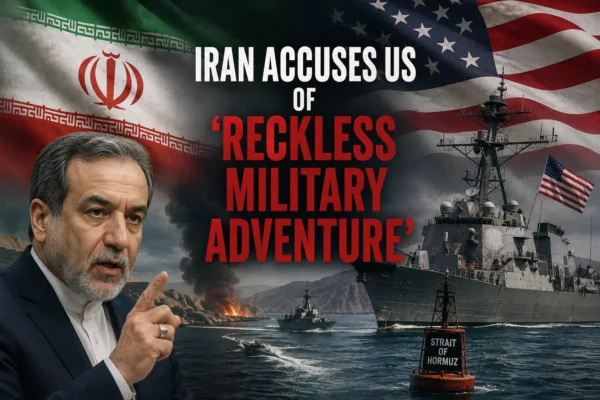
U.S. President Donald Trump has sharply escalated tensions with Iran by warning that he could “obliterate” the country’s energy infrastructure if a deal to end the ongoing conflict is not reached soon. The threat specifically targets critical assets such as oil fields, power plants, and water facilities—systems that are essential to both Iran’s economy and civilian life. The warning comes amid negotiations aimed at reopening the Strait of Hormuz, a vital global النفط shipping route through which a significant portion of the world’s oil supply passes. Trump has indicated that progress is being made with what he described as a “more reasonable” Iranian leadership, but he set a short timeline for results, signaling that military escalation remains on the table. Iran, however, has pushed back strongly, reportedly rejecting U.S. proposals and denying that meaningful direct negotiations are underway. Tehran has also warned that any attack on its infrastructure would trigger retaliatory strikes across the region, potentially targeting energy facilities in neighboring countries and escalating the conflict into a broader regional war. The stakes are particularly high because energy infrastructure is deeply tied to civilian survival. Analysts and human rights organizations have cautioned that deliberate attacks on such facilities could have catastrophic humanitarian consequences and may violate international law. Meanwhile, global markets are already reacting. Oil prices have surged amid fears of disruption, and economists warn that a prolonged conflict could fuel inflation and slow global economic growth. The situation remains fluid, with diplomatic efforts continuing behind the scenes, but the rhetoric signals that the crisis may be approaching a critical tipping point

Read More
Israeli strike Lebanon journalists

Israeli strike kills journalists in Lebanon, as Yemen says Iran ‘dragging country into war’

An Israeli airstrike in southern Lebanon has killed three journalists, intensifying global concern over the safety of media workers in conflict zones and raising fears of a wider regional war. The victims included reporters and a cameraman from Lebanese outlets, who were covering ongoing hostilities between Israel and Hezbollah when their vehicle was struck. Israel stated that the strike targeted one individual it accused of being linked to Hezbollah intelligence, though it did not provide evidence and did not address the deaths of the other journalists. Lebanese authorities strongly condemned the attack, calling it a violation of international law and protections afforded to journalists in war zones. The incident comes amid a sharp escalation in the broader Middle East conflict, particularly following joint U.S.-Israeli strikes on Iran. Journalists have increasingly found themselves in harm’s way, with multiple fatalities reported across Lebanon, Gaza, and Iran since the conflict intensified. Meanwhile, tensions have expanded beyond Lebanon. Yemen’s Houthi movement, aligned with Iran, has warned that continued attacks could drag the region deeper into war. Officials signaled readiness to intervene militarily, accusing external powers of escalating the conflict and destabilizing the region. In parallel developments, missile and drone attacks across the Gulf, along with strikes on infrastructure and military bases, indicate that the conflict is no longer contained to a single front. Analysts warn that involvement from additional regional actors could transform the situation into a full-scale multi-country war. The killing of journalists has added urgency to calls from international organizations for accountability and protection of civilians. As the conflict widens, the risks to media personnel—and the broader civilian population—continue to grow.

Read More
Iran US-Israel conflict

Iran claims US-Israeli strikes targeting civilian sites as Rubio expects war to end ‘in weeks, not months’

Tensions in the Middle East continue to escalate as Iran accuses the United States and Israel of deliberately targeting civilian infrastructure, while U.S. Secretary of State Marco Rubio insists the conflict will be short-lived, predicting it will end “in weeks, not months.” Iranian officials and multiple human rights groups claim that recent U.S.-Israeli airstrikes have hit non-military sites, including schools, hospitals, and residential areas. A new report estimates that nearly 1,500 civilians, including over 200 children, have been killed since the conflict began in late February 2026. Tehran has strongly condemned the strikes, calling them violations of international humanitarian law and warning of continued retaliation if attacks persist. The United States and Israel, however, deny deliberately targeting civilians. Washington maintains that the strikes are focused on dismantling Iran’s military infrastructure, including missile systems, drone capabilities, and naval assets. Rubio stated that the campaign is progressing “ahead of schedule” and does not require a ground invasion. Despite intensifying violence, Rubio has expressed confidence that the war will conclude soon. Speaking after diplomatic meetings with G7 allies, he indicated that the conflict is expected to last only a few more weeks, emphasizing that U.S. objectives can be achieved within that timeframe. He reiterated that the timeline remains “weeks, not months,” even as fighting continues across multiple fronts. Meanwhile, the broader consequences of the conflict are becoming increasingly severe. Global oil prices have surged, and disruptions in the Strait of Hormuz are affecting international trade. Iran has also carried out retaliatory strikes and cyberattacks, raising fears of further regional escalation. As diplomatic channels remain open but fragile, the coming weeks are likely to determine whether the conflict de-escalates—or expands into a wider regional war. Join Our Personality Development and Spoken English Course

Read More
Trump Iran negotiations

Trump says negotiations to end war happening ‘right now’ and Iran is ‘talking sense’

U.S. President Donald Trump has claimed that negotiations to end the ongoing conflict with Iran are actively underway, saying talks are happening “right now” and that Tehran is “talking sense.” His remarks suggest a possible diplomatic opening after weeks of escalating military tensions in the Middle East. According to Trump, recent discussions have been “productive” and involve senior U.S. officials working through intermediaries to reach a broader agreement that could bring a “complete resolution” to hostilities. He indicated that Iran appears increasingly willing to negotiate, even describing the tone of communication as constructive and encouraging. However, the situation remains highly complex and contested. Iranian officials have publicly denied that any direct negotiations with Washington are taking place, acknowledging only indirect contacts via mediators such as Pakistan, Turkey, and Egypt. This contradiction highlights a familiar pattern in U.S.–Iran relations, where backchannel diplomacy often occurs alongside public denials. Key sticking points persist. Iran is reportedly demanding guarantees against future attacks, compensation for war damages, and no restrictions on its missile program. Meanwhile, the United States is pushing for stricter conditions, particularly concerning security and regional stability. Despite Trump’s optimism, skepticism remains among analysts and officials. Ongoing military exchanges and deep mistrust between both sides continue to undermine confidence in a swift resolution. Still, the emergence of diplomatic engagement—even indirect—signals a potential shift from confrontation toward negotiation. Whether these talks evolve into a formal agreement will depend on bridging significant geopolitical and strategic differences.

Read More

Iran says it will show ‘zero restraint’ if oil sites struck again as Qatar demands end to attacks

Iran has issued a stark warning that it will show “zero restraint” if its oil and gas infrastructure is targeted again, signaling a dangerous escalation in the ongoing regional conflict. The statement came after recent strikes on Iran’s critical energy facilities, including the massive South Pars gas field, which is central to the country’s economy and energy supply. Tehran has already responded with retaliatory attacks on energy infrastructure across the Gulf, including strikes on Qatar’s Ras Laffan industrial hub—one of the world’s largest liquefied natural gas (LNG) facilities. Iranian officials emphasized that these actions represent only a limited use of their military capabilities, warning that future responses could be far more severe. Qatar has strongly condemned the attacks, calling for an immediate halt to the violence and warning that continued escalation could destabilize global energy markets. The Gulf nation, heavily reliant on LNG exports, described the strikes as a direct threat to international energy security and economic stability. The broader conflict has increasingly drawn energy infrastructure into its core, with both Iran and its adversaries targeting oil and gas assets. Iran’s leadership argues that such strikes are part of a coordinated effort by the United States and Israel to weaken its economy, while urging regional countries to take collective action against further escalation. Meanwhile, the situation has rattled global markets, with fears growing over supply disruptions in a region that accounts for a significant share of the world’s oil and gas exports. Analysts warn that continued attacks on energy sites could trigger sharp price spikes and long-term instability in global supply chains. As tensions rise, diplomatic calls for restraint are intensifying, but Iran’s latest warning suggests that any further strikes on its energy sector could push the conflict into a far more destructive phase.

Read More

‘Extensive damage’ at Qatar industrial site as Iran retaliates for strike on gas field

Iran has reportedly caused extensive damage to a major industrial energy site in Qatar, marking a sharp escalation in the ongoing Middle East conflict and raising serious concerns about global energy security. The attack targeted facilities in Ras Laffan, a critical industrial hub and home to the world’s largest liquefied natural gas (LNG) export infrastructure. Iranian missile and drone strikes were launched in retaliation for earlier attacks on Iran’s South Pars gas field, a key energy asset jointly shared with Qatar. According to reports, the strikes disrupted operations at the Qatari site, forcing shutdowns and halting portions of LNG production. Ras Laffan is central to Qatar’s role as one of the world’s top LNG exporters, supplying energy to major markets across Asia and Europe. Any damage to this facility has immediate ripple effects on global supply chains. The Iranian response follows an earlier strike on South Pars, which is responsible for a large share of Iran’s domestic gas production. The attack on that field triggered fires and temporarily reduced output, prompting Tehran to warn that it would retaliate against energy infrastructure across the Gulf region. This tit-for-tat escalation has significantly heightened tensions, with multiple Gulf countries now on alert. Saudi Arabia and other regional players have reportedly intercepted additional drones and missiles, indicating the potential for a broader regional conflict. The economic impact has been immediate. Global oil and gas prices surged amid fears of prolonged disruption, particularly as the Strait of Hormuz—a vital energy transit route—faces increasing risk of closure. Analysts warn that continued attacks on energy infrastructure could destabilize markets and push the global economy into further uncertainty. Overall, the strike on Qatar’s industrial site represents a dangerous expansion of the conflict, shifting focus toward critical energy assets and increasing the likelihood of sustained global energy shocks.

Read More
Trump Iran unconditional surrender

Trump demands Iran’s ‘unconditional surrender’ as Israel says it hit leadership bunker ‘with 50 jets’

U.S. President Donald Trump has demanded Iran’s “unconditional surrender”, dramatically escalating rhetoric as the conflict between Iran and Israel intensifies across the Middle East. The statement came as Israel claimed it had launched a massive airstrike using around 50 fighter jets to destroy a key underground bunker believed to be used by senior Iranian leadership in Tehran. Posting on his Truth Social platform, Trump said there would be “no deal with Iran except unconditional surrender,” signaling that Washington would not pursue negotiations unless Tehran fully capitulates. He also suggested that once Iran surrendered and installed what he described as a “great and acceptable leader,” the United States and its allies would help rebuild the country’s economy and restore stability. The remarks came amid a rapidly expanding regional war. Israeli military officials said their air force conducted a large-scale strike on a fortified underground command bunker beneath Iran’s leadership compound in Tehran. According to the Israel Defense Forces (IDF), about 50 warplanes dropped dozens of bombs on the site, targeting infrastructure believed to be used by senior regime figures following the death of Iran’s supreme leader earlier in the conflict. Israeli officials described the bunker as a secure command center spanning multiple streets beneath the capital, designed to protect leadership during wartime. The strike was part of a broader wave of Israeli attacks on Iranian and allied targets across the region. Meanwhile, Iran has continued retaliatory missile and drone attacks against Israeli positions and U.S. bases in the Gulf, raising fears of a wider regional confrontation. International leaders and humanitarian groups have urged de-escalation as casualties rise and displacement spreads across affected areas. Diplomatic efforts are reportedly underway by several countries to mediate the crisis, but Trump’s demand for unconditional surrender suggests the path to negotiations remains uncertain as the conflict deepens.

Read More
Trump Iran

Trump says ‘everything’s been knocked out in Iran’ as he criticises UK and Starmer

US President Donald Trump claimed on Tuesday that US-Israeli military operations have inflicted “virtually everything … knocked out” of Iran’s defence capabilities, asserting that Iran’s navy, air force, radar and air-defence systems have been disabled amid escalating conflict in the Middle East. Trump made the remarks in the Oval Office during a press session with German Chancellor Friedrich Merz, defending the strikes as necessary to pre-empt what he described as an imminent threat from Iran. He denied that Israel had forced the United States into war, insisting that he acted to prevent a potentially planned Iranian attack on the United States. Trump admitted uncertainty about Iran’s post-conflict leadership and acknowledged the absence of a clear “day-after” plan. Trump’s comments came amid soaring tensions with European allies, particularly the UK. He openly criticised UK Prime Minister Sir Keir Starmer, saying he was “not happy with the UK” and that Starmer was “not Winston Churchill” for initially resisting US requests to use British military bases in support of offensive operations against Iran. Trump said Starmer had been “very uncooperative” and lamented that the “special relationship” between the US and UK was “not what it was,” highlighting London’s hesitancy over involvement and legal concerns. Starmer later allowed limited UK base use for defensive strikes against Iranian missile infrastructure but stopped short of broader offensive participation. The diplomatic spat underscores the growing strain between Washington and London as the Middle East conflict deepens. While Trump’s narrative emphasises military success, critics question both the legality and strategic planning of the campaign, and allies like Starmer have insisted on adherence to international law and careful strategic considerations.

Read More
Trump Iran warning

Trump says world has 10 days to see if Iran deal reached

Donald Trump has said the world has roughly 10 days to determine whether a new agreement can be reached with Iran, warning that failure to secure a deal could lead to serious consequences, including potential military escalation. His remarks come as tensions rise over Tehran’s nuclear program and ongoing diplomatic efforts involving the United States and international partners. Speaking after recent negotiations, Trump described the discussions as “productive but complicated,” emphasizing that Washington is seeking a comprehensive agreement that would permanently prevent Iran from obtaining nuclear weapons. He stressed that any deal must include strict limitations on uranium enrichment, expanded international inspections, and constraints on Iran’s missile development capabilities. According to Trump, previous diplomatic frameworks were inadequate, and the new proposal must deliver stronger guarantees. Indirect talks between American and Iranian officials have reportedly taken place in Geneva, where mediators are attempting to bridge longstanding disagreements. Iran continues to maintain that its nuclear activities are intended for civilian energy purposes, while rejecting demands to scale back certain defense programs it considers essential to national sovereignty. These conflicting positions remain a major obstacle to a breakthrough. Meanwhile, the United States has increased its military readiness in the Middle East, deploying additional naval and air assets to the region. Analysts view the buildup as both a pressure tactic in negotiations and a contingency measure should diplomacy fail. The possibility of confrontation has raised global concern, with several governments urging restraint and renewed diplomatic engagement to avoid a wider conflict. Despite his warning, Trump reiterated that his preferred outcome is a peaceful resolution. However, his 10-day timeframe underscores the urgency of the situation and signals that the coming days could be decisive for regional stability and international security.

Read More
EU adds Iran’s Revolutionary Guards to terrorist lis

EU adds Iran’s Revolutionary Guards to terrorist list

EU adds Iran’s Revolutionary Guards to terrorist list — On 29 January 2026, the European Union (EU) formally added Iran’s Islamic Revolutionary Guard Corps (IRGC) to its official terrorist organizations list, marking a major escalation in the bloc’s response to Tehran’s domestic repression and regional conduct. The decision was made unanimously by the 27 EU member states’ foreign ministers during a meeting in Brussels, with support from traditionally cautious capitals including France, Germany, and Italy. The move reflects growing concern within the EU over the IRGC’s role in violently suppressing widespread protests inside Iran. Human rights groups say the crackdown led to thousands of deaths and mass arrests, drawing strong international condemnation. EU foreign policy chief Kaja Kallas said the designation was justified because “repression cannot go unanswered,” adding that labeling an organization accused of killing its own citizens as terrorist sends a clear political signal. By placing the IRGC alongside extremist groups such as al-Qaida and ISIS, the EU now criminalizes material support or cooperation with the Guard within its jurisdiction. The listing triggers asset freezes, travel bans, and legal penalties under EU law. Member states also gain stronger legal authority to investigate networks tied to the IRGC and enforce financial restrictions against individuals or entities linked to the group. Iran swiftly condemned the decision, warning of destabilizing consequences and possible retaliation. Tehran accused the EU of politicizing counterterrorism measures and interfering in Iran’s internal affairs. While some analysts argue the step is largely symbolic given existing sanctions imposed by the United States, Canada, and Australia, the designation represents a significant political rebuke. The move aligns European policy more closely with Western partners critical of Iran’s domestic crackdown and regional activities. It also signals a tougher EU stance toward Tehran at a time of heightened tensions, reinforcing pressure on Iran over human rights and security concerns.

Read More