Jeffrey Epstein documents

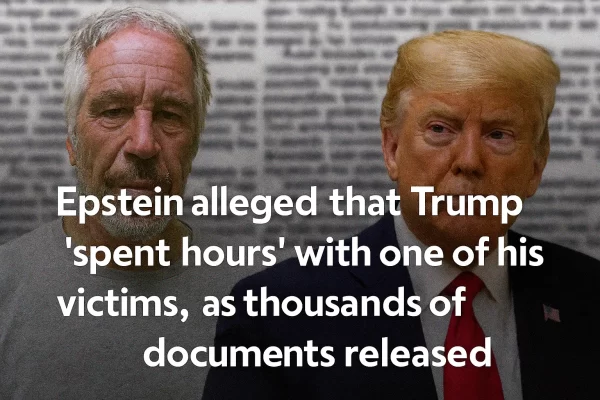
Epstein alleged that Trump ‘spent hours’ with one of his victims, as thousands of documents released

Thousands of pages of newly unsealed court documents related to the late financier Jeffrey Epstein have revealed fresh details about his network of associates and alleged interactions with powerful figures, including former U.S. President Donald Trump. The files, which stem from a long-running civil case against Epstein’s associate Ghislaine Maxwell, include depositions, witness statements, and correspondence that shed light on the scale of Epstein’s operations and the alleged involvement of several high-profile individuals. Among the revelations, one of Epstein’s alleged victims claimed that Trump had “spent hours” with her at Epstein’s Palm Beach residence. The woman, whose identity remains confidential in the documents, did not accuse Trump of sexual misconduct but described his presence at gatherings organized by Epstein in the early 2000s. The allegations add to the growing scrutiny surrounding Epstein’s connections with influential figures from politics, business, and entertainment. Trump has repeatedly denied any wrongdoing or inappropriate relationship with Epstein or his associates. He has acknowledged knowing Epstein “like everybody in Palm Beach,” but insisted he was “not a fan” of the financier and severed ties with him long before his 2019 arrest. Epstein, who was charged with sex trafficking of minors, died in jail that same year in what was officially ruled a suicide. The newly released files also mention other prominent names, including Prince Andrew, Bill Clinton, and several former officials and celebrities. While the documents contain numerous allegations, much of the material remains unverified or based on witness testimony, and no additional criminal charges have been filed as a result of the disclosures. Legal experts say the release of these records underscores the far-reaching nature of Epstein’s influence and the need for continued transparency. Victims’ advocates have welcomed the disclosures, saying they help expose the scale of Epstein’s alleged abuse and the systems that enabled it to persist for years. The Epstein case continues to be one of the most controversial scandals involving sexual exploitation, wealth, and power. As investigators and journalists sift through the newly unsealed evidence, questions remain about who else may have known about or participated in Epstein’s activities—and whether justice can ever be fully served for his victims.
Read More
Elon Musk’s $1 trn pay deal

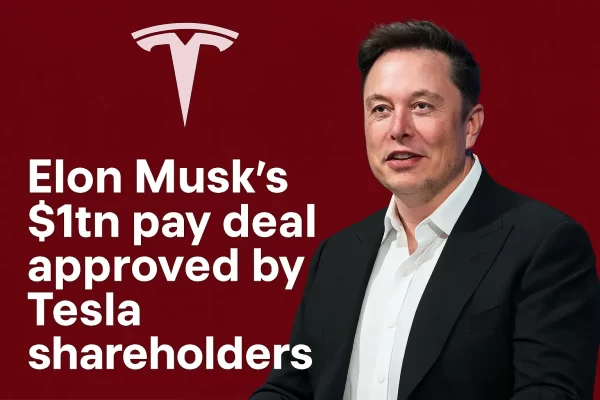
Elon Musk’s $1tn pay deal approved by Tesla shareholders

At Tesla’s annual shareholders meeting in Austin, Texas, more than 75% of shareholders voted in favour of a new compensation plan for Elon Musk. The package, potentially worth up to around $1 trillion, would be the largest corporate CEO compensation award ever if all performance conditions are achieved. The deal is structured largely as stock-based incentives rather than a fixed salary, linking Musk’s potential earnings to Tesla’s long-term performance. If successful, Musk’s ownership stake in Tesla could increase from roughly 13% to about 25%, further cementing his control over the company. Key Performance Conditions The massive payout depends on Tesla achieving a series of ambitious goals over the coming years. These include reaching a market capitalization of about $8.5 trillion, delivering 20 million vehicles annually, and deploying 1 million robotaxis alongside selling 1 million humanoid robots, such as Tesla’s “Optimus” models. Additionally, Tesla must record sustained annual profits in the hundreds of billions of dollars and Musk must remain as CEO for a defined period while guiding the company through these milestones. Why Supporters Backed It Supporters argue that Musk is the driving force behind Tesla’s transformation from an electric carmaker to a broader AI and robotics powerhouse. They believe the plan aligns Musk’s personal incentives with Tesla’s long-term growth rather than short-term profit. For many investors, the potential benefits justify the risk. Musk’s proven record with Tesla, SpaceX, and other ventures gives confidence that he can push the company toward extraordinary achievements in automation, energy, and self-driving technology. Why It’s Controversial Despite the strong vote in favour, the deal has attracted significant criticism. The sheer scale of the potential payout—$1 trillion—has been labelled excessive by critics who question its fairness and impact on corporate governance. Some institutional investors and governance experts warned that such a plan could dilute shareholder value and place too much power in the hands of a single individual. Sceptics also argue that achieving all the performance targets is unlikely. Tesla faces mounting challenges, including intensifying EV competition, slowing demand, supply chain risks, and regulatory scrutiny. Entrusting so much influence to one figure raises concerns about oversight and succession planning. What This Means Going Forward If Musk meets all conditions, he could become the first person in history to receive a corporate payout of this magnitude, potentially making him the world’s first trillionaire. For Tesla, it represents a daring bet on future dominance across multiple sectors—EVs, robotics, and AI. The vote signals strong investor faith in Musk’s leadership and Tesla’s long-term vision. Yet, it also sets towering expectations that may prove difficult to meet. The outcome will define not only Musk’s personal wealth but also Tesla’s position in the global technology landscape. Read this also Inside Gaza, BBC sees total devastation after two years of war Bottom line: Tesla shareholders have handed Musk a colossal opportunity—and an equally colossal challenge. The $1 trillion plan embodies both Tesla’s ambition and the immense risks that come with placing so much of its future in one man’s hands.

Read More
Jamaica life-threatening storm

Jamaica in path of ‘life-threatening’ category five Hurricane Melissa

Jamaica is bracing for the full force of Hurricane Melissa, now an extremely dangerous Category 5 storm, as it barrels through the Caribbean with devastating winds and torrential rain. The U.S. National Hurricane Center (NHC) has warned that the storm poses a “life-threatening threat” to the island, bringing the potential for catastrophic damage, flooding, and storm surges. Melissa, with sustained winds exceeding 260 kilometers per hour (160 mph), is the strongest hurricane to form in the Atlantic this season. The hurricane’s eye was located just 150 kilometers southeast of Kingston on Tuesday afternoon, moving northwest at around 20 kilometers per hour. Meteorologists say the storm’s outer bands have already begun lashing Jamaica’s southern coast with heavy rainfall and fierce winds. Authorities have issued evacuation orders for low-lying and coastal areas, including parts of St. Catherine, Clarendon, and St. Elizabeth parishes. Shelters have been opened across the island, and the government has mobilized emergency services, soldiers, and medical personnel in preparation for the storm’s landfall, expected late Tuesday night or early Wednesday morning. Prime Minister Andrew Holness has urged citizens to take the warnings seriously, emphasizing that this hurricane could cause “unprecedented destruction” if residents do not act swiftly. “We are facing a dangerous and unpredictable system. Everyone must move to safety and avoid taking risks,” Holness said during a national address. Meteorologists predict that Melissa could drop up to 600 millimeters (24 inches) of rain in some areas, leading to flash floods and landslides, particularly in mountainous regions. Coastal communities face the risk of storm surges up to 5 meters (16 feet) high, capable of inundating entire neighborhoods and cutting off access to vital infrastructure. Airports across the island have suspended operations, and airlines have canceled flights in and out of Jamaica. The national power company has warned of possible widespread outages as high winds threaten to topple electricity poles and damage transmission lines. After passing Jamaica, Hurricane Melissa is projected to continue northwest toward the Cayman Islands and western Cuba, though slight changes in its path could alter its trajectory. The NHC continues to monitor the storm closely, warning nearby nations to remain vigilant.

Read More
Israel Gaza ceasefire violation

Israel launches air strikes in Gaza, accusing Hamas of ‘blatant violation of ceasefire’

Israel launched a series of air strikes on the Gaza Strip late Sunday, accusing Hamas of breaching the fragile ceasefire that has held since the end of major hostilities earlier this year. The Israeli military said the strikes targeted what it described as “terror infrastructure” belonging to Hamas, following what it called “a blatant violation of the ceasefire agreement.” According to the Israel Defense Forces (IDF), the strikes hit several sites across northern and central Gaza, including alleged rocket manufacturing facilities and command posts. “Hamas fired multiple projectiles toward Israeli territory in clear violation of the ceasefire terms,” the IDF said in a statement. “In response, we have targeted key sites used by the organization to prepare further attacks.” Local sources in Gaza reported multiple explosions overnight, with plumes of smoke rising above residential areas. The Gaza Health Ministry said at least eight people were injured, including two children, though there were no immediate reports of fatalities. Hospitals in Gaza, already under strain due to shortages of medical supplies, struggled to treat the wounded. Hamas condemned the strikes as an “unprovoked act of aggression” and denied responsibility for any rocket fire. In a statement, the group said, “The Israeli occupation bears full responsibility for the escalation and its consequences. This aggression is part of Israel’s ongoing attempts to undermine the stability of Gaza and impose new conditions on the ceasefire.” The ceasefire, brokered by Egypt and supported by the United States and Qatar, had largely held since July, following months of indirect talks between Israel and Hamas. It was seen as a crucial step toward easing humanitarian conditions in Gaza and allowing reconstruction efforts to continue. However, tensions have remained high, particularly over the slow pace of aid delivery and restrictions on imports. Regional mediators expressed concern over the renewed violence. Egyptian officials reportedly contacted both sides overnight, urging restraint and warning that further escalation could unravel months of diplomatic progress. “The situation is extremely fragile,” one Egyptian diplomat said. “Both parties must avoid actions that could reignite a broader conflict.” The United Nations also called for calm, emphasizing that civilians should not pay the price of renewed hostilities. “We urge all sides to return to dialogue and respect the ceasefire commitments,” said a spokesperson for the UN Middle East envoy. Analysts say the latest flare-up underscores the difficulty of maintaining long-term stability in Gaza, where recurring cycles of violence have repeatedly derailed peace efforts. Whether this incident leads to another full-scale conflict will depend on the coming days and the willingness of both sides to step back from confrontation.

Read More
Zelensky Tomahawk missiles

Zelensky fails to secure Tomahawk missiles at talks with Trump

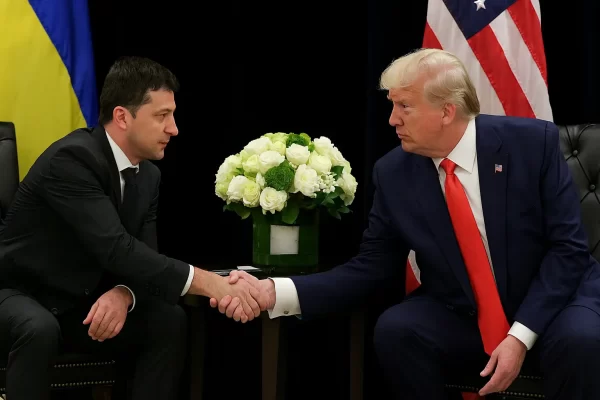
Ukrainian President Volodymyr Zelensky’s highly anticipated meeting with U.S. President Donald Trump at the White House has ended without an agreement on the transfer of Tomahawk cruise missiles, dealing a blow to Kyiv’s hopes of acquiring advanced long-range weaponry to bolster its defenses against Russian forces. According to U.S. and Ukrainian officials, the discussions between the two leaders were “constructive but inconclusive.” Zelensky had arrived in Washington seeking approval for the sale or transfer of Tomahawk missiles, capable of striking targets up to 1,600 kilometers away, arguing that such systems were vital to Ukraine’s ability to deter Russian attacks on critical infrastructure and logistics hubs. However, President Trump reportedly declined to approve the request, citing concerns that providing such high-precision, long-range weapons could escalate the conflict and draw the United States deeper into the war. Instead, Trump proposed increasing U.S. intelligence sharing and offering a new package of defensive systems, including Patriot interceptors and counter-drone technologies. In a joint press conference following the meeting, Zelensky said he appreciated Washington’s continued support but admitted that “Ukraine had hoped for more tangible commitments.” He added that Kyiv would continue discussions with American defense officials and Congress in hopes of securing “the tools necessary to end the war on fair terms.” Trump emphasized his administration’s focus on “peace through strength” and suggested that further negotiations between Russia and Ukraine could take place “under the right conditions.” He also reiterated his belief that a diplomatic settlement remains possible if both sides “show flexibility and put national interest above pride.” Analysts say the outcome highlights the ongoing tension between Kyiv’s urgent battlefield needs and Washington’s cautious approach to escalation. While the U.S. remains Ukraine’s largest supplier of aid and weaponry, the Trump administration has increasingly framed its support in the context of a potential peace deal rather than open-ended military assistance. The failure to secure Tomahawk missiles is likely to frustrate Ukrainian commanders, who argue that long-range precision weapons are essential for targeting Russian supply lines deep inside occupied territories. Without them, Ukraine remains largely dependent on shorter-range systems like ATACMS and Storm Shadow missiles provided by other Western allies. Despite the setback, Zelensky vowed to keep pushing for stronger defense partnerships. “Ukraine will not stop fighting for its freedom and independence,” he said. “We will continue to work with our partners to ensure our country’s security and future.” The talks mark a pivotal moment in U.S.-Ukraine relations, as Kyiv balances gratitude for continued support with growing pressure to achieve decisive results on the battlefield before winter sets in.

Read More
$100,000 skilled worker visa fee

Trump adds $100,000 fee for skilled worker visa applicants

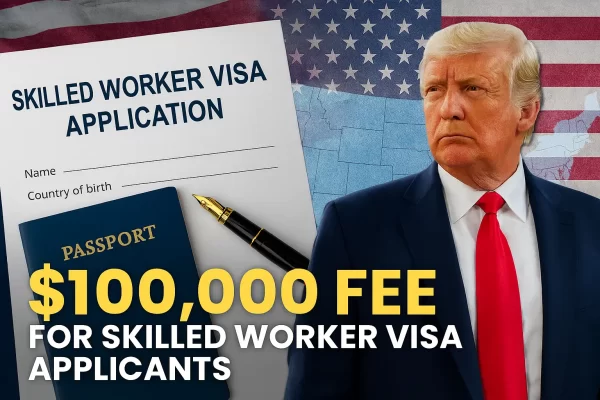
In a dramatic policy shift, former U.S. President Donald Trump has announced the introduction of a $100,000 fee for skilled worker visa applicants, sparking intense debate both at home and abroad. The measure, aimed at what Trump describes as “protecting American workers,” represents one of the most restrictive steps taken in the U.S. immigration system in recent years. According to Trump, the new fee will apply to high-skilled visas, such as the H-1B program, which is widely used by technology firms, medical institutions, and research organizations to bring in global talent. Proponents argue that the fee will reduce dependency on foreign workers, encourage companies to prioritize American employees, and generate significant revenue for the federal government. However, critics warn that the policy could severely damage the U.S. economy. The $100,000 visa fee is far higher than any existing immigration charge in the world, and experts believe it will deter talented professionals from applying. Companies in Silicon Valley, Wall Street, and leading universities rely heavily on international expertise, and many business leaders fear this move will drive talent toward other global hubs such as Canada, the United Kingdom, and Australia. Immigration advocates also caution that the measure unfairly targets skilled professionals who contribute billions to the U.S. economy annually. A coalition of tech firms and advocacy groups has already signaled plans to challenge the fee in court, arguing it is discriminatory and unconstitutional. Trump, however, defended the plan as part of his broader “America First” strategy. At a rally, he claimed that the fee would “make foreign workers pay their fair share” and ensure that U.S. citizens do not lose jobs to overseas professionals willing to work for less. He added that the revenue from the new fees would be invested in training programs for American workers, especially in the technology and healthcare sectors. International reaction has been swift. India, one of the largest sources of H-1B applicants, expressed “deep concern” over the impact of the new rule. Industry groups in India estimate that thousands of skilled workers, particularly in IT and engineering, will be priced out of the U.S. market. Similarly, European leaders warned that such policies could isolate the U.S. from global innovation networks. The policy, if fully implemented, could reshape global migration patterns. Analysts suggest that Canada and other nations with more welcoming immigration systems may emerge as beneficiaries, attracting talent that the U.S. risks losing. For now, the $100,000 skilled worker visa fee remains one of Trump’s most controversial immigration moves, with long-term consequences that could redefine America’s role in the global workforce.

Read More
Obama says US faces political crisis after killing of Charlie Kirk

Obama says US faces ‘political crisis’ after killing of Charlie Kirk

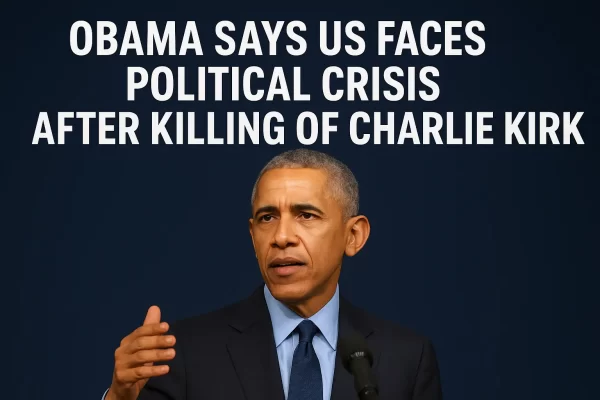
Former President Barack Obama has warned that the United States is at a dangerous turning point following the killing of conservative activist Charlie Kirk, describing the moment as nothing less than a “political crisis.” His comments come amid intensifying fears that political violence is no longer an exception but is becoming an alarming trend in America’s democracy. Charlie Kirk, the 31-year-old founder of Turning Point USA, was assassinated earlier this month while addressing students at a Utah college. Authorities have charged a 22-year-old suspect, Tyler Robinson, with aggravated murder, and prosecutors are seeking the death penalty. The killing has shaken the political landscape, sparking condemnation across party lines but also further inflaming partisan divides. Speaking at a civic event, Obama strongly denounced the attack and linked it to a broader decline in democratic norms. He said that while passionate disagreements are natural in a democracy, resorting to violence against political opponents crosses a dangerous line. “The central premise of our democratic system,” he noted, “is that we have to be able to disagree, sometimes strongly, without resorting to violence.” Obama also criticized the way some political leaders responded to Kirk’s killing, suggesting that a rush to label enemies and inflame divisions is worsening the crisis. Without naming him directly, Obama pointed to former President Donald Trump’s reaction, which immediately placed blame on the “radical left” before investigators had released detailed information. According to Obama, this rhetoric deepens polarization and feeds a cycle of hostility. Analysts say Obama’s remarks highlight a growing concern that the United States is entering a period of normalized political violence. Experts warn that the breakdown of long-standing democratic “guardrails” — unwritten rules of civility and restraint — makes the system more vulnerable. By framing opponents as existential threats, politicians create an atmosphere where violent actions can seem justified in the eyes of extremists. Obama described the nation as being at an “inflection point,” a moment when the country can either recommit to democratic values or slide further toward chaos and division. He urged Americans to reject dehumanizing language, stand against political violence, and hold leaders accountable for protecting institutions and norms. The killing of Charlie Kirk has become more than a tragic act of violence; it has sparked a fierce debate over the future of U.S. politics. For Obama, it is evidence that the country must act decisively to preserve democracy. “This is a political crisis,” he warned, “and how we respond will shape the future of America.” Wabstalk

Read More
Trump Russia sanctions

Trump ‘ready’ to sanction Russia if Nato nations stop buying its oil

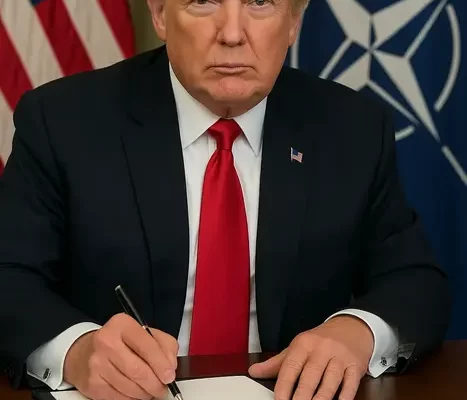
Former U.S. President Donald Trump has issued a strong warning that he is prepared to impose new sanctions on Russia if NATO member states agree to cut down on their purchases of Russian oil. The statement underscores Washington’s ongoing efforts to reduce Moscow’s economic influence amid its prolonged war in Ukraine. Speaking to reporters, Trump said the West must present a united front against Russia’s use of energy exports as a financial weapon. He emphasized that NATO nations remain heavily dependent on Russian oil and gas, which continues to provide the Kremlin with billions in revenue despite existing sanctions. According to him, the only way to significantly weaken Russia’s war chest is by targeting its oil trade more aggressively. Trump’s remarks come at a time when European countries are divided on how to handle their energy needs. While some NATO members have made strides in reducing Russian imports, others remain reliant due to geographic proximity, infrastructure limitations, and economic concerns. Analysts note that this split has weakened the overall impact of Western sanctions and left Moscow with a steady stream of income. Trump’s proposed sanctions could include restrictions on financial transactions, secondary sanctions on companies doing business with Russia, and penalties aimed at shipping firms that transport Russian crude. These measures, he argues, would not only pressure Moscow but also push NATO allies to accelerate their energy diversification plans. Critics, however, caution that such a move might trigger an energy crisis in parts of Europe, especially ahead of winter. Some NATO nations have already faced rising fuel prices, which have strained households and businesses. Experts warn that further disruptions could cause political backlash within European governments that are already under pressure from domestic voters. Despite the risks, Trump insists that decisive action is necessary. He framed the issue as not only an economic matter but also a strategic one, suggesting that every barrel of oil purchased from Russia effectively funds the continuation of the war in Ukraine. The Kremlin has yet to officially respond to Trump’s comments, but Russian officials have previously dismissed Western threats as “economic blackmail.” Moscow has sought to expand its oil exports to Asian markets, particularly China and India, in an effort to offset declining sales to Europe. As the debate intensifies, NATO faces a crucial test of unity. Whether member states will align behind Trump’s push for tougher energy sanctions remains uncertain. What is clear, however, is that the issue of Russian oil remains central to the broader struggle over the future of Europe’s security and stability Wabstalk

Read More
Russia heaviest strikes Ukraine

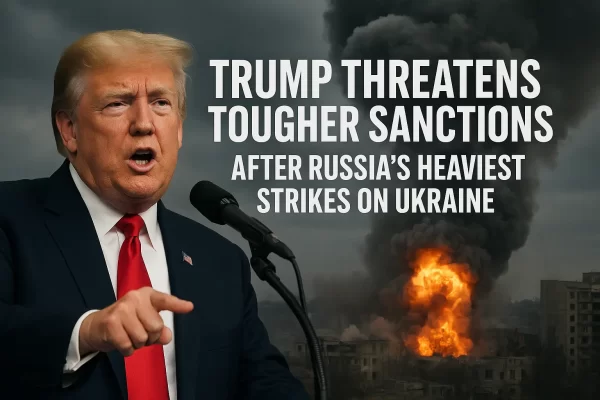
Trump threatens tougher sanctions after Russia’s heaviest strikes on Ukraine

In a sharp escalation of rhetoric, former U.S. President Donald Trump has threatened to impose tougher sanctions on Russia following what Ukrainian officials described as the heaviest strikes on their territory since the war began. The wave of missile and drone attacks devastated multiple cities, leaving widespread destruction and further straining already fragile humanitarian conditions. According to Kyiv, the strikes targeted not only military infrastructure but also civilian areas, including power grids, residential neighborhoods, and hospitals. Ukraine’s President Volodymyr Zelenskyy condemned the attacks as “terrorism aimed at breaking the spirit of the people.” International aid organizations have warned of worsening conditions as millions face blackouts and limited access to essential services. Trump, speaking at a campaign event, argued that Russia’s “aggression must meet an even stronger response.” He claimed that, if in office, his administration would dramatically tighten economic sanctions on Moscow and pressure U.S. allies in Europe and Asia to follow suit. While Trump has previously faced criticism for his mixed messaging on Russia, his latest remarks reflect the growing global outrage over the escalating conflict. The Biden administration, meanwhile, has already coordinated multiple rounds of sanctions with NATO allies, targeting Russian banks, energy companies, and defense suppliers. However, analysts note that the Kremlin has found ways to adapt, leveraging trade with non-Western partners such as China, India, and Iran. Trump’s call for “maximum sanctions” signals a push for more aggressive economic isolation, though experts warn that achieving full international compliance would be challenging. European leaders have also reacted strongly to the renewed strikes. The European Union is reportedly preparing its own expanded sanctions package, focusing on closing loopholes that allow Russia to import restricted technology through third-party countries. Germany and France, in particular, have expressed frustration over Moscow’s continued escalation despite ongoing diplomatic efforts. For Ukraine, the immediate priority remains securing additional air defense systems to counter the missile and drone attacks. Zelenskyy reiterated his plea to Western nations for advanced weaponry, including Patriot missile systems and long-range strike capabilities. “Every day without stronger defenses costs Ukrainian lives,” he said in a televised address. Google fined €2.95bn by EU for abusing advertising dominance The latest strikes underscore the shifting dynamics of the war as Russia seeks to regain momentum on the battlefield. With winter approaching, Ukraine faces both military and humanitarian challenges, and the debate over sanctions is set to dominate international discussions in the coming weeks. Whether Trump’s threats translate into policy remains uncertain, but his remarks highlight how the war in Ukraine continues to shape global politics Wabstalk

Read More
Google fined €2.95bn

Google fined €2.95bn by EU for abusing advertising dominance

The European Union has once again taken strong action against a tech giant, as Google has been fined €2.95 billion for abusing its advertising dominance in the European market. This marks one of the largest penalties ever imposed on a technology company by the European Commission, highlighting growing concerns over the influence of Big Tech and the need to ensure fair competition. EU’s ruling against Google The European Commission ruled that Google systematically exploited its dominant position in the online advertising sector to disadvantage competitors and restrict innovation. According to the investigation, Google allegedly used its advertising platform to favor its own services, while making it harder for rivals to compete fairly. This practice was seen as a direct violation of EU antitrust rules, which aim to protect fair market competition and prevent monopolistic abuse. The Commission’s statement emphasized that Google’s conduct had long-lasting negative effects on both advertisers and publishers. By controlling access to the online ad ecosystem, Google limited choice, raised costs for businesses, and ultimately harmed consumers who faced fewer options and higher prices. Impact on digital advertising Online advertising represents a major portion of Google’s revenue, with billions generated annually through platforms like Google Ads and AdSense. The ruling could reshape the digital advertising landscape across Europe. Regulators argue that unchecked dominance allows Google to act as both a broker and competitor, creating a conflict of interest. The EU has demanded not only the financial penalty but also structural changes in how Google operates its advertising business in Europe. The company will be required to open its platforms to greater competition and ensure transparency for advertisers and publishers. If Google fails to comply, it could face additional daily fines. Google’s response In a statement, Google expressed disagreement with the decision, arguing that its advertising services provide value to businesses and consumers alike. The company indicated it may appeal the ruling, stressing that competition in the online advertising industry remains robust with many alternatives available to advertisers. Despite this defense, analysts note that Google’s dominant share of the ad market—estimated to be more than 70% in certain areas—makes it difficult for smaller firms to compete. Critics argue that Google’s practices undermine innovation, as rivals struggle to gain a foothold against the tech giant’s integrated ecosystem. Wider implications for Big Tech This case is the latest in a series of EU regulatory actions against technology giants, including previous fines on Google related to its shopping and Android businesses. It underscores the European Union’s determination to hold Big Tech companies accountable for anti-competitive behavior. Experts believe the ruling could set a precedent for stricter regulations not only in Europe but also globally. Countries such as the United States, India, and Australia are already scrutinizing Google’s advertising practices, and the EU’s landmark fine may encourage similar actions elsewhere. read alsoThree dead after historic funicular railway derails in Lisbona Conclusion The €2.95 billion fine sends a strong message that the European Union is committed to curbing abuses of advertising dominance and ensuring a fairer digital economy. For Google, the ruling represents another major challenge in navigating regulatory pressure, while for advertisers and consumers, it may signal the beginning of a more competitive and transparent online advertising market. Wabstalk

Read More