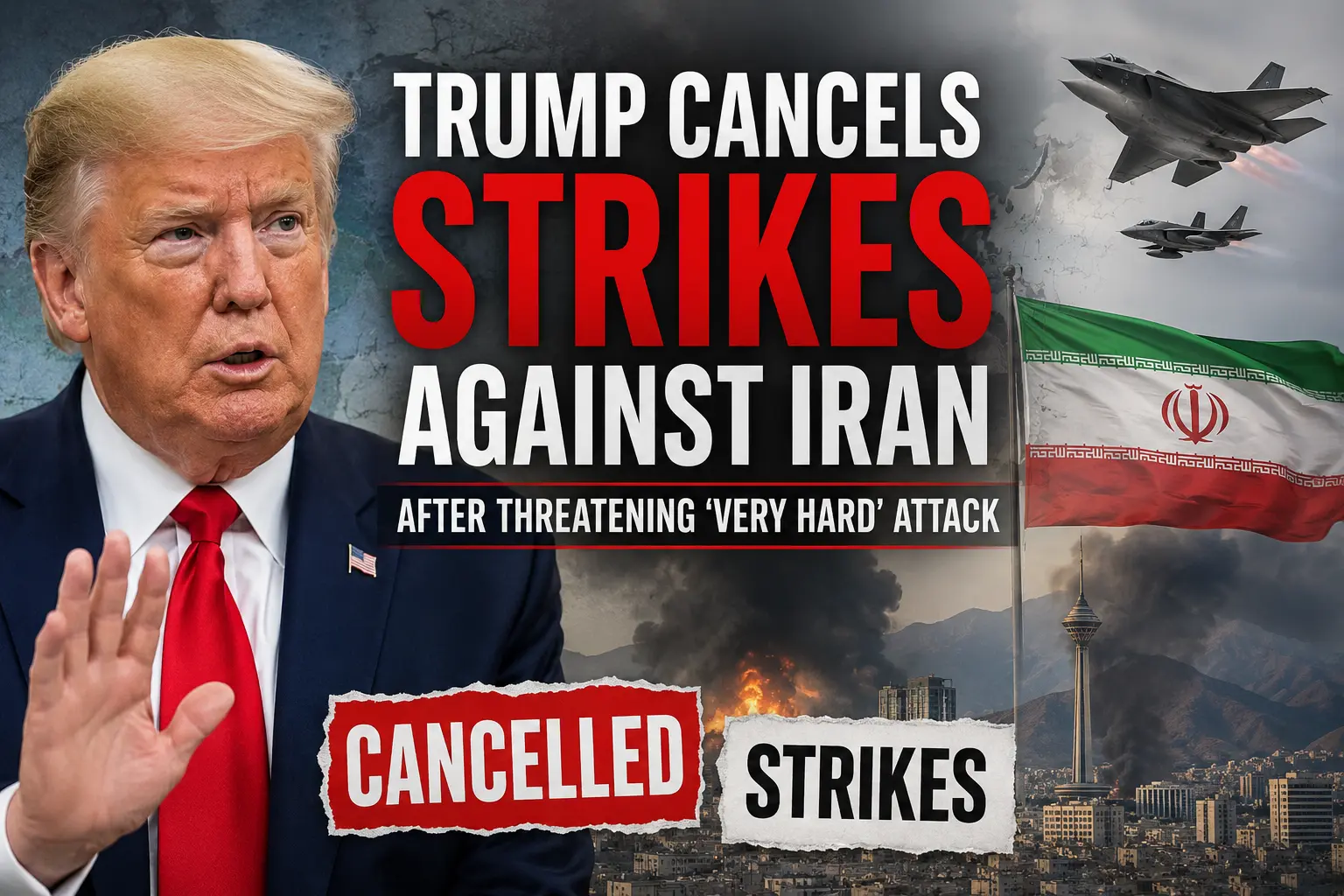
U.S. President Donald Trump announced that he has cancelled planned military strikes against Iran, only hours after warning that the United States would hit the country “very hard tonight.” The dramatic reversal came amid growing international concern over escalating tensions in the Middle East and fears of a wider regional conflict.
Earlier in the day, Trump had issued strong warnings toward Iran, threatening intensified military action following continued hostilities between U.S. and Iranian forces. He also suggested that the United States could seek control of key Iranian energy infrastructure, including Kharg Island, one of Iran’s most important oil export hubs. The remarks triggered concern in global energy markets and among U.S. allies in the region.
However, Trump later announced that the scheduled strikes and bombings had been called off. According to his statement, discussions with Iranian leadership and consultations involving several regional and international partners created an opportunity for diplomacy. He indicated that progress had been made toward a possible agreement, prompting the decision to halt the planned attack.
Despite cancelling the strikes, Trump emphasized that pressure on Iran would continue. Reports indicate that U.S. measures, including a naval blockade targeting Iran, remain in place while negotiations proceed. Key issues reportedly include Iran’s nuclear activities, sanctions relief, maritime security in the Strait of Hormuz, and broader regional stability.
The sudden shift from military threats to renewed diplomacy highlights the fragile nature of the current crisis. While the cancellation of the strikes has eased immediate fears of escalation, uncertainty remains over whether negotiations will produce a lasting agreement between Washington and Tehran. Regional governments and global markets are expected to closely monitor developments in the coming days.