
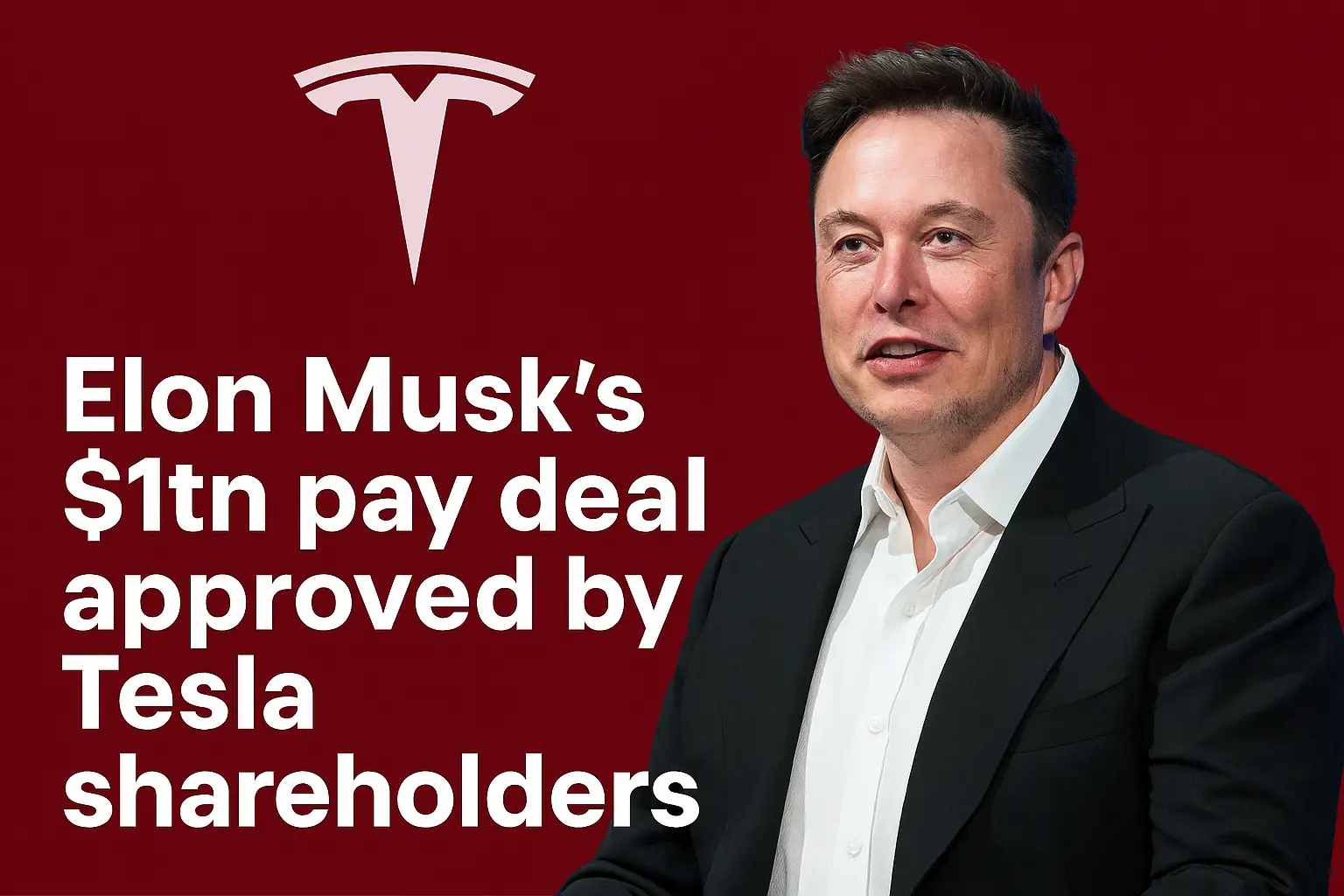
At Tesla’s annual shareholders meeting in Austin, Texas, more than 75% of shareholders voted in favour of a new compensation plan for Elon Musk. The package, potentially worth up to around $1 trillion, would be the largest corporate CEO compensation award ever if all performance conditions are achieved.
The deal is structured largely as stock-based incentives rather than a fixed salary, linking Musk’s potential earnings to Tesla’s long-term performance. If successful, Musk’s ownership stake in Tesla could increase from roughly 13% to about 25%, further cementing his control over the company.
Key Performance Conditions
The massive payout depends on Tesla achieving a series of ambitious goals over the coming years. These include reaching a market capitalization of about $8.5 trillion, delivering 20 million vehicles annually, and deploying 1 million robotaxis alongside selling 1 million humanoid robots, such as Tesla’s “Optimus” models.
Additionally, Tesla must record sustained annual profits in the hundreds of billions of dollars and Musk must remain as CEO for a defined period while guiding the company through these milestones.
Why Supporters Backed It
Supporters argue that Musk is the driving force behind Tesla’s transformation from an electric carmaker to a broader AI and robotics powerhouse. They believe the plan aligns Musk’s personal incentives with Tesla’s long-term growth rather than short-term profit.
For many investors, the potential benefits justify the risk. Musk’s proven record with Tesla, SpaceX, and other ventures gives confidence that he can push the company toward extraordinary achievements in automation, energy, and self-driving technology.
Why It’s Controversial
Despite the strong vote in favour, the deal has attracted significant criticism. The sheer scale of the potential payout—$1 trillion—has been labelled excessive by critics who question its fairness and impact on corporate governance. Some institutional investors and governance experts warned that such a plan could dilute shareholder value and place too much power in the hands of a single individual.
Sceptics also argue that achieving all the performance targets is unlikely. Tesla faces mounting challenges, including intensifying EV competition, slowing demand, supply chain risks, and regulatory scrutiny. Entrusting so much influence to one figure raises concerns about oversight and succession planning.
What This Means Going Forward
If Musk meets all conditions, he could become the first person in history to receive a corporate payout of this magnitude, potentially making him the world’s first trillionaire. For Tesla, it represents a daring bet on future dominance across multiple sectors—EVs, robotics, and AI.
The vote signals strong investor faith in Musk’s leadership and Tesla’s long-term vision. Yet, it also sets towering expectations that may prove difficult to meet. The outcome will define not only Musk’s personal wealth but also Tesla’s position in the global technology landscape.
Read this also Inside Gaza, BBC sees total devastation after two years of war
Bottom line: Tesla shareholders have handed Musk a colossal opportunity—and an equally colossal challenge. The $1 trillion plan embodies both Tesla’s ambition and the immense risks that come with placing so much of its future in one man’s hands.