
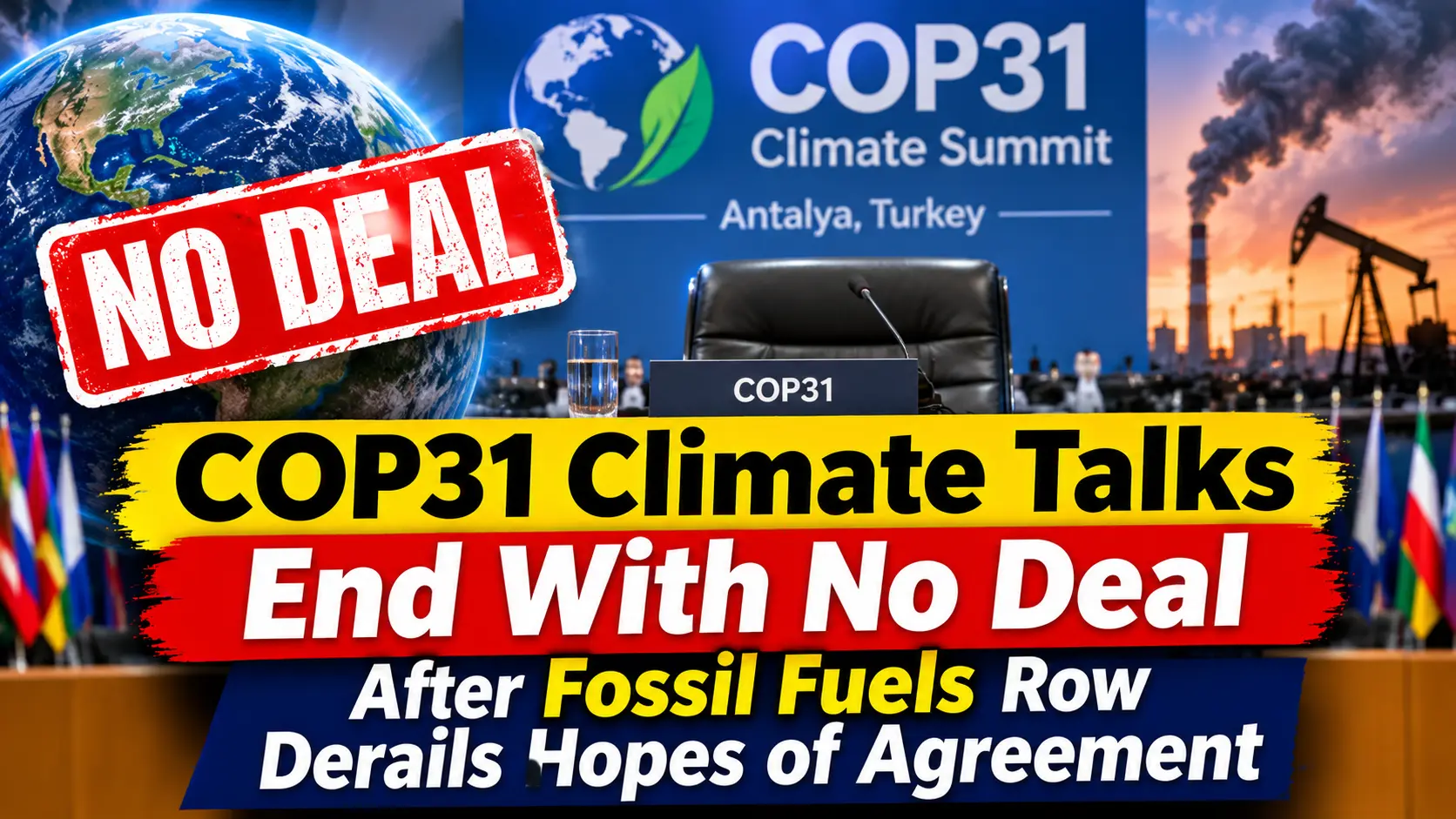
The COP31 climate summit ended without a final agreement on Sunday after a heated dispute over fossil fuels derailed hopes of a global climate deal. Negotiations in Antalya, Turkey, continued beyond their scheduled deadline, but representatives from nearly 200 countries failed to reach consensus on a proposed agreement.
The biggest disagreement centred on the absence of references to coal, oil and gas in the final draft. Several countries, including members of the European Union and vulnerable island nations, demanded stronger commitments to transition away from fossil fuels, which are major contributors to global warming.
The European Union rejected the proposed text, arguing that it failed to address the root causes of climate change. Representatives described the agreement as insufficient and warned that approving it without mentioning fossil fuels would undermine international climate ambitions.
Countries dependent on oil and gas exports opposed stronger language, highlighting concerns about energy security, economic stability and the financial consequences of a rapid transition. These divisions prevented negotiators from finding a compromise acceptable to all parties.
United Nations Secretary-General António Guterres expressed disappointment over the outcome, urging governments to demonstrate greater ambition and responsibility in tackling the climate crisis. Climate activists also criticised the summit’s failure, saying countries had missed an important opportunity to strengthen global commitments.
The collapse of the negotiations raises fresh questions about international cooperation and the effectiveness of climate summits. With rising temperatures, extreme weather and environmental damage continuing worldwide, pressure is growing on governments to take meaningful action.
Although discussions may continue through future diplomatic meetings, COP31’s failure highlights the difficult balance between economic interests and urgent environmental protection.