
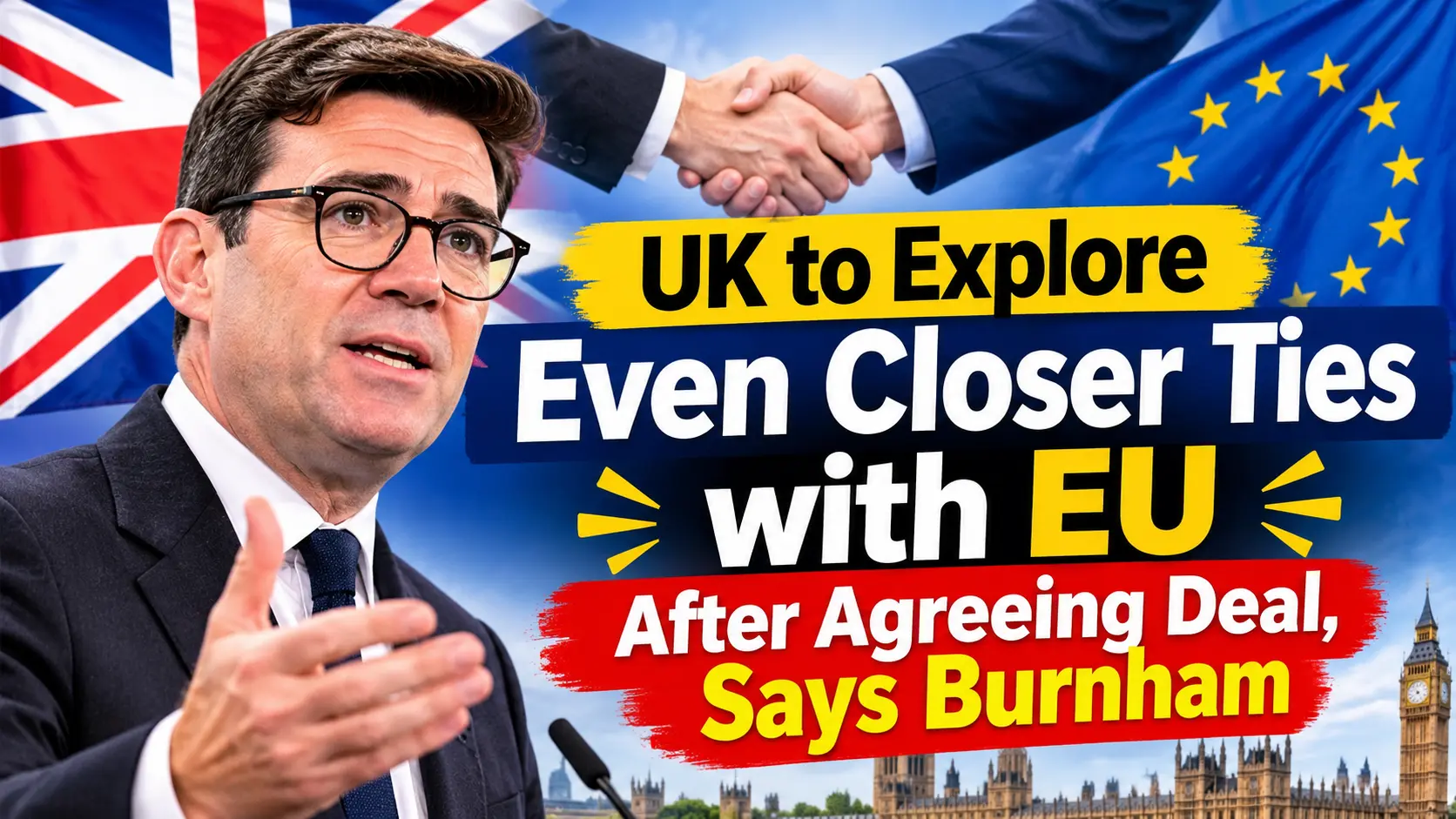
The United Kingdom is preparing to explore even closer relations with the European Union following a new agreement covering trade, environmental cooperation and youth mobility. Prime Minister Andy Burnham has described the deal as an important step towards rebuilding relations between Britain and its European neighbours after years of tensions following Brexit.
The agreement was finalised during a UK-EU summit in Brussels on November 20, 2026. It focuses on reducing trade barriers, strengthening economic cooperation and creating more opportunities for young people in both regions.
One of the major elements of the agreement involves simplifying checks on British food exports to the European Union. From 2028, many existing certificates and border inspections for animal and plant products are expected to be removed, helping businesses reduce costs and making trade smoother.
Another important development is a proposed youth mobility scheme. Under the arrangement, up to 100,000 young people aged between 18 and 31 from each side will have opportunities to travel, work and study across the UK and EU for up to three years.
The two sides have also reached an agreement to link their emissions trading systems, with implementation targeted for 2028. This could strengthen cooperation on climate policies and reduce additional costs for businesses.
Burnham said the latest agreement represents a positive development but stressed that further discussions are necessary to determine the long-term relationship. Both sides will explore additional opportunities ahead of their next summit.
However, the agreement has attracted criticism from opposition politicians, with Conservative leader Kemi Badenoch arguing that Britain could become too dependent on EU regulations. Reform UK leader Nigel Farage also criticised the arrangement.
Despite political disagreements, the agreement signals a significant effort to rebuild UK-EU relations and strengthen economic cooperation.