
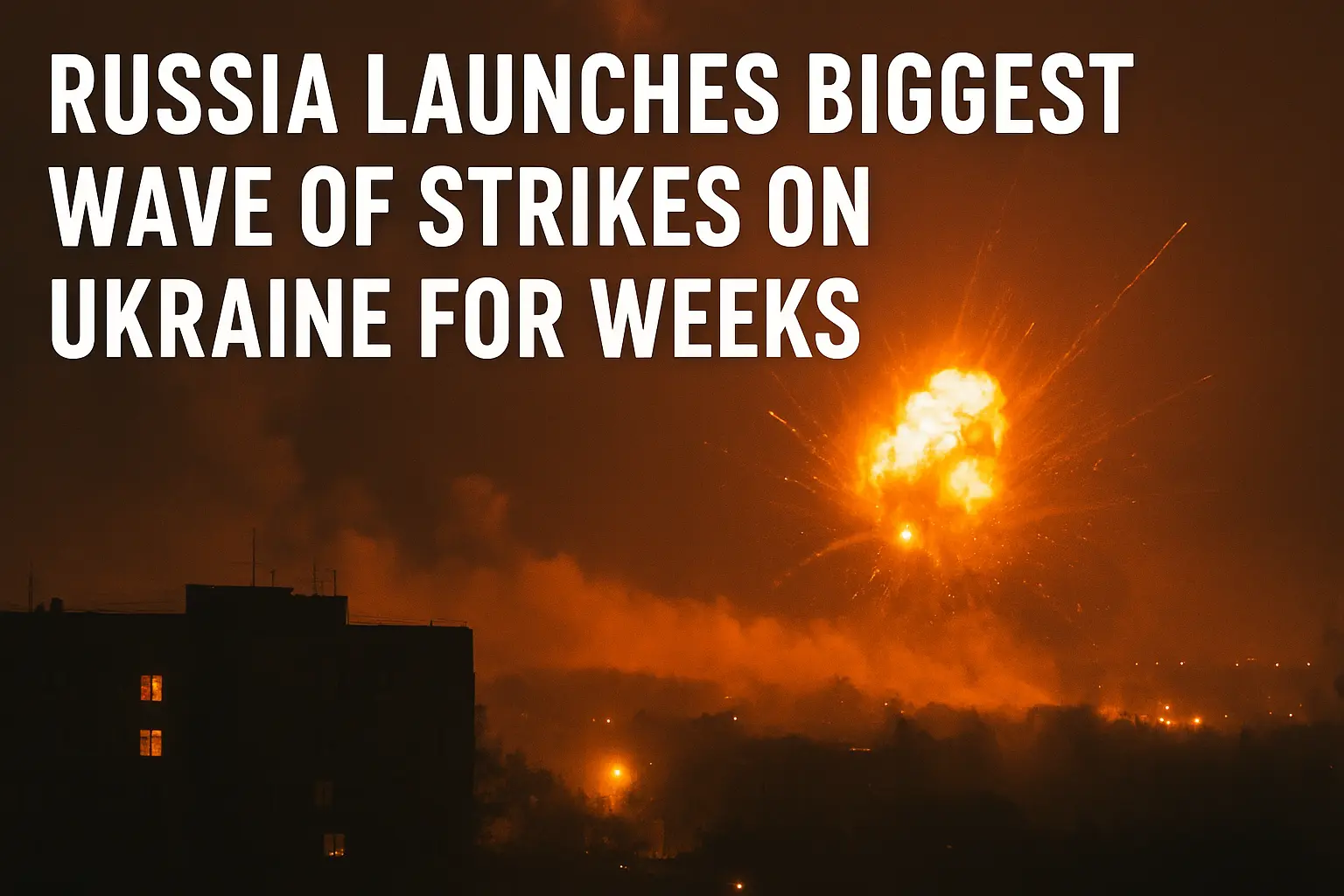
Ukraine faced one of the heaviest nights of bombardment in weeks as Russia strikes Ukraine with a large-scale missile and drone assault across multiple regions. Ukrainian authorities reported dozens of explosions in major cities, including Kyiv, Kharkiv, Dnipro, and Odesa, marking the most intense wave of attacks since early summer.
According to Ukraine’s air force, Russia launched more than 100 missiles and drones, including Kalibr cruise missiles, Iskander ballistic rockets, and Shahed drones, targeting critical infrastructure and residential areas. Air defenses intercepted the majority of incoming weapons, but several missiles penetrated, causing widespread damage. At least 12 civilians were confirmed killed, with over 40 injured, though officials warned the numbers could rise as rescue operations continued.
The strikes caused blackouts in several regions, with Ukraine’s energy grid suffering renewed damage. In Kharkiv, emergency crews battled fires after residential buildings were hit. Odesa’s port facilities were also targeted, threatening grain exports vital to Ukraine’s economy and global food supplies. Meanwhile, Kyiv residents were forced into shelters for hours as air raid sirens echoed through the capital.
Ukraine’s President Volodymyr Zelensky condemned the assault, calling it “another act of terror designed to break our spirit.” He emphasized that despite the scale of destruction, Ukraine’s resolve remains unshaken. “Every time Russia strikes Ukraine, it only strengthens our unity and determination to defend our country,” he said in a late-night address.
International reactions were swift. The European Union and the United States condemned Moscow’s latest barrage, pledging additional air defense systems and humanitarian support. NATO Secretary-General Jens Stoltenberg described the strikes as evidence of Russia’s continued escalation, reaffirming that the alliance would not abandon Ukraine.
Military analysts believe the assault is part of Russia’s strategy to weaken Ukraine’s infrastructure ahead of the winter months. Targeting energy facilities has been a recurring tactic, aiming to deprive civilians of heat and electricity. However, experts note that Ukraine’s improved air defense network, bolstered by Western-supplied systems like the Patriot and IRIS-T, has significantly reduced the effectiveness of such attacks compared to last year.
Despite these defenses, the sheer volume of missiles poses a constant threat. Ukrainian officials have urged allies to accelerate the delivery of advanced systems and ammunition, warning that Russia is increasing its missile production capacity.
As the war grinds on into its third year, both sides show no signs of compromise. With each escalation, the humanitarian toll deepens, leaving millions of Ukrainians displaced, without power, or living under the shadow of air raid sirens.
read also Zelensky leaves White House unscathed as he buys more time
For now, the world watches anxiously as Russia strikes Ukraine with growing ferocity, testing not only Ukraine’s resilience but also the resolve of its Western allies.