Mogherini fraud investigation

Former EU top diplomat Mogherini accused in fraud investigation

Federica Mogherini, the former European Union foreign-policy chief, is at the centre of a widening Mogherini fraud investigation that has shaken EU institutions and raised serious concerns about procurement integrity within the bloc. The case revolves around allegations of procurement fraud, corruption, conflict of interest, and unauthorized disclosure of confidential information linked to an EU-funded diplomatic training programme. Authorities say the investigation concerns a 2021–2022 tender issued by the European External Action Service for the creation of a new EU Diplomatic Academy. The contract was awarded to the College of Europe in Belgium, an elite postgraduate institution where Mogherini has served as rector since 2020. Investigators are examining whether privileged information was improperly shared with the College before the tender officially opened, potentially giving it an unfair competitive edge. Belgian federal police, acting on instructions from the European Public Prosecutor’s Office, conducted coordinated raids on multiple locations. These included the EEAS headquarters in Brussels, the College of Europe campus in Bruges, and private homes belonging to the suspects. During the operation, Mogherini and two other senior officials — one from the European Commission and one from the College — were detained for questioning. Following interrogation, all three individuals were formally informed of the allegations against them. They were released the same day, as investigators determined none of them posed a flight risk. Despite the gravity of the accusations, each of the suspects remains presumed innocent while the inquiry proceeds. The case has triggered significant alarm within EU leadership circles. The diplomatic academy programme was intended to strengthen the EU’s global diplomatic capacity by providing high-level training to early-career diplomats. The possibility that such a flagship initiative may have been compromised by irregularities has sparked criticism about transparency, oversight, and the use of EU public funds. Within academic circles, the investigation is also viewed as a reputational crisis for the College of Europe, an institution long regarded as a cornerstone of European policy education. Critics argue that the situation exposes broader structural vulnerabilities in how the EU awards contracts to institutions with deep political connections. As the Mogherini fraud investigation continues, prosecutors are working to determine whether procurement rules were deliberately manipulated and whether corrupt practices were employed to influence the tender’s outcome. The findings could carry significant political consequences and may prompt reforms aimed at tightening accountability within EU bodies. For now, the investigation remains ongoing, and no formal charges have been proven in court. The case is expected to develop further in the coming weeks as investigators analyse seized documents and communications

Read More
Putin-Witkoff talks

Putin and Trump’s envoy set for key Ukraine talks in Moscow

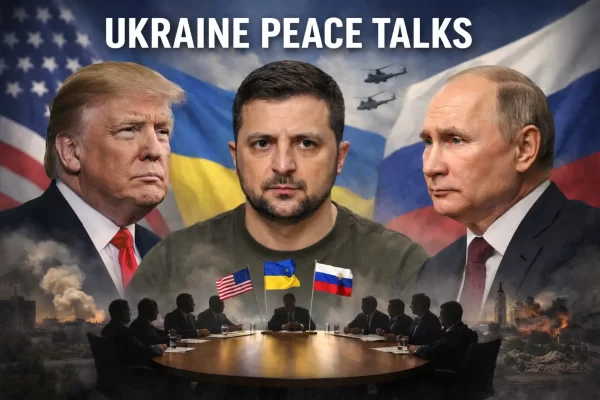
Vladimir Putin and Steve Witkoff, the special envoy appointed by Donald Trump, are set to hold critical discussions in Moscow aimed at shaping the next phase of efforts to end the war in Ukraine. The meeting is being described as one of the most consequential diplomatic engagements since Russia’s full-scale invasion began, as both sides look to test the possibilities of a negotiated settlement while maintaining hardline positions. Witkoff’s trip to Moscow follows intensive discussions in the United States between American and Ukrainian officials, who have been working to evaluate and revise a U.S.-backed peace framework. That framework has been controversial, with Ukrainian officials expressing deep concern that certain elements appear overly accommodating to Russian demands. Key sticking points include the status of contested territories and security guarantees—issues that have repeatedly derailed previous diplomatic attempts. Moscow has signaled openness to dialogue but has avoided offering any clear concessions. Russian officials have described this meeting as a preliminary review rather than a decisive moment, suggesting that a long negotiation process may lie ahead. Analysts believe Russia’s strategy is to gauge the extent to which the U.S. envoy might be willing to adjust Washington’s position, particularly regarding sanctions and recognition of Russian control over occupied regions. For his part, Witkoff has maintained a cautiously optimistic tone, noting that a “permanent peace” could be possible if both sides show flexibility. He has hinted that economic incentives and long-term security arrangements could form part of a broader settlement package. However, Ukrainian leaders remain adamant that territorial integrity cannot be compromised, especially regarding regions such as Crimea, Donbas, Kherson, and Zaporizhzhia. Complicating the environment further, Putin recently issued a stark public warning to European nations, declaring that Russia is “ready” for war if Europe chooses confrontation. This declaration is widely interpreted as an attempt to strengthen Russia’s negotiating leverage ahead of the talks. At the same time, European leaders have reiterated their support for Ukraine, signaling that they will resist any diplomatic solution that weakens Ukraine’s sovereignty. The stakes of the Putin-Witkoff talks extend far beyond the battlefield. The outcome may influence the future of European security, Washington’s role in regional stability, and the potential for diplomatic engagement at a time when both sides are digging in. While the meeting does not guarantee immediate breakthroughs, it represents a rare opening in a conflict that has largely resisted negotiation. Whether this window leads to progress or entrenches positions further will become clearer in the coming days, but expectations remain measured amid significant geopolitical uncertainty.

Read More
Indonesia floods missing

Indonesia searches for hundreds missing in deadly floods

Indonesia is facing a large-scale humanitarian emergency as rescuers continue searching for hundreds of people still missing after devastating floods and landslides swept across parts of Sumatra. The disaster, triggered by days of relentless heavy rain, has destroyed homes, buried villages in mud, and cut off entire communities. Authorities report that the death toll has surged into the hundreds, while many more remain unaccounted for, leaving families in a state of uncertainty and fear. In the worst-affected regions, rescue teams are working around the clock despite dangerous conditions. Deep mud, collapsed roads, and overflowing rivers have slowed progress, forcing teams to navigate difficult terrain on foot. Officials have deployed drones, sniffer dogs, and heavy equipment to speed up the search, but widespread destruction continues to hamper movement. Many isolated areas can only be reached after hours of trekking or by makeshift boats, as bridges and access routes have been washed away. Survivors describe scenes of chaos as flash floods tore through their homes with little warning. Many were unable to save belongings, and thousands have now been displaced, sheltering in temporary camps with limited food, clean water, and medical supplies. Relief workers warn that conditions could worsen if rains continue, raising the risk of further landslides and disease outbreaks. Local authorities, the military, and volunteers are coordinating efforts, while communities join in the search, hoping for any sign of those still missing. The government has called for urgent national support as rescue and recovery operations intensify.

Read More
US asylum pause

US halts all asylum claim decisions after National Guard shooting

The United States has announced a nationwide halt on all asylum claim decisions following the fatal shooting of two National Guard soldiers near the White House. The move marks one of the most sweeping pauses in the country’s modern asylum system and comes as federal officials launch an extensive security review into how the suspect — reportedly an asylum recipient — was vetted before entering the country. According to officials, the US asylum pause affects every category of affirmative asylum processing. Asylum officers have been instructed to continue reviewing files but may not approve, deny, or close any cases until further notice. All upcoming decision-related appointments have been canceled, leaving thousands of applicants in legal limbo. The freeze extends to individuals from all nationalities, including those who arrived through special programs created for vulnerable populations. Authorities say the temporary suspension is intended to ensure that vetting and background-check procedures meet the “highest security standards.” The shooting has intensified political debate in Washington, with lawmakers demanding tougher immigration controls and clearer screening protocols for individuals seeking protection through the asylum system. For applicants, the pause introduces uncertainty into an already backlogged process. Many asylum seekers rely on timely decisions to secure work authorization, reunite with family members, and stabilize their lives in the United States. Advocacy groups have raised concerns that the indefinite nature of the freeze could result in prolonged hardship and undermine protections for those fleeing persecution. Trump says US will pause migration from ‘third-world countries’ The federal government has not indicated when the pause will be lifted. Officials have stated only that decisions will resume once the review is complete and new guidance is in place. As the investigation into the shooting continues, the announcement signals a broader shift toward tightened immigration policies and heightened scrutiny of asylum claims nationwide.

Read More
Trump migration pause

Trump says US will pause migration from ‘third-world countries’

Donald Trump has announced that the United States will “permanently pause migration from all ‘Third World Countries’,” a move he claims is essential to give the “U.S. system time to fully recover.” His declaration, widely circulated through his social media post, marks one of the most sweeping immigration positions taken during his presidency. In his late-night statement, Trump outlined a set of hardline measures aimed at reshaping the immigration system. He said he intends to eliminate “all federal benefits and subsidies to noncitizens,” arguing that only individuals who contribute economically and culturally should remain in the country. He further stated that he would strip legal status and deport anyone he considers “not a net asset to the United States” or “incapable of loving our country.” The announcement followed a fatal shooting near the White House that was allegedly carried out by an Afghan national. The incident fueled political debate over national security and immigration enforcement. Trump’s response signals a significant escalation in his administration’s longstanding crackdown on migration, which has included tightened border controls, travel restrictions, and expanded deportations. He also warned that his administration would move to “denaturalise migrants who undermine domestic tranquility,” while expanding criteria for deportation to include foreign nationals deemed security risks or “non-compatible with Western civilisation.” The broad and undefined language of these criteria has triggered concern among legal experts and civil rights groups, who argue that such proposals could lead to inconsistent or discriminatory enforcement. One of the most notable gaps in Trump’s announcement is the absence of a clear definition of what constitutes “Third World Countries.” No list was provided, leaving observers to speculate about how broadly the policy could be applied. This ambiguity raises fears that immigrants from large portions of Asia, Africa, Latin America, and the Caribbean could face unprecedented barriers. Critics say the proposal lacks legal clarity, implementation details, and constitutional grounding. Past attempts by the Trump administration to impose similar restrictions — including travel bans and tightened visa rules — frequently faced court challenges and resistance from Congress. Analysts warn that a sweeping “migration pause” could be tied up in legal battles for months or years. If implemented as described, the plan could disrupt existing refugee admissions, family reunification petitions, employment visas, and Green Card processes. It may also create uncertainty for millions of immigrants already living in the United States, many of whom fear the potential expansion of deportation criteria. Trump’s proposal has intensified the national conversation on immigration, setting the stage for renewed political conflict as policymakers, advocates, and courts assess the legality and impact of such an unprecedented halt to migration.

Read More
Zelensky

Zelensky warns against giving away territory as latest Ukraine talks end

Ukrainian President Volodymyr Zelensky has issued a firm warning against any proposals that involve surrendering territory to Russia, as the latest round of diplomatic discussions concluded without major breakthroughs. Speaking after the talks, Zelensky emphasized that Ukraine’s sovereignty and territorial integrity are non-negotiable, underscoring that no peace plan can succeed if it compromises the nation’s internationally recognized borders. The talks, which brought together Ukrainian officials and a coalition of international mediators, focused on exploring new frameworks for a potential ceasefire and long-term security guarantees. While some participants suggested considering territorial concessions as part of a broader compromise, Kyiv firmly rejected this approach. Zelensky stressed that accepting such terms would not only undermine Ukraine’s future security but also set a dangerous precedent for global norms surrounding territorial aggression. Despite the lack of concrete progress, diplomats described the negotiations as “constructive,” noting that all sides remain committed to pursuing a peaceful resolution. Ukraine reiterated that any sustainable peace agreement must include the full withdrawal of Russian forces, the return of all occupied regions, and binding security assurances to prevent future escalations. Zelensky also called on international partners to maintain strong political and military support for Ukraine, warning that weakening assistance would embolden Russian aggression and prolong the conflict. He highlighted the importance of unity among allies, especially as winter approaches and fighting continues on multiple fronts. While the talks ended without major advancements, the Ukrainian government said discussions would continue in the coming weeks. For Kyiv, the stance remains clear: peace is possible, but not at the cost of territorial loss or national sovereignty.

Read More
Nigeria mass abduction

Nigeria sees one of worst mass abductions as 315 taken from school

Nigeria is facing one of its most devastating mass abductions in years after 315 people — including 303 students and 12 teachers — were seized from St. Mary’s Catholic Primary and Secondary School in the Papiri community of Niger State. The attack, carried out by heavily armed gunmen in the early hours, has renewed nationwide alarm over the persistent vulnerability of schools amid rising insecurity. The gunmen reportedly arrived in large numbers, overwhelming the limited security presence before storming classrooms and staff quarters. Many students attempted to flee into nearby bushes, but dozens were later confirmed to be among those abducted, raising the total number well above initial estimates. Local authorities and community leaders described the abduction as one of the largest school kidnappings ever recorded in the country, surpassing several high-profile incidents from previous years. The Christian Association of Nigeria confirmed the updated figure of 315 abducted after a detailed headcount, noting that some early reports had underestimated how many students were missing. Out of 629 enrolled students at the school, nearly half were taken, underscoring the scale of the crisis and the attackers’ ability to operate with impunity. The abduction follows another major kidnapping just days earlier, in which 25 girls were taken from a secondary school in Kebbi State. The back-to-back incidents have heightened fear across northern Nigeria and prompted authorities in nearby states to order emergency school closures as a precaution. The surge in violence has also pressured the federal government to reassess its security strategies, as armed groups increasingly target educational institutions for ransom or political leverage. President Bola Tinubu cancelled planned international commitments to address the crisis, directing military, police, and local security forces to conduct an intensive rescue operation across forests surrounding the area. Security personnel have reportedly launched coordinated searches, but large-scale abductions in remote regions often pose significant challenges due to difficult terrain and the mobility of the armed groups responsible. Community leaders have appealed for calm but expressed frustration over what they describe as recurring lapses in intelligence and protection for rural schools. The Christian Association of Nigeria urged the public to avoid circulating misinformation, dismissing claims that the school received prior warnings as false and harmful. Civil-society organizations, including major child-rights groups, have renewed calls for stronger national policies to protect schoolchildren, stressing that attacks on educational facilities have become disturbingly routine. The mass abduction in Niger State stands as a stark reminder of the insecurity gripping parts of the country. As families await news of their loved ones, the incident highlights the urgent need for sustained security reforms, improved community protection, and a strengthened commitment to safeguarding children — especially in regions where schools have increasingly become targets.

Read More
Zelensky negotiations with US

Zelensky ready to work with US on ‘their vision’ for ending Ukraine war

Ukrainian President Volodymyr Zelensky has signaled a willingness to engage closely with Washington on a U.S.-backed peace proposal, describing his approach as “constructive, honest and prompt.” Following a meeting in Kyiv with U.S. Army Secretary Daniel Driscoll, Zelensky affirmed that Ukrainian and American teams would collaboratively work on the key elements of the plan. Although the full details of the 28-point plan have not been publicly disclosed, reports suggest it contains highly sensitive terms — including territorial concessions, military restrictions, and a new security architecture. According to media coverage, some of the most controversial proposals would require Ukraine to cede control over the Donbas region, formally recognize Russian control over Crimea, Luhansk, and Donetsk, and limit its army to 600,000 troops. In exchange, Ukraine would receive “robust security guarantees,” though the exact form and enforceability of those guarantees remain unclear. For Zelensky, agreeing to negotiate does not mean blind capitulation. His office says that while he has accepted a draft, he has also “outlined the fundamental principles that matter to our people.” He frames the collaboration as essential for a “just peace that respects everyone’s sovereignty, a durable peace that can’t be called into question by future aggression.” This willingness to engage has stirred strong reactions. Several European allies have pushed back, warning that the U.S.-proposed plan could amount to a forced surrender of Ukrainian land and resources. Critics argue that such terms might undermine Ukraine’s long-term security and set a dangerous precedent for capitulation-style diplomacy. Still, Zelensky appears determined enough to explore diplomacy. His team plans to hold further discussions not only with U.S. officials but also with other international leaders. According to his office, as part of upcoming diplomacy, Zelensky expects to engage with former U.S. President Donald Trump to explore key diplomatic pathways. How Tommy Hilfiger Became an Overnight Success | Perception Hack | Genius | Secret Zelensky’s outreach underscores a realistic — albeit risky — gamble: he hopes that by aligning with the U.S. vision of peace, Ukraine can secure a deal that prevents future Russian aggression while preserving core national interests. At the same time, he is balancing a fragile relationship — negotiating under pressure from Western allies, wary of concessions, and on a war footing that demands both vigilance and flexibility. Children among 25 killed in one of Russia’s deadliest strikes on western Ukraine

Read More
Russia-Ukraine war residential building strike

Children among 25 killed in one of Russia’s deadliest strikes on western Ukraine

A devastating Russian drone and missile strike hit the western Ukrainian city of Ternopil overnight, killing 25 people, including three children, and injuring dozens more. The attack, one of the deadliest in western Ukraine since the start of the full-scale invasion, struck a densely populated residential area where families were asleep as the bombardment began. According to authorities, two nine-storey residential apartment blocks suffered direct hits. The upper floors were torn apart as explosions triggered a fierce blaze that engulfed the buildings within minutes. Interior Minister Ihor Klymenko described sections of the structure being consumed in what he called “fiery lava,” a torrent of flames so intense that many residents had no chance to escape before the fire overtook their homes. Of the 25 confirmed fatalities, three were children aged just 5, 7, and 16. Emergency crews reported that another 73 people were wounded, including at least 15 children, many suffering burns, blast injuries, or smoke inhalation. Rescue workers continued digging through smoldering rubble throughout the day, warning that as many as two dozen people remained missing and that recovery operations could take several days due to the scale of destruction. Ukraine’s air force said Russia launched an enormous overnight barrage consisting of 476 drones and 48 missiles targeting multiple regions. While air defenses intercepted a significant number, several managed to slip through, striking civilian infrastructure, residential zones, and energy facilities. The attack triggered power outages across several western regions, leaving thousands without electricity or heating as winter temperatures continue to drop sharply. Local officials warned that the humanitarian situation could worsen if strikes on energy facilities persist. Ukrainian leaders condemned the assault as a deliberate attack on civilians, emphasizing that there were no military installations near the impact zone. Officials stressed that the timing and scale of the strike suggested an effort to sow fear and cause mass casualties far from active front lines. The attack coincided with President Volodymyr Zelenskyy’s diplomatic visit to Turkey, where he is seeking enhanced international support to counter Russia’s escalating aerial campaign. Ukrainian authorities announced they would raise the Ternopil strike at the United Nations Security Council, calling for a stronger global response and accountability measures. Ukraine to get up to 100 French-made Rafale fighter jets As firefighters continued to extinguish pockets of flames and families searched for missing loved ones, the tragedy underscored the increasingly lethal reach of Russian strikes—even in Ukraine’s western regions, which had once been considered relatively safe. For many residents, the overnight attack marked a horrifying reminder that no part of the country is beyond the war’s devastating impact. How Tommy Hilfiger Became an Overnight Success | Perception Hack | Genius | Secret

Read More
Ukraine Rafale deal

Ukraine to get up to 100 French-made Rafale fighter jets

Ukraine is set to receive a major boost to its airpower as France moves forward with a landmark plan to supply up to 100 Rafale fighter jets, marking one of the largest military aviation transfers in Europe since the start of the war. The decision underscores France’s growing commitment to strengthening Ukraine’s long-term defense capabilities and supporting Kyiv’s efforts to modernize its Soviet-era air fleet. The Rafale, manufactured by Dassault Aviation, is considered one of the world’s most advanced multirole fighter jets. Its ability to perform air superiority missions, deep strike operations, reconnaissance tasks, and nuclear deterrence roles makes it a highly versatile platform. For Ukraine—whose air force has relied heavily on aging MiG-29s and Su-27s—the introduction of Rafales would represent a transformative shift in capability. Ukrainian officials have argued for months that a modern fighter fleet is essential not only for protecting airspace but also for regaining strategic initiative on the battlefield. While the exact timeline for delivery remains under discussion, French sources suggest that the aircraft could be transferred in phases over several years. This approach would allow Ukrainian pilots and ground crews sufficient time for training, which is a crucial component of the agreement. France is also expected to provide simulators, maintenance support, and long-term logistics to ensure sustained operational readiness. The deal, still being finalized, signals a broader shift in European security policies. As the war continues with no clear end in sight, European countries are increasingly willing to commit high-value assets to Ukraine’s defense. France’s willingness to supply Rafales—a premium component of its own air force—highlights the seriousness of Europe’s evolving security posture and the recognition that Ukraine’s defense is directly tied to the stability of the continent. For Kyiv, the potential delivery of up to 100 Rafale jets would dramatically enhance its ability to intercept missiles, challenge Russian aircraft, and support ground operations. It would also integrate Ukraine more deeply into Western defense standards, a step seen as significant for its future ambitions within NATO. Experts believe this modernization could position Ukraine to operate alongside allied air forces with greater interoperability and effectiveness. The economic implications are also notable. Dassault Aviation, which has seen rising demand for Rafales in recent years, stands to gain from long-term production and support contracts. The deal additionally strengthens France’s geopolitical influence, positioning Paris as a central player in shaping the future of European defense. Overall, the Ukraine Rafale deal marks a pivotal moment in the ongoing conflict, signalling a strategic upgrade for Ukraine’s air capabilities and a strengthened commitment from France to support Kyiv in the years ahead. Feud erupts between Trump and ally Marjorie Taylor Greene ahead of Epstein files vote

Read More