Gaza devastation

Inside Gaza, BBC sees total devastation after two years of war

Two years after the war between Israel and Hamas began, the Gaza Strip has been reduced to ruins, with once-thriving neighborhoods now resembling ghost towns. A BBC team granted rare access to the territory describes a landscape of total devastation — homes flattened, hospitals barely functioning, and thousands of displaced families struggling to survive amid the wreckage. Entire districts that were once crowded with markets, schools, and apartment blocks now lie in rubble. In northern Gaza, what used to be Gaza City’s commercial heart is now a sea of collapsed concrete and twisted metal. The BBC crew reported seeing children playing amid debris, their laughter echoing in streets that have no running water, electricity, or sanitation. “It’s like time stopped here,” one resident told reporters. “We are alive, but everything around us is dead.” The humanitarian situation remains dire. The United Nations estimates that more than 1.7 million people — nearly 80 percent of Gaza’s population — are still displaced. Many live in makeshift shelters or tents built from scrap metal and plastic sheets. Food shortages are chronic, with aid deliveries continuing to face restrictions at border crossings. Hospitals, already crippled by years of blockade, are overwhelmed. Doctors work without adequate supplies, and power cuts force surgeries to be done under flashlights. The BBC also visited Al-Shifa Hospital in Gaza City, once the territory’s largest medical facility. Its corridors are dark, lined with patients on stretchers, while generators rumble outside. “We’ve lost colleagues, we’ve lost equipment, and we’re losing patients we could have saved,” said one exhausted doctor. Israel’s government maintains that its military operations were aimed at dismantling Hamas’s military infrastructure, following the deadly attacks that triggered the war in 2023. Officials say rebuilding can only begin once Hamas’s influence is completely removed. However, international aid agencies argue that ordinary civilians have borne the brunt of the destruction, with entire families wiped out and public infrastructure obliterated. Despite calls from global powers for a long-term ceasefire and reconstruction plan, progress has been painfully slow. Many foreign donors remain hesitant to fund rebuilding projects without assurances of stability. Meanwhile, Gazans face another winter with little shelter and minimal hope. At the Rafah crossing on the Egyptian border, crowds gather daily, hoping for rare permits to leave. “We just want to live somewhere safe,” said a young mother holding her child. “We have nothing left here.” Two years on, the BBC’s report paints a bleak picture: a territory trapped between the ruins of war and the uncertainty of peace. For Gaza’s people, survival has become the only measure of victory.

Read More
tower collapse in rome

Worker dies after partial collapse of medieval tower in Rome

A construction worker has died after a partial collapse of a medieval tower in central Rome, Italian authorities confirmed on Tuesday. The tragic incident occurred at the historic Torre Accursi, a centuries-old structure undergoing restoration near Piazza Venezia, one of the capital’s busiest and most visited areas. According to emergency services, part of the upper section of the tower gave way around midday, sending debris cascading onto the scaffolding below where several workers were operating. Rescue teams rushed to the scene within minutes, including firefighters, police, and paramedics. One worker, a 42-year-old Italian man, was found trapped under rubble and pronounced dead at the scene. Two other workers sustained minor injuries and were taken to nearby hospitals for treatment. The area around the tower has since been cordoned off as authorities investigate the cause of the collapse. Early reports suggest structural instability in a section of the ancient masonry may have triggered the failure, though officials have not ruled out the possibility of errors related to the ongoing restoration work. Engineers and heritage experts from the Italian Ministry of Culture have joined the investigation to assess the extent of the damage and the safety of adjacent buildings. The Torre Accursi, dating back to the 13th century, is one of several medieval towers that once dotted the skyline of Rome. The structure had been under restoration for several months as part of a broader city initiative to preserve historical landmarks that have suffered from decades of wear, pollution, and neglect. The project aimed to reinforce the tower’s foundations and repair cracks that had developed in its stone walls. Rome’s mayor, Roberto Gualtieri, expressed his condolences to the victim’s family and called for a thorough investigation. “This is a terrible tragedy that should never have happened,” he said. “Our thoughts are with the worker’s loved ones, and we will ensure full accountability for what occurred.” The collapse has sparked renewed debate about the safety of restoration projects on Italy’s vast array of ancient and medieval buildings. Preservation experts have long warned that balancing conservation with modern construction standards poses significant challenges. The incident also comes amid broader concerns over workplace safety in Italy, where fatal accidents on construction sites remain a recurring issue despite recent reforms. As the investigation continues, authorities have suspended all work at the site. The Ministry of Culture stated that the tower’s stability will be closely monitored before any restoration efforts resume. Meanwhile, tributes have poured in for the victim, remembered by colleagues as a skilled and dedicated craftsman who had spent years working on historic restoration projects across Rome.

Read More
tequila bats Mexico

Why tequila depends on Mexico’s bats

equila, Mexico’s most famous spirit, owes much of its existence to an unlikely ally — bats. Specifically, the lesser long-nosed bat and the Mexican long-tongued bat play a vital role in pollinating the blue agave plants from which tequila is made. These nocturnal creatures help sustain the delicate balance of the agave ecosystem, making them essential to the drink’s future. Blue agave plants take around seven to ten years to mature before they can be harvested for tequila production. During this time, the plants produce tall flowering stalks called quiotes, which can reach up to six meters in height. Most agave farmers traditionally cut these stalks off to preserve the plant’s sugar concentration, ensuring a sweeter heart, or piña, for distillation. However, when the flowering stalks are removed, bats lose their primary source of nectar, disrupting their feeding habits and reducing the chance for natural pollination. The relationship between bats and agave is a classic example of mutualism in nature. As bats feed on the nectar of agave flowers, they transfer pollen from one plant to another, promoting genetic diversity and resilience within the species. Without bat pollination, agave plants would become more genetically uniform, making them vulnerable to pests, diseases, and climate stress — all of which could threaten tequila production. In recent years, conservationists and tequila producers have begun to recognize the importance of protecting bats and encouraging natural pollination. Initiatives like the “Bat-Friendly Tequila” and “Bat-Friendly Mezcal” programs allow some agave plants in each field to bloom naturally, providing food for bats and ensuring genetic variation. Farmers who participate in these programs label their bottles with a special bat-friendly certification, signaling to consumers that their tequila supports wildlife conservation. These sustainable practices not only protect bat populations but also safeguard the long-term future of tequila. Encouraging biodiversity helps agave plants adapt to environmental changes, including drought and shifting weather patterns linked to climate change. Jamaicans reveal devastation as hurricane causes floods, power cuts and splits city in two The story of tequila and bats is a reminder that even the world’s most celebrated products rely on natural relationships to survive. Every sip of tequila is connected to the nighttime flight of bats across Mexico’s agave fields. Protecting these pollinators is not only a matter of preserving wildlife — it’s also essential for maintaining the flavor, quality, and cultural heritage of one of Mexico’s most iconic spirits.

Read More
Jamaica

Jamaicans reveal devastation as hurricane causes floods, power cuts and splits city in two

Jamaica is reeling from the aftermath of the catastrophic Hurricane Melissa, which tore through the island earlier this week, leaving a trail of destruction described by residents as “the worst in living memory.” The Category Five storm battered the island with sustained winds of over 250 km/h, torrential rains, and massive storm surges that inundated coastal areas and crippled infrastructure. The capital, Kingston, has been left partially cut off after severe flooding and landslides split the city in two, isolating several districts from the main road network. Entire neighborhoods were submerged under several feet of water, forcing thousands of residents to seek refuge in emergency shelters. According to Jamaica’s Office of Disaster Preparedness and Emergency Management, more than 80% of the island’s households lost power during the height of the storm, while communication networks collapsed under widespread outages. Residents shared harrowing accounts of how the hurricane transformed once-bustling streets into rivers overnight. “It was like the sea came for us,” said one survivor from Port Royal, recalling how waves crashed through coastal defenses. In the hills overlooking the city, homes were swept away by mudslides, while downed trees and power lines made rescue operations perilous. Authorities have confirmed at least 27 deaths, though officials warn that the number may rise as search-and-rescue teams reach the most remote areas. Hospitals have been overwhelmed with the injured, and emergency crews continue to battle blocked roads and damaged bridges. Prime Minister Andrew Holness declared a national state of emergency, urging international partners for immediate assistance. “Our nation is facing one of the darkest moments in its modern history,” he said in a televised address. “But Jamaica will rebuild, stronger and united.” Airports remain closed, and the main seaport in Kingston sustained heavy damage, disrupting food and fuel supplies. Power company officials estimate it could take several weeks before electricity is fully restored across the island. Water systems have also been compromised, raising fears of disease outbreaks as residents rely on contaminated floodwaters. International aid has begun to arrive, with relief teams from neighboring Caribbean nations and the United States assisting local authorities in distributing food, clean water, and medical supplies. Despite the destruction, scenes of resilience have emerged across the island. Volunteers and community groups are working tirelessly to clear debris, support displaced families, and restore a sense of hope amid the ruins. As Jamaica begins its long recovery, experts warn that the record-breaking intensity of Hurricane Melissa highlights the growing threat of climate change to the Caribbean. For many Jamaicans, however, survival and rebuilding their shattered communities remain the immediate priority.

Read More
Jamaica life-threatening storm

Jamaica in path of ‘life-threatening’ category five Hurricane Melissa

Jamaica is bracing for the full force of Hurricane Melissa, now an extremely dangerous Category 5 storm, as it barrels through the Caribbean with devastating winds and torrential rain. The U.S. National Hurricane Center (NHC) has warned that the storm poses a “life-threatening threat” to the island, bringing the potential for catastrophic damage, flooding, and storm surges. Melissa, with sustained winds exceeding 260 kilometers per hour (160 mph), is the strongest hurricane to form in the Atlantic this season. The hurricane’s eye was located just 150 kilometers southeast of Kingston on Tuesday afternoon, moving northwest at around 20 kilometers per hour. Meteorologists say the storm’s outer bands have already begun lashing Jamaica’s southern coast with heavy rainfall and fierce winds. Authorities have issued evacuation orders for low-lying and coastal areas, including parts of St. Catherine, Clarendon, and St. Elizabeth parishes. Shelters have been opened across the island, and the government has mobilized emergency services, soldiers, and medical personnel in preparation for the storm’s landfall, expected late Tuesday night or early Wednesday morning. Prime Minister Andrew Holness has urged citizens to take the warnings seriously, emphasizing that this hurricane could cause “unprecedented destruction” if residents do not act swiftly. “We are facing a dangerous and unpredictable system. Everyone must move to safety and avoid taking risks,” Holness said during a national address. Meteorologists predict that Melissa could drop up to 600 millimeters (24 inches) of rain in some areas, leading to flash floods and landslides, particularly in mountainous regions. Coastal communities face the risk of storm surges up to 5 meters (16 feet) high, capable of inundating entire neighborhoods and cutting off access to vital infrastructure. Airports across the island have suspended operations, and airlines have canceled flights in and out of Jamaica. The national power company has warned of possible widespread outages as high winds threaten to topple electricity poles and damage transmission lines. After passing Jamaica, Hurricane Melissa is projected to continue northwest toward the Cayman Islands and western Cuba, though slight changes in its path could alter its trajectory. The NHC continues to monitor the storm closely, warning nearby nations to remain vigilant.

Read More
jewel theft

Two arrested over theft of jewels at Louvre museum in Paris

In a dramatic development following one of the most audacious museum robberies in recent memory, French authorities have arrested two men in connection with the jewel theft at the Louvre Museum in Paris. The theft occurred on 19 October 2025, when four intruders disguised as maintenance workers used a cherry-picker truck to reach the Galerie d’Apollon section of the Louvre. Once inside, they smashed a window and several display cases before escaping with eight pieces of France’s crown jewels, valued at around €88 million (approximately US $102 million). The stolen items included priceless crowns, scepters, and diamond-encrusted ornaments that once belonged to French royalty. The two suspects, both men in their thirties and already known to police for previous offences, were taken into custody on the evening of Saturday, 25 October. One was arrested at Paris’s Charles de Gaulle Airport while attempting to board a flight to Algeria, while the second was captured in Seine-Saint-Denis, north of Paris, reportedly preparing to travel to Mali. The arrests were carried out by France’s elite Brigade de Répression du Banditisme (BRB), a special police unit dedicated to major crimes. Investigators said the breakthrough came after meticulous forensic work at the crime scene, where officers discovered power tools, helmets, walkie-talkies, and over 150 DNA and fingerprint traces. These pieces of evidence helped link the suspects directly to the robbery. Although the arrests bring a measure of relief, none of the main stolen jewels have yet been recovered. Only one damaged piece, believed to have been dropped during the thieves’ escape, was found near the museum shortly after the heist. Authorities fear that the rest of the jewels may have already been dismantled, sold on the black market, or smuggled abroad. The Louvre’s director described the robbery as a “terrible failure,” admitting that serious security and surveillance lapses had been uncovered during the investigation. In particular, officials noted that the façade used by the thieves lacked proper camera coverage — a vulnerability the museum has since pledged to fix immediately. French police have intensified their hunt for the remaining members of the group, who are believed to have orchestrated the robbery with precision and insider knowledge of the museum’s security systems. Investigators suspect that additional accomplices may have helped plan or finance the theft. While the arrests represent a significant step forward, authorities caution that the inquiry is far from over. The focus now shifts to tracing the missing jewels, identifying all participants in the heist, and ensuring that the Louvre — the world’s most visited museum — never again becomes the scene of such a bold and costly crime.

Read More
Trump China Ukraine peace talks

Trump hopes China will help push Russia towards Ukraine peace talks

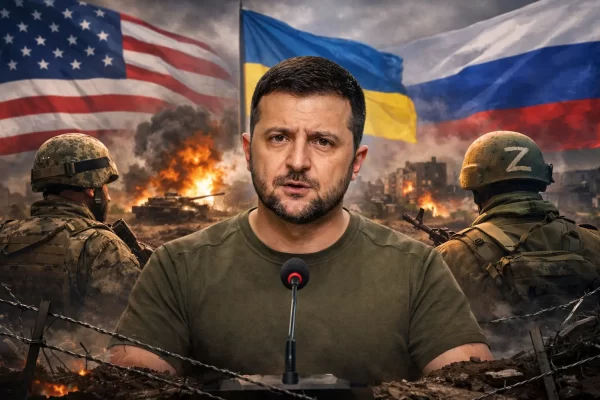
Former U.S. President Donald Trump has expressed optimism that China could play a key diplomatic role in nudging Russia toward renewed peace negotiations over Ukraine. Speaking to reporters at his Florida residence on Friday, Trump said he believed “China’s influence over Moscow” could be decisive in bringing both sides back to the table and ending what he called “a war that should have never gone this far.” Trump, who has repeatedly signaled his intention to broker a peace deal between Kyiv and Moscow if re-elected, emphasized that Beijing holds “significant leverage” over Russian President Vladimir Putin, both economically and strategically. “President Xi has the ability to encourage Putin to make peace,” Trump said. “China doesn’t want to see instability or global economic disruption—so I think they can help us move toward a solution.” His remarks come amid increasing speculation that the White House may support Trump’s informal diplomatic outreach efforts, particularly after the collapse of the planned Trump-Putin meeting in Budapest earlier this week. Although the former president insisted his talks with Moscow were “ongoing through other channels,” he admitted that recent discussions had “not gone anywhere.” China has maintained a delicate balance throughout the war in Ukraine, calling for a negotiated settlement while avoiding direct condemnation of Russia’s invasion. Beijing’s 12-point peace proposal, released in early 2023, received a mixed response from Western leaders but was welcomed by Moscow as a “constructive framework.” Analysts say Trump’s latest comments indicate a willingness to align parts of his diplomatic approach with China’s mediation style—one focused on economic incentives rather than military pressure. Meanwhile, Ukrainian officials remain skeptical of any deal that allows Russia to retain occupied territories. President Volodymyr Zelensky has said he would only participate in peace talks that respect Ukraine’s territorial integrity and involve international guarantees for long-term security. Still, Trump’s remarks suggest a growing sense of urgency to find an exit from the conflict. “Every day this war continues, people are dying, economies are suffering, and the world gets closer to a bigger catastrophe,” he warned. “If we can bring China, Russia, and Ukraine to the same table, it would be a massive step toward stability.” As tensions rise across Eastern Europe, attention will now turn to Beijing’s response. Whether China chooses to take a more active diplomatic role—or continues its cautious neutrality—could determine whether Trump’s vision for peace has any real chance of success. Trump says Putin talks ‘don’t go anywhere’ as he imposes new sanctions

Read More
Trump Putin sanctions

Trump says Putin talks ‘don’t go anywhere’ as he imposes new sanctions

Former U.S. President Donald Trump announced on Wednesday that planned talks with Russian President Vladimir Putin “didn’t go anywhere,” as his administration imposed a fresh round of sanctions on Moscow over its continued military involvement in Ukraine. The statement marks a sharp turn in tone just days after Trump had expressed optimism about brokering a peace deal between Russia and Ukraine. Speaking to reporters at the White House, Trump said his team had “made every effort” to prepare for constructive talks with the Kremlin, but that “the Russian side was not ready to make meaningful commitments.” He added that he would not pursue another meeting “until there’s a real change in attitude from Moscow.” The two leaders had been expected to meet in Budapest later this month to discuss potential steps toward ending the war. The sanctions announced by the U.S. Treasury target more than 40 Russian entities and individuals, including defense manufacturers, energy companies, and senior officials close to the Kremlin. According to Trump, the measures are aimed at “pressuring Russia to engage seriously in peace negotiations” while maintaining support for Ukraine’s sovereignty. “We are not walking away from diplomacy,” Trump said. “But we are not going to waste time when the other side refuses to move toward peace.” Kremlin spokesperson Dmitry Peskov criticized the new sanctions, calling them “unfriendly and counterproductive.” He said Moscow viewed Washington’s move as “a continuation of pressure politics” and reiterated that Russia would not negotiate “under threats.” Russian state media also downplayed Trump’s comments, suggesting the U.S. was using sanctions to strengthen its negotiating position. In Kyiv, Ukrainian President Volodymyr Zelensky welcomed the new U.S. sanctions, saying they demonstrated continued American commitment to Ukraine’s defense. “Every step that isolates Russia’s war machine helps us bring peace closer,” Zelensky said in a televised address. Analysts say the collapse of the planned Trump–Putin meeting underscores the ongoing difficulty in finding common ground on Ukraine, even as both sides face mounting pressure to end the war. “Trump’s decision to suspend talks sends a message that the U.S. expects concrete concessions before engaging further,” said Rachel Kim, a senior fellow at the Atlantic Policy Institute. Read This Also Trump says he did not want ‘wasted meeting’ after plan for Putin talks shelved For now, Washington appears to be balancing a dual strategy of deterrence and diplomacy — maintaining economic and political pressure on Moscow while keeping open the possibility of future talks. Whether these sanctions will push Russia toward meaningful engagement remains uncertain, but Trump’s latest move signals that patience with Putin’s approach is wearing thin.

Read More
Trump Putin meeting shelved

Trump says he did not want ‘wasted meeting’ after plan for Putin talks shelved

Donald Trump has said that he did not want a “wasted meeting” with Vladimir Putin, after plans for a face-to-face summit in Budapest were put on hold. The context: Trump had announced last week that he intended to meet Putin “within two weeks” in Budapest to try to help bring an end to the war in Ukraine. But on Tuesday he told reporters that the meeting is not going ahead “in the immediate future,” after Moscow signalled strong refusal to accept an immediate cease-fire. In his remarks, Trump said:“I don’t want to have a wasted meeting. I don’t want to have a waste of time, so we’ll see what happens.” This signals that he believes the pre-conditions for meaningful talks are not yet in place, especially since Sergei Lavrov, Russia’s foreign minister, made clear that Russia’s negotiating position remains unchanged. From the Russian side, spokesman Dmitry Peskov affirmed that preparation is still required before any summit:“Preparation is needed, serious preparation,” he said.He also added, “No one wants to waste time, neither President Trump nor President Putin.” Hungary — where the meeting was due to take place — also weighed in. Viktor Orbán, the Hungarian prime minister, confirmed that although the date is not set, “preparations … are continuing,” suggesting the summit is not formally cancelled, just deferred. One major obstacle remains: Russia recently sent a private diplomatic communication — a “non-paper” — to the United States, restating its long-standing peace terms for Ukraine. These terms are seen as maximalist and incompatible with what Ukraine and its European allies are prepared to accept. In short, Russia is staying firm, making it difficult to arrange a meeting worth having from the U.S. side. Meanwhile, behind these diplomatic moves, Russia launched a major overnight missile and drone attack on Ukraine — killing civilians, including children, and striking key energy infrastructure. That escalation further complicates prospects for diplomacy and puts pressure on both sides over whether any talks can succeed. Trump’s shift in tone is also noteworthy. Earlier this year, he had suggested that he wanted to bring an end to the war quickly and had appeared open to the idea of territorial compromises by Ukraine. But now he seems to be aligning with the idea of freezing the war along current frontlines — a position also tentatively echoed by Ukrainian President Volodymyr Zelenskyy, who called Trump’s recent proposal “a good compromise,” though he expressed doubt that Russia would accept it. Why this matters Trump’s insistence on avoiding a “wasted meeting” underscores how difficult it is to achieve meaningful diplomacy when both sides’ positions remain far apart. For Ukraine and its Western allies, the pause in the planned summit may actually be a relief, as they fear that a poorly prepared meeting could legitimize Russian territorial gains or pressure Kyiv into concessions. On the other hand, the suspension of the summit may also be viewed as a missed opportunity to re-energize diplomatic efforts at a time when the war continues to drag on and the human and economic costs keep rising.

Read More
Hong Kong cargo plane crash

Two dead after cargo plane skids off Hong Kong runway into sea

A cargo aircraft skidded off the runway at Hong Kong International Airport early Monday and plunged into the sea, killing two airport security staff, officials have confirmed. What happened Around 3:50 a.m. HKT, the Boeing 747 freighter—operated by Turkish carrier ACT Airlines under lease for Emirates SkyCargo—was landing on the airport’s north runway after arriving from Dubai’s Al Maktoum International Airport. After touchdown, the aircraft veered sharply to the left, broke through the perimeter fence, and collided with a security patrol car stationed outside the runway’s fencing. The plane and patrol car ended up in the water. Both men in the car—a 30-year-old and a 41-year-old, long-time airport workers—were trapped when the vehicle sank into shallow sea. One was pronounced dead at the scene, while the other died after being taken to hospital. The four crew members on board the aircraft escaped with no major injuries. Status & response The north runway was temporarily closed while the investigation and emergency measures were carried out, but the airport’s two other runways remained operational and normal flights continued. Emergency teams mobilised significant resources: according to reports, 213 firefighters and emergency crew, along with 45 vehicles and vessels, responded to the incident. Investigators from the Air Accident Investigation Authority and the Hong Kong Civil Aviation Department are now examining operational, technical, and environmental causes. Both the flight data recorder and the cockpit voice recorder are being recovered. Key uncertainty & background Importantly, weather and runway conditions at the time of landing were reported as normal, and no distress call was made by the aircraft prior to the excursion. The aircraft involved was a 32-year-old Boeing 747, originally a passenger aircraft later converted to freighter use. This marks the deadliest incident at Hong Kong International Airport in more than a quarter-century, reviving concerns over the airport’s operational safety and ground coordination. Wabstalk Significance The tragedy raises critical questions about runway excursions—when aircraft leave the intended landing path—and the interaction between aircraft operations and ground-vehicle safety zones. The fact that the patrol car was outside the runway fence and performing routine duties underscores the severity of the plane’s deviation. As one of the world’s busiest air-cargo hubs, any disruption or serious incident at Hong Kong International Airport carries significant implications for global logistics, safety standards, and operator procedures. Authorities are now under pressure to review ground-access protocols and aircraft approach guidelines to prevent a repeat of such a devastating accident. Israel launches air strikes in Gaza, accusing Hamas of ‘blatant violation of ceasefire’

Read More