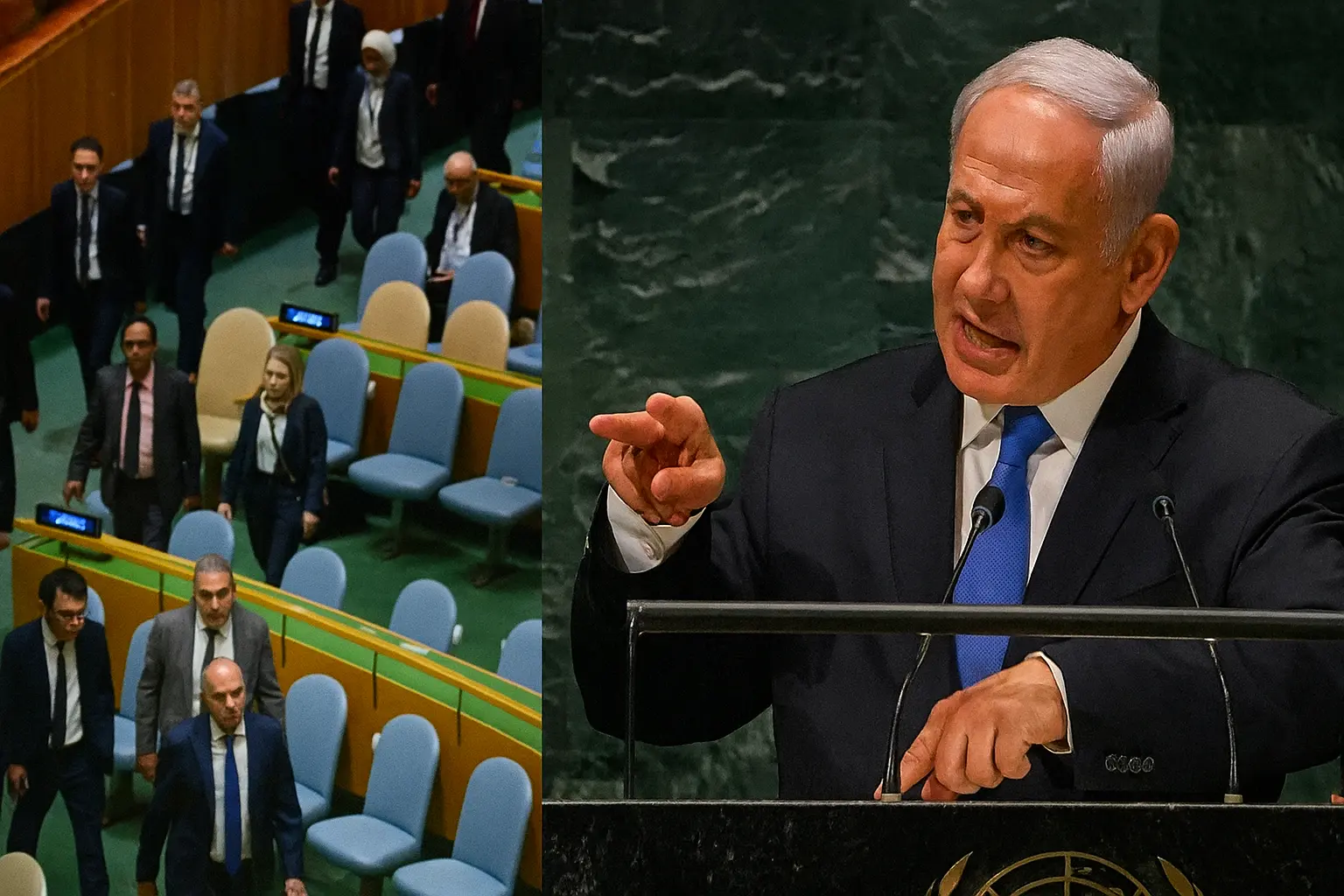
Israeli Prime Minister Benjamin Netanyahu delivered a fiery speech at the United Nations General Assembly this week, strongly condemning international efforts to recognize Palestinian statehood. His address sparked controversy as dozens of diplomats walked out in protest, underscoring the deep divisions within the global community over the Israeli-Palestinian conflict.
Netanyahu’s remarks came amid growing momentum among UN member states to grant broader recognition to Palestine as an independent state. Several European and Latin American countries have recently voiced support for Palestinian membership in the UN system, arguing it is a necessary step toward a two-state solution. However, Netanyahu rejected such moves outright, calling them “a reward for terror and rejectionism.”
“The recognition of a Palestinian state at this time is not a step toward peace—it is a step away from it,” Netanyahu said. “Peace cannot be imposed by resolutions, declarations, or diplomatic shortcuts. It must be achieved through direct negotiations without preconditions.”
The speech quickly drew visible pushback inside the General Assembly hall. Representatives from Arab, Muslim-majority, and some non-aligned countries stood up and exited as Netanyahu spoke, a coordinated demonstration of disapproval. Palestinian officials later described his address as “an assault on international legitimacy” and evidence that Israel’s government “remains entrenched in occupation.”
The timing of Netanyahu’s remarks is significant. Over the past year, the Palestinian leadership has intensified lobbying for full UN membership, buoyed by support from nations frustrated with the lack of progress in peace talks. The United States, a close ally of Israel, has continued to block such efforts at the Security Council, insisting negotiations are the only path forward. Still, the growing number of countries willing to recognize Palestine reflects mounting international impatience.
Analysts note that Netanyahu’s combative tone was aimed not only at the UN audience but also at his domestic base. His right-wing coalition has faced pressure from hardline parties demanding a firm stance against Palestinian aspirations. By framing Palestinian recognition as a threat to Israel’s security, Netanyahu reinforced his position as a defender of national interests, even if it risked diplomatic backlash.
Critics argue that Israel’s hardline approach only isolates it further. European diplomats stressed after the speech that unilateral rejection of Palestinian statehood undermines prospects for dialogue. “Recognition is not an obstacle to peace,” one EU representative said. “The real obstacle is the ongoing expansion of settlements and the absence of negotiations.”
The walkout at the UN underscored how polarized the international community remains on the issue. While Netanyahu vowed that Israel would “stand alone if necessary,” the diplomatic rift suggests growing pressure on his government to engage in meaningful talks.
Trump urges Erdogan to stop buying Russian oil as they meet at White House