US security guarantee for Ukraine

US offered Ukraine 15-year security guarantee, Zelensky says

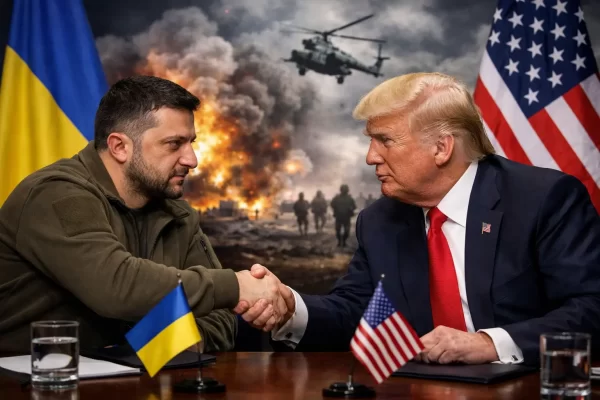
The United States offered Ukraine a 15-year security guarantee as part of ongoing discussions over long-term support and post-war stability, President Volodymyr Zelensky has said. The proposal, according to Zelensky, is intended to provide Kyiv with sustained military, political, and strategic backing as the country continues to defend itself against Russia’s invasion and plan for future security arrangements. Zelensky described the offer as a significant signal of Washington’s commitment to Ukraine’s sovereignty and territorial integrity. He noted that the guarantee would extend well beyond the immediate conflict, covering a period in which Ukraine would focus on rebuilding its armed forces, strengthening institutions, and integrating more deeply with Western security frameworks. While the precise legal and military details have not been made public, Zelensky emphasized that the duration itself reflects a shift toward longer-term thinking among Ukraine’s partners. Ukrainian officials have consistently argued that temporary aid packages are not sufficient to deter future aggression. From Kyiv’s perspective, a multi-year security guarantee could help ensure continuity of military assistance, intelligence cooperation, and training, while also reassuring investors and allies that Ukraine will not be left exposed once active hostilities subside. Zelensky said such guarantees are critical for preventing a repeat of past scenarios in which Ukraine found itself without enforceable security assurances. The proposed 15-year framework is also seen as a bridge toward broader security integration, including eventual NATO membership, which remains Ukraine’s strategic objective. Zelensky reiterated that any guarantees offered now should complement, not replace, Ukraine’s long-term goal of joining the alliance. Discussions over the guarantee come amid intensified diplomatic efforts to shape Ukraine’s future security architecture. While negotiations are ongoing and no final agreement has been announced, Zelensky said the US proposal demonstrates growing recognition that Ukraine’s security is closely linked to wider European and transatlantic stability.

Read More
Zelensky Trump talks

Zelensky plans to meet Trump on Sunday for talks on ending Russian war

Ukrainian President Volodymyr Zelensky has announced plans to meet former U.S. President Donald Trump on Sunday for high-level discussions aimed at ending the ongoing Russian war against Ukraine. The proposed meeting comes at a critical moment in the conflict, as fighting continues along multiple фронts and diplomatic efforts intensify ahead of key political developments in the United States and Europe. According to officials close to Kyiv, the talks will focus on potential pathways toward a negotiated settlement, security guarantees for Ukraine, and the future role of the United States in supporting Kyiv militarily and economically. Zelensky has repeatedly stressed that any peace initiative must respect Ukraine’s sovereignty and territorial integrity, signaling that Kyiv will not accept compromises that legitimize Russian control over occupied regions. The planned Zelensky Trump talks are significant because Trump has publicly claimed that he could end the war quickly if returned to office, though he has not provided detailed proposals. His statements have sparked concern among some Western allies, who fear a possible reduction in U.S. support for Ukraine. At the same time, Trump’s influence within American politics makes the meeting strategically important for Zelensky, who is seeking assurances that bipartisan backing for Ukraine will continue regardless of future political shifts in Washington. For Zelensky, the meeting also serves a broader diplomatic purpose. Ukraine is attempting to maintain momentum behind international efforts to pressure Moscow through sanctions while keeping open the possibility of dialogue under conditions acceptable to Kyiv. Ukrainian officials argue that Russia must demonstrate genuine willingness to end hostilities, including halting missile attacks and withdrawing troops, before meaningful negotiations can proceed. Trump, for his part, has positioned himself as a deal-maker capable of leveraging U.S. influence to bring both sides to the table. Supporters of his approach argue that prolonged war risks further destabilizing global energy markets and European security. Critics, however, warn that pushing for a rapid settlement without firm guarantees could leave Ukraine vulnerable to future aggression. The outcome of the Zelensky Trump talks remains uncertain, but analysts agree the meeting underscores the growing intersection between global diplomacy and domestic U.S. politics. With the war entering another protracted phase, Ukraine is working to ensure that its interests remain central to any discussion involving major powers. As Sunday’s meeting approaches, expectations are cautious. Ukrainian officials emphasize that dialogue does not equal concession, while observers note that any credible plan to end the Russian war will require coordination with European allies and clear terms that uphold international law. Regardless of immediate results, the talks highlight Ukraine’s continued efforts to engage all influential actors in pursuit of a just and lasting peace.

Read More
Imran Khan state gift fraud case

Imran Khan and wife given further jail terms after state gift fraud case

Former Pakistan Prime Minister Imran Khan and his wife Bushra Bibi have been handed additional jail sentences in the Imran Khan state gift fraud case, deepening the legal troubles facing the former leader amid an already volatile political climate. The verdict was delivered by a special accountability court, which found Imran Khan and Bushra Bibi guilty of illegally retaining and selling state gifts received during Khan’s tenure as prime minister. The court ruled that the couple violated established rules governing the declaration, purchase, and disposal of gifts received from foreign dignitaries, causing financial loss to the national exchequer. According to prosecutors, Imran Khan failed to properly disclose several high-value gifts and did not pay the required amount to retain them legally. Bushra Bibi was charged as an accomplice for her alleged role in facilitating the concealment and sale of these items. The court rejected defense arguments that the gifts were lawfully obtained and dismissed claims that the case was politically motivated. The latest sentences will run alongside Khan’s existing prison terms in other cases, further reducing any immediate prospect of his release. Imran Khan has been incarcerated since 2023 and faces multiple convictions related to corruption, misuse of authority, and breaches of official conduct. His legal team has announced plans to challenge the ruling in higher courts, arguing that due process was not followed and evidence was selectively presented. The decision has sparked strong reactions from Khan’s Pakistan Tehreek-e-Insaf party, which condemned the judgment as part of a broader campaign to sideline the former prime minister ahead of future political developments. Supporters staged protests in several cities, while authorities increased security to prevent unrest. The Imran Khan state gift fraud case is widely seen as a significant chapter in Pakistan’s ongoing accountability drive, highlighting the strict scrutiny faced by former officeholders. As appeals proceed, the case is expected to remain a focal point in Pakistan’s legal and political discourse. Former EU top diplomat Mogherini accused in fraud investigation WabsTalk Spoken English and Public Speaking Institute

Read More
Bondi shooting

Naveed Akram charged with 15 counts of murder over Bondi shooting

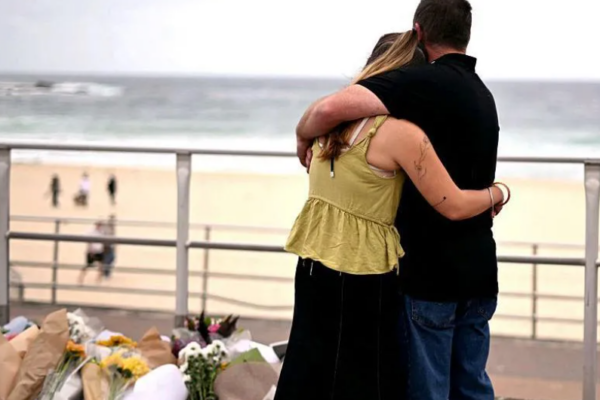
Australian authorities have formally charged Naveed Akram with 15 counts of murder in connection with the deadly Bondi shooting, marking a major development in one of the country’s most shocking acts of mass violence. Prosecutors allege that the attack unfolded in a crowded public area, triggering widespread panic and a rapid emergency response as police moved to secure the scene and protect civilians. According to investigators, the charges stem from a single, sustained incident in which multiple victims were killed. Law enforcement officials say extensive forensic work, witness testimony, and surveillance analysis were used to reconstruct the sequence of events and support the prosecution’s case. The scale of the charges reflects the number of victims involved and underscores the seriousness with which authorities are pursuing accountability. The Bondi shooting has reignited national debate over public safety, counter-terrorism preparedness, and the adequacy of existing threat-assessment mechanisms. Security experts note that incidents of this nature place extraordinary strain on emergency services and require seamless coordination between police, medical responders, and local authorities. In the immediate aftermath, hospitals were placed on high alert while specialized units conducted area sweeps to rule out additional threats. Legal analysts caution that the case will likely be complex and closely scrutinized, given the gravity of the allegations and the public interest involved. If convicted on all counts, Akram would face the most severe penalties available under Australian law. Court proceedings are expected to examine motive, intent, and the chain of events leading up to the shooting, as well as the response by authorities. For the Bondi community, the charges represent a step toward justice, though the emotional impact of the tragedy remains profound. Memorials and calls for reform continue as families seek answers and assurances that lessons will be learned to prevent future attacks.

Read More
Trump criticism

Trump criticises ‘decaying’ European countries and ‘weak’ leaders

Former U.S. President Donald Trump has launched a fresh round of criticism at European nations, accusing them of being “decaying societies” led by “weak and visionless leaders.” His remarks, delivered during a rally-style event in Florida, have reignited debate over the future of transatlantic relations and the growing divide between Washington and its traditional allies. Trump argued that several European countries have “lost their way,” describing them as economically stagnant and politically fractured. He claimed that European leaders had allowed their nations to “decline through uncontrolled migration, crumbling infrastructure, and failed energy policies.” According to him, these issues reflect a broader “collapse of leadership” across the continent. Supporters at the event applauded as he issued warnings that America must not “follow Europe down the same path.” Throughout his speech, Trump framed Europe as an example of what the United States should avoid, rather than a model to emulate. He stated that Europe’s economic struggles, inflation pressures, and political turmoil demonstrate a “system that no longer works.” He directly criticised several unnamed European heads of government, calling them “timid, weak and incapable of defending their own people.” While he did not specify individual leaders, observers believe his comments were aimed at governments that have clashed with him over policy in the past. Trump also condemned European defence spending, arguing that many nations remain overly dependent on the United States for military protection. He insisted that NATO allies still “take advantage of America,” renewing his long-standing claim that European countries fail to carry their share of the security burden. He further suggested that if Europe continues “failing to defend itself,” the U.S. will eventually reconsider its commitments. These remarks come at a time when Europe faces a complex geopolitical landscape, including war in Ukraine, rising far-right movements, and economic uncertainty. European officials have not yet responded directly to Trump’s latest statements, but analysts say such comments could deepen mistrust between the two sides. Some experts noted that Trump’s rhetoric may influence Republican foreign-policy direction, especially as debates intensify around funding for Ukraine, NATO contributions, and broader Western unity. Meanwhile, Trump’s critics argue that his comments undermine longstanding alliances and weaken America’s strategic position. They warn that labeling European nations as “decaying” risks alienating key partners at a time when global cooperation is essential. Others see the remarks as an effort to appeal to voters who distrust international institutions and prefer a more isolationist vision. As Trump continues to shape political discourse, his harsh critique of Europe underscores the potential for renewed tension in U.S.–EU relations, particularly if he plays a significant role in future American policymaking.

Read More
Fabergé egg recovery

Police recover $19k Fabergé egg swallowed by NZ man

New Zealand police have recovered a $19,000 Fabergé egg after a man attempted to hide the valuable item by swallowing it during a botched theft. According to investigators, the suspect allegedly stole the decorative egg from a private collection before trying to evade capture by ingesting it. The unusual tactic quickly backfired, leading to his hospitalization under police supervision. Doctors carried out imaging tests to confirm the object’s location, and authorities waited for the egg to pass naturally to avoid causing internal injury. Despite concerns about potential damage, the Fabergé egg was retrieved intact, surprising both medical staff and police officers. The recovered piece has since been returned to its rightful owner. Police say the incident highlights the extreme lengths some individuals go to when attempting to conceal stolen goods. They also noted that the suspect is expected to face multiple charges, including theft and obstruction. Meanwhile, art experts emphasized the cultural and monetary value of such items, stressing the importance of proper security for collectible artifacts. The Fabergé egg recovery has sparked widespread curiosity, adding an unusual chapter to New Zealand’s record of art-related crime. Former EU top diplomat Mogherini accused in fraud investigation WabsTalk Spoken English and Public Speaking Institute

Read More
Indonesia floods missing

Indonesia searches for hundreds missing in deadly floods

Indonesia is facing a large-scale humanitarian emergency as rescuers continue searching for hundreds of people still missing after devastating floods and landslides swept across parts of Sumatra. The disaster, triggered by days of relentless heavy rain, has destroyed homes, buried villages in mud, and cut off entire communities. Authorities report that the death toll has surged into the hundreds, while many more remain unaccounted for, leaving families in a state of uncertainty and fear. In the worst-affected regions, rescue teams are working around the clock despite dangerous conditions. Deep mud, collapsed roads, and overflowing rivers have slowed progress, forcing teams to navigate difficult terrain on foot. Officials have deployed drones, sniffer dogs, and heavy equipment to speed up the search, but widespread destruction continues to hamper movement. Many isolated areas can only be reached after hours of trekking or by makeshift boats, as bridges and access routes have been washed away. Survivors describe scenes of chaos as flash floods tore through their homes with little warning. Many were unable to save belongings, and thousands have now been displaced, sheltering in temporary camps with limited food, clean water, and medical supplies. Relief workers warn that conditions could worsen if rains continue, raising the risk of further landslides and disease outbreaks. Local authorities, the military, and volunteers are coordinating efforts, while communities join in the search, hoping for any sign of those still missing. The government has called for urgent national support as rescue and recovery operations intensify.

Read More
Trump migration pause

Trump says US will pause migration from ‘third-world countries’

Donald Trump has announced that the United States will “permanently pause migration from all ‘Third World Countries’,” a move he claims is essential to give the “U.S. system time to fully recover.” His declaration, widely circulated through his social media post, marks one of the most sweeping immigration positions taken during his presidency. In his late-night statement, Trump outlined a set of hardline measures aimed at reshaping the immigration system. He said he intends to eliminate “all federal benefits and subsidies to noncitizens,” arguing that only individuals who contribute economically and culturally should remain in the country. He further stated that he would strip legal status and deport anyone he considers “not a net asset to the United States” or “incapable of loving our country.” The announcement followed a fatal shooting near the White House that was allegedly carried out by an Afghan national. The incident fueled political debate over national security and immigration enforcement. Trump’s response signals a significant escalation in his administration’s longstanding crackdown on migration, which has included tightened border controls, travel restrictions, and expanded deportations. He also warned that his administration would move to “denaturalise migrants who undermine domestic tranquility,” while expanding criteria for deportation to include foreign nationals deemed security risks or “non-compatible with Western civilisation.” The broad and undefined language of these criteria has triggered concern among legal experts and civil rights groups, who argue that such proposals could lead to inconsistent or discriminatory enforcement. One of the most notable gaps in Trump’s announcement is the absence of a clear definition of what constitutes “Third World Countries.” No list was provided, leaving observers to speculate about how broadly the policy could be applied. This ambiguity raises fears that immigrants from large portions of Asia, Africa, Latin America, and the Caribbean could face unprecedented barriers. Critics say the proposal lacks legal clarity, implementation details, and constitutional grounding. Past attempts by the Trump administration to impose similar restrictions — including travel bans and tightened visa rules — frequently faced court challenges and resistance from Congress. Analysts warn that a sweeping “migration pause” could be tied up in legal battles for months or years. If implemented as described, the plan could disrupt existing refugee admissions, family reunification petitions, employment visas, and Green Card processes. It may also create uncertainty for millions of immigrants already living in the United States, many of whom fear the potential expansion of deportation criteria. Trump’s proposal has intensified the national conversation on immigration, setting the stage for renewed political conflict as policymakers, advocates, and courts assess the legality and impact of such an unprecedented halt to migration.

Read More
Nigeria mass abduction

Nigeria sees one of worst mass abductions as 315 taken from school

Nigeria is facing one of its most devastating mass abductions in years after 315 people — including 303 students and 12 teachers — were seized from St. Mary’s Catholic Primary and Secondary School in the Papiri community of Niger State. The attack, carried out by heavily armed gunmen in the early hours, has renewed nationwide alarm over the persistent vulnerability of schools amid rising insecurity. The gunmen reportedly arrived in large numbers, overwhelming the limited security presence before storming classrooms and staff quarters. Many students attempted to flee into nearby bushes, but dozens were later confirmed to be among those abducted, raising the total number well above initial estimates. Local authorities and community leaders described the abduction as one of the largest school kidnappings ever recorded in the country, surpassing several high-profile incidents from previous years. The Christian Association of Nigeria confirmed the updated figure of 315 abducted after a detailed headcount, noting that some early reports had underestimated how many students were missing. Out of 629 enrolled students at the school, nearly half were taken, underscoring the scale of the crisis and the attackers’ ability to operate with impunity. The abduction follows another major kidnapping just days earlier, in which 25 girls were taken from a secondary school in Kebbi State. The back-to-back incidents have heightened fear across northern Nigeria and prompted authorities in nearby states to order emergency school closures as a precaution. The surge in violence has also pressured the federal government to reassess its security strategies, as armed groups increasingly target educational institutions for ransom or political leverage. President Bola Tinubu cancelled planned international commitments to address the crisis, directing military, police, and local security forces to conduct an intensive rescue operation across forests surrounding the area. Security personnel have reportedly launched coordinated searches, but large-scale abductions in remote regions often pose significant challenges due to difficult terrain and the mobility of the armed groups responsible. Community leaders have appealed for calm but expressed frustration over what they describe as recurring lapses in intelligence and protection for rural schools. The Christian Association of Nigeria urged the public to avoid circulating misinformation, dismissing claims that the school received prior warnings as false and harmful. Civil-society organizations, including major child-rights groups, have renewed calls for stronger national policies to protect schoolchildren, stressing that attacks on educational facilities have become disturbingly routine. The mass abduction in Niger State stands as a stark reminder of the insecurity gripping parts of the country. As families await news of their loved ones, the incident highlights the urgent need for sustained security reforms, improved community protection, and a strengthened commitment to safeguarding children — especially in regions where schools have increasingly become targets.

Read More
Zelensky negotiations with US

Zelensky ready to work with US on ‘their vision’ for ending Ukraine war

Ukrainian President Volodymyr Zelensky has signaled a willingness to engage closely with Washington on a U.S.-backed peace proposal, describing his approach as “constructive, honest and prompt.” Following a meeting in Kyiv with U.S. Army Secretary Daniel Driscoll, Zelensky affirmed that Ukrainian and American teams would collaboratively work on the key elements of the plan. Although the full details of the 28-point plan have not been publicly disclosed, reports suggest it contains highly sensitive terms — including territorial concessions, military restrictions, and a new security architecture. According to media coverage, some of the most controversial proposals would require Ukraine to cede control over the Donbas region, formally recognize Russian control over Crimea, Luhansk, and Donetsk, and limit its army to 600,000 troops. In exchange, Ukraine would receive “robust security guarantees,” though the exact form and enforceability of those guarantees remain unclear. For Zelensky, agreeing to negotiate does not mean blind capitulation. His office says that while he has accepted a draft, he has also “outlined the fundamental principles that matter to our people.” He frames the collaboration as essential for a “just peace that respects everyone’s sovereignty, a durable peace that can’t be called into question by future aggression.” This willingness to engage has stirred strong reactions. Several European allies have pushed back, warning that the U.S.-proposed plan could amount to a forced surrender of Ukrainian land and resources. Critics argue that such terms might undermine Ukraine’s long-term security and set a dangerous precedent for capitulation-style diplomacy. Still, Zelensky appears determined enough to explore diplomacy. His team plans to hold further discussions not only with U.S. officials but also with other international leaders. According to his office, as part of upcoming diplomacy, Zelensky expects to engage with former U.S. President Donald Trump to explore key diplomatic pathways. How Tommy Hilfiger Became an Overnight Success | Perception Hack | Genius | Secret Zelensky’s outreach underscores a realistic — albeit risky — gamble: he hopes that by aligning with the U.S. vision of peace, Ukraine can secure a deal that prevents future Russian aggression while preserving core national interests. At the same time, he is balancing a fragile relationship — negotiating under pressure from Western allies, wary of concessions, and on a war footing that demands both vigilance and flexibility. Children among 25 killed in one of Russia’s deadliest strikes on western Ukraine

Read More