Donald Trump deployment

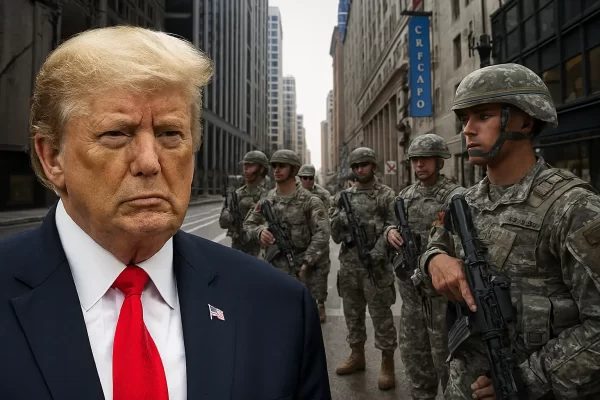
Trump authorises deployment of 300 National Guard troops to Chicago

In a move aimed at curbing escalating violence and unrest, former U.S. President Donald Trump has authorised the deployment of 300 National Guard troops to Chicago, citing a “breakdown of law and order” in the city. The decision, announced from his Florida residence, comes after weeks of mounting pressure from local leaders, police unions, and community groups alarmed by rising gun violence and social tensions. According to White House officials, the National Guard units will assist Chicago police in “stabilising critical areas” and protecting public infrastructure. Trump described the move as “a necessary step to restore peace and protect innocent lives,” adding that federal support was essential in cities “where local leadership has failed to maintain security.” Chicago has faced a surge in violent incidents over the past month, with several neighbourhoods reporting record numbers of shootings. City officials have struggled to contain the unrest, which has been linked to gang-related crime, economic hardship, and political discontent. Although some local leaders welcomed the deployment as a short-term measure, others criticised it as federal overreach that could inflame tensions further. Mayor Brandon Johnson responded cautiously, stating that while the city appreciates federal assistance, the focus must remain on addressing the root causes of violence. “What Chicago needs is investment in communities, not just boots on the ground,” Johnson said. He emphasised the importance of collaboration between federal, state, and local agencies to prevent further escalation. The National Guard troops are expected to begin operations within 48 hours, focusing primarily on transportation hubs, commercial districts, and areas identified as high-risk. Officials stressed that the deployment is temporary and will operate under strict coordination with local law enforcement to avoid clashes or confusion. This is not the first time Trump has used the National Guard to address urban unrest. During his presidency, he authorised similar deployments in cities such as Portland and Minneapolis amid protests and violence. Supporters argue that these measures demonstrated decisive leadership, while critics view them as political theatre intended to project strength during moments of domestic crisis. Analysts suggest that the move could have broader political implications as Trump continues to position himself as a “law-and-order” figure ahead of the next election cycle. By highlighting violence in major cities, he reinforces his campaign narrative that Democratic-led urban centres have failed to maintain safety and discipline. For many Chicago residents, however, the immediate concern is whether this latest federal intervention will bring relief or further strain community relations. As the National Guard prepares to take to the streets, the city remains on edge—caught between the need for security and the fear of deeper division.

Read More
Netanyahu attacks Palestinian recognition

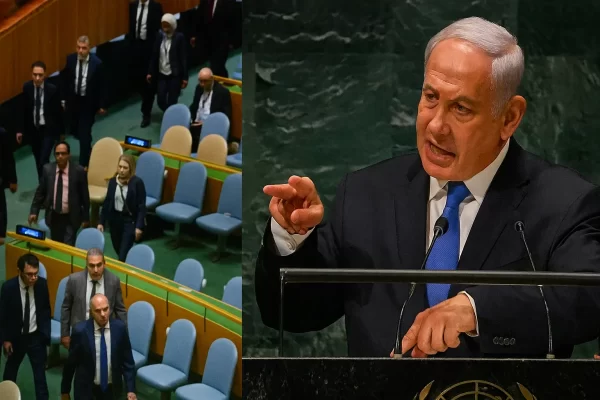
Netanyahu attacks Palestinian recognition as dozens walk out of UN speech

Israeli Prime Minister Benjamin Netanyahu delivered a fiery speech at the United Nations General Assembly this week, strongly condemning international efforts to recognize Palestinian statehood. His address sparked controversy as dozens of diplomats walked out in protest, underscoring the deep divisions within the global community over the Israeli-Palestinian conflict. Netanyahu’s remarks came amid growing momentum among UN member states to grant broader recognition to Palestine as an independent state. Several European and Latin American countries have recently voiced support for Palestinian membership in the UN system, arguing it is a necessary step toward a two-state solution. However, Netanyahu rejected such moves outright, calling them “a reward for terror and rejectionism.” “The recognition of a Palestinian state at this time is not a step toward peace—it is a step away from it,” Netanyahu said. “Peace cannot be imposed by resolutions, declarations, or diplomatic shortcuts. It must be achieved through direct negotiations without preconditions.” The speech quickly drew visible pushback inside the General Assembly hall. Representatives from Arab, Muslim-majority, and some non-aligned countries stood up and exited as Netanyahu spoke, a coordinated demonstration of disapproval. Palestinian officials later described his address as “an assault on international legitimacy” and evidence that Israel’s government “remains entrenched in occupation.” The timing of Netanyahu’s remarks is significant. Over the past year, the Palestinian leadership has intensified lobbying for full UN membership, buoyed by support from nations frustrated with the lack of progress in peace talks. The United States, a close ally of Israel, has continued to block such efforts at the Security Council, insisting negotiations are the only path forward. Still, the growing number of countries willing to recognize Palestine reflects mounting international impatience. Analysts note that Netanyahu’s combative tone was aimed not only at the UN audience but also at his domestic base. His right-wing coalition has faced pressure from hardline parties demanding a firm stance against Palestinian aspirations. By framing Palestinian recognition as a threat to Israel’s security, Netanyahu reinforced his position as a defender of national interests, even if it risked diplomatic backlash. Critics argue that Israel’s hardline approach only isolates it further. European diplomats stressed after the speech that unilateral rejection of Palestinian statehood undermines prospects for dialogue. “Recognition is not an obstacle to peace,” one EU representative said. “The real obstacle is the ongoing expansion of settlements and the absence of negotiations.” The walkout at the UN underscored how polarized the international community remains on the issue. While Netanyahu vowed that Israel would “stand alone if necessary,” the diplomatic rift suggests growing pressure on his government to engage in meaningful talks. Trump urges Erdogan to stop buying Russian oil as they meet at White House

Read More
Trump urges Erdogan to stop buying Russian oil

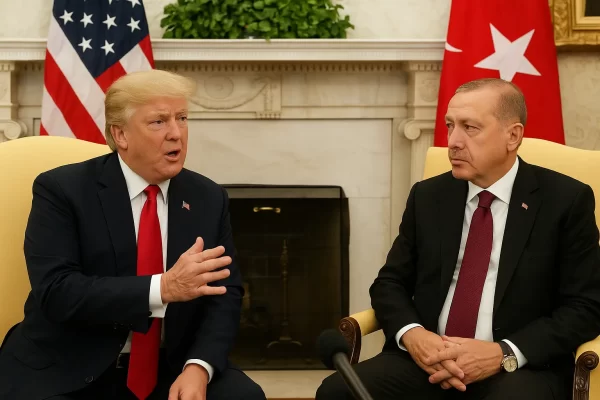
Trump urges Erdogan to stop buying Russian oil as they meet at White House

U.S. President Donald Trump pressed Turkish President Recep Tayyip Erdogan to halt Ankara’s continued purchase of Russian oil during a bilateral meeting at the White House on Wednesday. The talks, which were expected to cover defense cooperation, NATO commitments, and regional conflicts, quickly turned into a sharp exchange over Turkey’s energy ties with Moscow. According to officials familiar with the discussions, Trump reiterated his administration’s growing frustration that a NATO ally like Turkey has deepened its economic relationship with Russia, particularly in the energy sector. He stressed that continued purchases of Russian crude directly undercut Western sanctions and weaken collective efforts to limit Moscow’s influence following its ongoing military actions in Ukraine. “Turkey is an important ally, but allies must stand together,” Trump said during a brief press appearance alongside Erdogan. “The United States cannot look away when NATO countries help fund Russia’s war machine. We are asking Turkey to diversify its energy sources and stop buying Russian oil.” Erdogan, while acknowledging the concerns, defended his country’s energy policy. He argued that Turkey’s heavy reliance on foreign imports leaves it with limited options and that stability in energy supply remains a national priority. “Our economy and our people depend on affordable energy,” Erdogan stated. “We are open to cooperation with the United States and other partners, but we cannot risk shortages that would harm Turkish households and businesses.” Behind closed doors, U.S. officials reportedly offered Ankara greater access to American liquefied natural gas (LNG) and increased support for alternative energy infrastructure. Washington has also signaled that Turkey could face potential sanctions if it continues large-scale Russian purchases, though no formal measures were announced at the meeting. The tense exchange underscores the widening fault lines within NATO, as Turkey often pursues an independent foreign policy that puts it at odds with Western allies. In addition to energy, disputes remain over Ankara’s acquisition of Russian S-400 missile systems and its military operations in northern Syria. Still, both leaders emphasized the importance of maintaining dialogue. Trump praised Turkey’s role in regional stability and hinted at expanding trade ties if Ankara shifts its energy strategy. Erdogan, meanwhile, said Turkey values its partnership with the United States but must balance national interests. Analysts believe the U.S. push is part of a broader campaign to isolate Russia economically, but they caution that Turkey’s geographic position and energy dependence make any sudden change unlikely. For now, Washington and Ankara appear locked in a delicate negotiation — one that could test the limits of their alliance in the months ahead.

Read More
$100,000 skilled worker visa fee

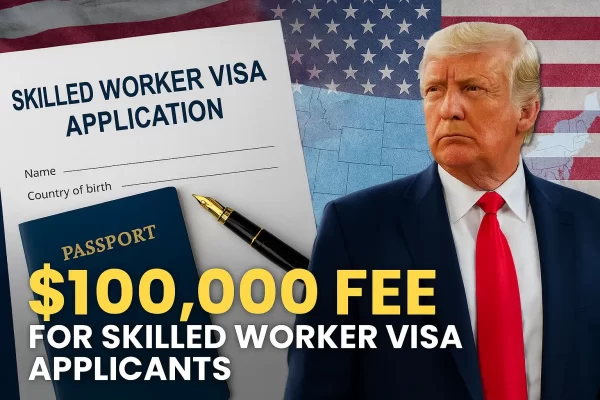
Trump adds $100,000 fee for skilled worker visa applicants

In a dramatic policy shift, former U.S. President Donald Trump has announced the introduction of a $100,000 fee for skilled worker visa applicants, sparking intense debate both at home and abroad. The measure, aimed at what Trump describes as “protecting American workers,” represents one of the most restrictive steps taken in the U.S. immigration system in recent years. According to Trump, the new fee will apply to high-skilled visas, such as the H-1B program, which is widely used by technology firms, medical institutions, and research organizations to bring in global talent. Proponents argue that the fee will reduce dependency on foreign workers, encourage companies to prioritize American employees, and generate significant revenue for the federal government. However, critics warn that the policy could severely damage the U.S. economy. The $100,000 visa fee is far higher than any existing immigration charge in the world, and experts believe it will deter talented professionals from applying. Companies in Silicon Valley, Wall Street, and leading universities rely heavily on international expertise, and many business leaders fear this move will drive talent toward other global hubs such as Canada, the United Kingdom, and Australia. Immigration advocates also caution that the measure unfairly targets skilled professionals who contribute billions to the U.S. economy annually. A coalition of tech firms and advocacy groups has already signaled plans to challenge the fee in court, arguing it is discriminatory and unconstitutional. Trump, however, defended the plan as part of his broader “America First” strategy. At a rally, he claimed that the fee would “make foreign workers pay their fair share” and ensure that U.S. citizens do not lose jobs to overseas professionals willing to work for less. He added that the revenue from the new fees would be invested in training programs for American workers, especially in the technology and healthcare sectors. International reaction has been swift. India, one of the largest sources of H-1B applicants, expressed “deep concern” over the impact of the new rule. Industry groups in India estimate that thousands of skilled workers, particularly in IT and engineering, will be priced out of the U.S. market. Similarly, European leaders warned that such policies could isolate the U.S. from global innovation networks. The policy, if fully implemented, could reshape global migration patterns. Analysts suggest that Canada and other nations with more welcoming immigration systems may emerge as beneficiaries, attracting talent that the U.S. risks losing. For now, the $100,000 skilled worker visa fee remains one of Trump’s most controversial immigration moves, with long-term consequences that could redefine America’s role in the global workforce.

Read More
Donald Trump UK state visit

Donald Trump and First Lady Melania depart UK as state visit ends

U.S. President Donald Trump and First Lady Melania Trump concluded their highly publicized UK state visit today, departing London after three days of official ceremonies, diplomatic meetings, and cultural events that underscored the enduring ties between the United States and the United Kingdom. The Donald Trump UK state visit began with a lavish welcome hosted by Queen Elizabeth II at Buckingham Palace, where the President and First Lady were greeted with full ceremonial honors. The visit featured a formal state banquet attended by members of the Royal Family and senior UK political leaders, symbolizing the depth of the Anglo-American alliance. During his stay, Trump held discussions with then-Prime Minister Theresa May, focusing on post-Brexit trade relations, defense cooperation, and global security. Both leaders emphasized the importance of a strong transatlantic partnership, though differences remained on certain issues such as climate policy and Iran. Trump reiterated his support for a “fair and ambitious” U.S.-UK trade deal, while May highlighted the need to protect British economic interests. The state visit also included a series of public appearances by First Lady Melania Trump, who engaged with schoolchildren and cultural institutions. She was praised for her elegant wardrobe choices and diplomatic presence throughout the trip. Her schedule highlighted the cultural and educational aspects of the U.S.-UK relationship, complementing the President’s political and economic focus. However, the visit was not without controversy. Thousands of protesters gathered in central London, voicing opposition to Trump’s policies and leadership style. The now-iconic “Trump baby blimp,” which first appeared during his previous UK trip, returned to the skies as a symbol of public dissent. Despite the demonstrations, Trump described the visit as a “tremendous success” and expressed gratitude for the hospitality extended by the Queen and the British government. In his farewell remarks, Trump emphasized the “unbreakable bond” between the United States and the United Kingdom, stressing that shared history, values, and security interests would continue to guide the relationship. He also thanked the Royal Family for what he called “a magnificent and historic welcome.” The Trumps boarded Air Force One at Stansted Airport, concluding what has been one of the most closely watched foreign visits of his presidency. The Donald Trump UK state visit highlighted both the enduring strength and the modern complexities of the U.S.-UK alliance. While political disagreements and protests drew attention, the ceremonial grandeur and official discussions reflected the importance of maintaining strong ties between the two nations as they navigate shifting global dynamics.

Read More
Obama says US faces political crisis after killing of Charlie Kirk

Obama says US faces ‘political crisis’ after killing of Charlie Kirk

Former President Barack Obama has warned that the United States is at a dangerous turning point following the killing of conservative activist Charlie Kirk, describing the moment as nothing less than a “political crisis.” His comments come amid intensifying fears that political violence is no longer an exception but is becoming an alarming trend in America’s democracy. Charlie Kirk, the 31-year-old founder of Turning Point USA, was assassinated earlier this month while addressing students at a Utah college. Authorities have charged a 22-year-old suspect, Tyler Robinson, with aggravated murder, and prosecutors are seeking the death penalty. The killing has shaken the political landscape, sparking condemnation across party lines but also further inflaming partisan divides. Speaking at a civic event, Obama strongly denounced the attack and linked it to a broader decline in democratic norms. He said that while passionate disagreements are natural in a democracy, resorting to violence against political opponents crosses a dangerous line. “The central premise of our democratic system,” he noted, “is that we have to be able to disagree, sometimes strongly, without resorting to violence.” Obama also criticized the way some political leaders responded to Kirk’s killing, suggesting that a rush to label enemies and inflame divisions is worsening the crisis. Without naming him directly, Obama pointed to former President Donald Trump’s reaction, which immediately placed blame on the “radical left” before investigators had released detailed information. According to Obama, this rhetoric deepens polarization and feeds a cycle of hostility. Analysts say Obama’s remarks highlight a growing concern that the United States is entering a period of normalized political violence. Experts warn that the breakdown of long-standing democratic “guardrails” — unwritten rules of civility and restraint — makes the system more vulnerable. By framing opponents as existential threats, politicians create an atmosphere where violent actions can seem justified in the eyes of extremists. Obama described the nation as being at an “inflection point,” a moment when the country can either recommit to democratic values or slide further toward chaos and division. He urged Americans to reject dehumanizing language, stand against political violence, and hold leaders accountable for protecting institutions and norms. The killing of Charlie Kirk has become more than a tragic act of violence; it has sparked a fierce debate over the future of U.S. politics. For Obama, it is evidence that the country must act decisively to preserve democracy. “This is a political crisis,” he warned, “and how we respond will shape the future of America.” Wabstalk

Read More
Charlie Kirk suspect linked to crime scene by DNA

Charlie Kirk suspect linked to crime scene by DNA, says FBI chief

In a dramatic development, the FBI has revealed that a suspect allegedly connected to Charlie Kirk has been directly linked to a crime scene through DNA evidence. The announcement, made by the bureau’s chief during a press briefing, underscores the critical role forensic science continues to play in high-profile investigations. According to the FBI, investigators recovered DNA samples from multiple items at the scene of the crime. After extensive testing in the bureau’s state-of-the-art laboratory, a positive match was confirmed, linking the suspect to the location. Officials stressed that while DNA evidence is a strong indicator of presence, the broader case will rely on corroborating witness testimony, surveillance records, and digital communications. The case has drawn national attention because of its alleged ties to Charlie Kirk, a prominent conservative commentator and activist. While the FBI has not disclosed the full extent of Kirk’s connection to the case, speculation has been mounting as details continue to surface. Analysts suggest that the bureau is moving cautiously, balancing the integrity of the ongoing investigation with public demand for transparency. “DNA doesn’t lie,” said the FBI director, emphasizing the reliability of forensic technology in modern criminal investigations. “But DNA is one part of a larger puzzle. Our duty is to present a case built on facts, evidence, and due process.” Legal experts have noted that DNA evidence, though powerful, is rarely conclusive on its own. Defense attorneys often challenge collection methods, contamination risks, and chain-of-custody procedures. However, in most cases where DNA has been properly preserved and tested, it has played a decisive role in convictions. Public reaction to the FBI’s announcement has been mixed. Supporters of Kirk argue that the allegations are politically motivated, warning against premature judgments before all evidence is made public. Others insist that the findings show the need for accountability, regardless of political affiliation. The FBI has so far declined to reveal whether Kirk himself is under direct investigation or whether the suspect linked by DNA is an associate or supporter. Authorities confirmed that further questioning and possible arrests could follow in the coming weeks as the case unfolds. As the investigation continues, one thing is clear: the Charlie Kirk suspect linked to crime scene by DNA development has intensified national debate. It raises broader questions about politics, justice, and the power of forensic science in an era where public trust in institutions is deeply divided. For now, the FBI maintains that the case is ongoing and that no final conclusions should be drawn until all evidence is presented in court.

Read More
Trump Russia sanctions

Trump ‘ready’ to sanction Russia if Nato nations stop buying its oil

Former U.S. President Donald Trump has issued a strong warning that he is prepared to impose new sanctions on Russia if NATO member states agree to cut down on their purchases of Russian oil. The statement underscores Washington’s ongoing efforts to reduce Moscow’s economic influence amid its prolonged war in Ukraine. Speaking to reporters, Trump said the West must present a united front against Russia’s use of energy exports as a financial weapon. He emphasized that NATO nations remain heavily dependent on Russian oil and gas, which continues to provide the Kremlin with billions in revenue despite existing sanctions. According to him, the only way to significantly weaken Russia’s war chest is by targeting its oil trade more aggressively. Trump’s remarks come at a time when European countries are divided on how to handle their energy needs. While some NATO members have made strides in reducing Russian imports, others remain reliant due to geographic proximity, infrastructure limitations, and economic concerns. Analysts note that this split has weakened the overall impact of Western sanctions and left Moscow with a steady stream of income. Trump’s proposed sanctions could include restrictions on financial transactions, secondary sanctions on companies doing business with Russia, and penalties aimed at shipping firms that transport Russian crude. These measures, he argues, would not only pressure Moscow but also push NATO allies to accelerate their energy diversification plans. Critics, however, caution that such a move might trigger an energy crisis in parts of Europe, especially ahead of winter. Some NATO nations have already faced rising fuel prices, which have strained households and businesses. Experts warn that further disruptions could cause political backlash within European governments that are already under pressure from domestic voters. Despite the risks, Trump insists that decisive action is necessary. He framed the issue as not only an economic matter but also a strategic one, suggesting that every barrel of oil purchased from Russia effectively funds the continuation of the war in Ukraine. The Kremlin has yet to officially respond to Trump’s comments, but Russian officials have previously dismissed Western threats as “economic blackmail.” Moscow has sought to expand its oil exports to Asian markets, particularly China and India, in an effort to offset declining sales to Europe. As the debate intensifies, NATO faces a crucial test of unity. Whether member states will align behind Trump’s push for tougher energy sanctions remains uncertain. What is clear, however, is that the issue of Russian oil remains central to the broader struggle over the future of Europe’s security and stability Wabstalk

Read More
Nepal first female Prime Minister

Nepal gets first female PM after deadly unrest

Nepal has witnessed a historic political shift as the country appointed its first female Prime Minister, following weeks of violent unrest that left dozens dead and hundreds injured. The appointment marks both a symbolic breakthrough in gender representation and a response to growing demands for stability after escalating political and social tensions. The newly appointed Prime Minister, long regarded as a reformist and advocate for democratic values, takes office at a moment of intense national crisis. Protests erupted across the country in recent weeks, sparked by allegations of corruption, poor governance, and deepening economic hardship. Demonstrations, which began peacefully, soon turned violent, with security forces clashing with protesters in Kathmandu, Pokhara, and other major cities. Human rights groups reported excessive use of force, while the government argued it was trying to restore order amid widespread arson, vandalism, and attacks on public offices. The unrest claimed at least 47 lives and left several regions in turmoil, forcing parliament to convene an emergency session to address the crisis. In a surprise move, lawmakers rallied behind the female leader, who emerged as a consensus candidate after major parties failed to agree on a male successor to the outgoing Prime Minister. Analysts say her election was not only historic for gender equality but also a strategic decision aimed at calming public anger and projecting a new image of inclusivity. Addressing the nation after her swearing-in, the new Prime Minister pledged to prioritize peace, accountability, and economic recovery. She promised independent investigations into the violence and vowed to hold both protesters and security forces accountable for unlawful actions. “Nepal cannot move forward if our people are divided by fear and bloodshed,” she declared. “My government’s first duty is to restore trust and rebuild hope.” International reactions poured in, with neighboring India and China congratulating Nepal on the historic milestone. The United Nations called the appointment “a step forward for democracy and representation,” while urging the government to ensure justice for victims of the unrest. Despite the optimism, challenges remain enormous. The country is grappling with rising inflation, youth unemployment, and political polarization. Critics argue that symbolic milestones alone will not solve Nepal’s structural problems. However, supporters believe her leadership could usher in a new chapter of governance, blending reform with reconciliation. Also Read Protests hit France as new PM takes office For ordinary Nepalis, the hope is that this appointment signals the beginning of a more inclusive and accountable political era. Whether the first female Prime Minister can overcome entrenched challenges and deliver stability remains to be seen, but her rise already marks a defining moment in the nation’s democratic journey.

Read More
Protests in France

Protests hit France as new PM takes office

France witnessed fresh waves of protests on Tuesday as the country’s newly appointed Prime Minister officially took office, signaling a turbulent start to the government’s new chapter. The demonstrations, which broke out in Paris and several other major cities, reflect deepening public dissatisfaction with government policies and broader social issues. Thousands of protesters, including trade union members, students, and activists, took to the streets carrying banners and chanting slogans against what they see as “out of touch leadership.” Many of the grievances echo long-standing frustrations over economic inequality, rising living costs, and the government’s handling of labor reforms. The protests were largely peaceful, though minor clashes were reported between demonstrators and police near Place de la République in Paris. Authorities deployed additional security forces to manage the unrest, while public transport services were disrupted in several areas. The new Prime Minister, who was appointed by President Emmanuel Macron just days earlier, faces the daunting task of restoring public trust in a climate of growing discontent. While delivering his first speech in office, he called for “dialogue and unity,” pledging to prioritize social justice, employment opportunities, and sustainable economic reforms. However, many protesters remain skeptical. “Every new Prime Minister promises change, but nothing improves for ordinary people,” said a 34-year-old teacher from Lyon who joined the rallies. “We are tired of symbolic speeches; we want real action on wages, housing, and healthcare.” Opposition parties have also seized the moment to criticize the government’s direction. Left-wing leaders accused the administration of ignoring working-class struggles, while far-right groups framed the protests as evidence of failed leadership. The political polarization suggests that the new PM’s term will be marked by fierce debates in parliament as well as on the streets. Trade unions announced plans for further strikes in the coming weeks, particularly targeting the transportation and education sectors. Analysts warn that prolonged protests could weaken the Prime Minister’s ability to pass reforms and undermine President Macron’s broader agenda. Despite the unrest, some observers view the protests as an opportunity for the government to engage more meaningfully with citizens. Political analysts argue that addressing demands for fairer wages, improved welfare systems, and greater transparency could help ease tensions and rebuild confidence. For now, France remains on edge as its new Prime Minister begins his tenure under the shadow of public discontent. Whether the government can bridge the widening gap between political leadership and ordinary citizens will determine not only the success of the new administration but also the stability of the country in the months ahead.

Read More