Trump Greenland negotiations

Trump wants ‘immediate negotiations’ to acquire Greenland but insists he ‘won’t use force’

Former US President Donald Trump has renewed his controversial interest in Greenland, calling for “immediate negotiations” to acquire the strategically vital Arctic island while insisting that the United States would not use military force to achieve the goal. The remarks have reignited international debate over sovereignty, security, and the future balance of power in the Arctic region. Trump framed his position as a matter of national and global security, arguing that Greenland’s location and natural resources make it critical at a time of rising competition among major powers. He stressed that his approach would rely on diplomacy and economic engagement rather than coercion, saying that negotiations could bring mutual benefits to both the United States and Greenland’s population. According to Trump, closer ties would lead to investment, infrastructure development, and enhanced security cooperation. Greenland, an autonomous territory within the Kingdom of Denmark, has repeatedly rejected the idea of being sold or transferred to another country. Danish officials have reaffirmed that Greenland is not for sale, while Greenlandic leaders have emphasized the island’s right to self-determination. Trump’s latest comments nevertheless place renewed pressure on Copenhagen and Nuuk, particularly as Arctic shipping routes open and interest in rare earth minerals intensifies. Analysts note that Trump’s insistence on non-forceful methods appears designed to soften criticism that his proposal undermines international norms. However, critics argue that even pushing for acquisition risks destabilizing relations with allies and sets a troubling precedent. Supporters counter that strategic realities require bold thinking and that negotiations do not automatically imply an outcome. The episode highlights the growing geopolitical importance of the Arctic, where climate change, security concerns, and resource competition intersect. Whether Trump’s call for talks gains traction or fades as diplomatic resistance hardens, the renewed focus on Greenland underscores how Arctic politics are moving closer to the center of global strategic discussions.

Read More
Trump first-year wins

Trump touts first-year wins at White House as Macron warns of shift to ‘world without rules

US President Donald Trump used a White House address to highlight what he described as major achievements in his first year back in office, as French President Emmanuel Macron warned that the world may be entering a “world without rules,” marked by growing power politics and weakened international norms. Speaking alongside senior officials and supporters, Trump argued that his administration had delivered swift results on the economy, border security and US global influence. He pointed to tougher immigration enforcement, new trade terms aimed at protecting American industry, and renewed pressure on allies to increase defence spending. Trump said these moves demonstrated that the United States was “leading again” and no longer constrained by agreements he considers unfair. The White House message focused heavily on sovereignty and national interest, with Trump insisting that strong borders and transactional diplomacy were essential to restoring American strength. He framed his first-year record as proof that unilateral action, rather than multilateral consensus, produces faster outcomes. In contrast, Macron struck a more cautionary tone in a separate address, warning that international rules built after the Second World War are being steadily eroded. He argued that the rise of great-power rivalry, combined with selective respect for international law, risks creating a global order driven more by force than cooperation. Without shared rules, Macron said, smaller states become more vulnerable and conflicts harder to contain. The contrasting messages highlight a widening philosophical gap between Washington and key European partners. While Trump’s approach prioritises immediate national gains and flexibility, European leaders continue to emphasise institutions, alliances and predictable rules as foundations of stability. Analysts say the debate goes beyond personalities, reflecting a broader struggle over how power should be exercised in an increasingly fragmented world. As Trump promotes his first-year wins as evidence of effective leadership, Macron’s warning underscores European fears that a rules-based order is giving way to a more volatile and uncertain global landscape.

Read More
Trump Greenland Nobel Prize

Trump ties Greenland demands to Nobel Prize in message to Norway leader

Donald Trump has once again placed Greenland at the centre of global debate, this time linking US ambitions over the Arctic island to the Nobel Peace Prize in a message reportedly sent to Norway’s leader. The unusual communication has drawn sharp reactions across Europe, reviving tensions over sovereignty, diplomacy, and Trump’s unconventional approach to foreign policy. According to officials familiar with the matter, Trump argued that US control or decisive influence over Greenland would strengthen global security, reduce great-power rivalry in the Arctic, and contribute to long-term peace. He framed these claims within the context of Norway’s role as host of the Nobel Peace Prize, suggesting that such a geopolitical achievement would merit consideration for the prestigious award. The message was described as direct and characteristically provocative, reflecting Trump’s long-standing view of himself as a dealmaker capable of reshaping international order. The Trump Greenland Nobel Prize narrative has unsettled Nordic leaders, particularly Denmark, which retains sovereignty over Greenland. Danish officials have repeatedly stressed that Greenland is not for sale and that its future must be decided by its own people. Norwegian sources, meanwhile, emphasised that the Nobel Committee operates independently and does not consider political lobbying or territorial proposals when awarding the prize. Greenland’s strategic value has increased significantly in recent years due to climate change, melting ice, and expanded access to shipping routes and natural resources. Both China and Russia have stepped up Arctic engagement, a trend Trump has often cited as justification for stronger US involvement. Critics, however, argue that tying territorial ambitions to a peace prize undermines diplomatic norms and risks inflaming regional tensions rather than easing them. Political analysts note that Trump has previously linked his diplomatic initiatives to Nobel recognition, pointing to Middle East agreements and relations with North Korea. In this case, the Greenland remarks appear aimed at reinforcing his image as a leader willing to challenge traditional boundaries of diplomacy. As reactions continue, the episode underscores how Greenland remains a flashpoint in Arctic geopolitics—and how Trump continues to blend personal legacy with international strategy.

Read More
Iran warns it will retaliate if US attacks

Iran warns it will retaliate if US attacks as protesters defy crackdown

Iran issued a stark warning that it will retaliate if the United States attacks, as nationwide protests continued despite an increasingly severe government crackdown. The warning came from Parliament Speaker Mohammad Baqer Qalibaf, who told lawmakers that any U.S. military strike on Iranian territory would be met with force against U.S. and allied interests, including regional military bases and Israel, which Tehran labels “legitimate targets” in such an event. This threat underscores the heightened tension between Tehran and Washington amid one of the most sustained protest movements in years. The demonstrations began in late December in response to deepening economic hardship, especially soaring inflation, and have spread to more than 100 cities and towns. Protesters are demanding systemic change, even as state authorities escalate their response with lethal force, mass arrests, and a widespread internet blackout that limits outside reporting. Verified videos show fierce clashes between protesters and security forces in major cities. U.S. President Donald Trump has publicly expressed support for the demonstrators, saying the United States “stands ready to help” and warning Iran that any further killings could provoke a strong response. In parliament, some Iranian lawmakers responded to the U.S. rhetoric with chants of “Death to America,” reflecting hardline sentiment within the regime. Iranian authorities have also toughened domestic rhetoric, with the attorney general declaring participants in the protests as “enemies of God,” a designation under Iranian law that carries the death penalty. Despite escalating violence and significant casualties, protesters continue to defy the crackdown, pressing ahead with demonstrations that show widespread public discontent with the clerical establishment. The situation remains volatile, with the potential for international military escalation if diplomatic or political solutions are not pursued.

Read More
Vance criticises Denmark over Greenland

Vance criticises Denmark and Europe’s handling of ‘critical’ Greenland

US Vice President JD Vance has criticised Denmark and other European countries over what he described as a failure to adequately manage and protect the “critical” strategic interests surrounding Greenland, reigniting debate over Arctic security and transatlantic responsibility. Speaking at a policy forum in Washington, Vance argued that Europe has underestimated Greenland’s growing importance at a time of rising geopolitical competition in the Arctic. Vance said Greenland occupies a central position in global security, citing its location between North America and Europe and its relevance to missile defence, satellite tracking, and emerging Arctic shipping routes. He warned that increased Russian and Chinese activity in the region demands a more serious and coordinated response, adding that “complacency from European capitals” risks leaving strategic gaps that adversaries could exploit. While stressing that the United States respects Denmark’s sovereignty over Greenland, Vance questioned whether Copenhagen and its European partners have invested sufficiently in defence infrastructure and economic resilience on the island. He pointed to ageing military facilities, limited surveillance capacity, and social challenges in Greenlandic communities as issues that, in his view, require urgent attention rather than symbolic commitments. European officials pushed back on the remarks, with Danish representatives noting that Denmark has increased defence spending in the Arctic and works closely with NATO allies, including the US, on security planning. They argued that Greenland’s future must be shaped with the consent of its population and warned against framing the issue solely through a military lens. Greenland’s government responded cautiously, welcoming international cooperation but emphasising autonomy and local development. Leaders in Nuuk reiterated that economic investment, climate adaptation, and respect for indigenous priorities are as important as defence considerations. WABSTALK Vance’s comments reflect a broader shift in US foreign policy rhetoric, which increasingly links Arctic strategy to global power competition. As climate change accelerates ice melt and opens new routes and resources, Greenland is likely to remain a focal point of debate between Washington, Copenhagen, and European allies over how to balance sovereignty, security, and regional stability. Trump says US will ‘run’ Venezuela until ‘safe transition can take place’

Read More
Nigeria village attack

At least 30 killed in attack on Nigeria village

At least 30 people have been killed in a deadly attack on a village in Nigeria, underscoring the persistent insecurity affecting parts of the country. The assault reportedly took place in a rural community where gunmen stormed the area, opening fire on residents and setting homes ablaze, according to local officials and community leaders. Witnesses described scenes of chaos as attackers arrived in large numbers, moving from house to house in the early hours. Many victims were civilians, including women and children, who were caught off guard while sleeping or attempting to flee. Survivors said the attackers used automatic weapons and acted with apparent coordination, suggesting a well-organised assault rather than a random act of violence. Local authorities confirmed that at least 30 bodies have been recovered so far, though the death toll may rise as search and rescue operations continue in surrounding areas. Several people were also injured and taken to nearby medical facilities, many of which are poorly equipped to handle mass casualty situations. Dozens of homes were destroyed, leaving families displaced and in urgent need of shelter, food, and medical assistance. The Nigeria village attack has renewed concerns about the government’s ability to protect vulnerable rural communities. In recent years, villages across different regions have faced repeated attacks linked to armed groups, banditry, and long-standing communal tensions. These incidents often occur in remote areas where security presence is limited and response times are slow. Security forces have been deployed to the affected area, and officials say an investigation is underway to identify and apprehend those responsible. Authorities have also promised increased patrols to prevent further violence. However, residents remain fearful, warning that without sustained security measures, similar attacks could happen again. The tragedy highlights the broader challenge Nigeria faces in addressing insecurity, restoring public confidence, and ensuring that civilians in rural communities are protected from escalating violence.

Read More
Trump Venezuela transition

Trump says US will ‘run’ Venezuela until ‘safe transition can take place’

Donald Trump has said the United States will “run” Venezuela until a “safe transition can take place,” marking one of his most forceful statements yet on the future of the crisis-hit South American nation. Speaking at a campaign-style event, Trump framed the comments as part of a broader strategy to restore stability, democracy, and economic order in Venezuela, which has been mired in political turmoil, sanctions, and economic collapse for years. Trump accused Venezuela’s current leadership of destroying the country’s economy, driving millions to flee, and turning the nation into what he described as a hub for crime and instability that affects the wider region. He argued that US involvement would be temporary and focused on overseeing a transition that ensures free elections, institutional reform, and the return of basic governance. According to Trump, the objective would be to hand control back to Venezuelans once conditions are deemed secure and democratic norms restored. The remarks immediately sparked controversy, with critics saying they suggest an unprecedented level of direct US control over another sovereign nation. Opponents argue that such language risks escalating tensions in Latin America and could revive memories of past US interventions in the region. They also warn that any perception of foreign rule could undermine the legitimacy of a future Venezuelan government. Supporters, however, say Trump’s comments reflect frustration with years of failed diplomatic efforts and sanctions that have not dislodged entrenched leadership or improved living conditions. They argue that a managed transition, backed by international partners, could help stabilize the country, revive oil production, and stem migration flows that have affected neighboring states and the United States. Venezuela remains one of the world’s most complex political crises, with deep divisions at home and competing interests abroad. Trump’s statement signals that, if returned to office, he may pursue a far more assertive approach, reshaping US policy toward Venezuela and potentially redefining Washington’s role in the region during any future transition.

Read More
US security guarantee for Ukraine

US offered Ukraine 15-year security guarantee, Zelensky says

The United States offered Ukraine a 15-year security guarantee as part of ongoing discussions over long-term support and post-war stability, President Volodymyr Zelensky has said. The proposal, according to Zelensky, is intended to provide Kyiv with sustained military, political, and strategic backing as the country continues to defend itself against Russia’s invasion and plan for future security arrangements. Zelensky described the offer as a significant signal of Washington’s commitment to Ukraine’s sovereignty and territorial integrity. He noted that the guarantee would extend well beyond the immediate conflict, covering a period in which Ukraine would focus on rebuilding its armed forces, strengthening institutions, and integrating more deeply with Western security frameworks. While the precise legal and military details have not been made public, Zelensky emphasized that the duration itself reflects a shift toward longer-term thinking among Ukraine’s partners. Ukrainian officials have consistently argued that temporary aid packages are not sufficient to deter future aggression. From Kyiv’s perspective, a multi-year security guarantee could help ensure continuity of military assistance, intelligence cooperation, and training, while also reassuring investors and allies that Ukraine will not be left exposed once active hostilities subside. Zelensky said such guarantees are critical for preventing a repeat of past scenarios in which Ukraine found itself without enforceable security assurances. The proposed 15-year framework is also seen as a bridge toward broader security integration, including eventual NATO membership, which remains Ukraine’s strategic objective. Zelensky reiterated that any guarantees offered now should complement, not replace, Ukraine’s long-term goal of joining the alliance. Discussions over the guarantee come amid intensified diplomatic efforts to shape Ukraine’s future security architecture. While negotiations are ongoing and no final agreement has been announced, Zelensky said the US proposal demonstrates growing recognition that Ukraine’s security is closely linked to wider European and transatlantic stability.

Read More
Zelensky Trump talks

Zelensky plans to meet Trump on Sunday for talks on ending Russian war

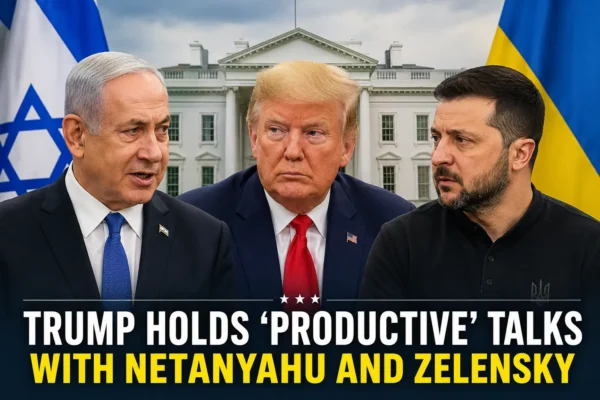
Ukrainian President Volodymyr Zelensky has announced plans to meet former U.S. President Donald Trump on Sunday for high-level discussions aimed at ending the ongoing Russian war against Ukraine. The proposed meeting comes at a critical moment in the conflict, as fighting continues along multiple фронts and diplomatic efforts intensify ahead of key political developments in the United States and Europe. According to officials close to Kyiv, the talks will focus on potential pathways toward a negotiated settlement, security guarantees for Ukraine, and the future role of the United States in supporting Kyiv militarily and economically. Zelensky has repeatedly stressed that any peace initiative must respect Ukraine’s sovereignty and territorial integrity, signaling that Kyiv will not accept compromises that legitimize Russian control over occupied regions. The planned Zelensky Trump talks are significant because Trump has publicly claimed that he could end the war quickly if returned to office, though he has not provided detailed proposals. His statements have sparked concern among some Western allies, who fear a possible reduction in U.S. support for Ukraine. At the same time, Trump’s influence within American politics makes the meeting strategically important for Zelensky, who is seeking assurances that bipartisan backing for Ukraine will continue regardless of future political shifts in Washington. For Zelensky, the meeting also serves a broader diplomatic purpose. Ukraine is attempting to maintain momentum behind international efforts to pressure Moscow through sanctions while keeping open the possibility of dialogue under conditions acceptable to Kyiv. Ukrainian officials argue that Russia must demonstrate genuine willingness to end hostilities, including halting missile attacks and withdrawing troops, before meaningful negotiations can proceed. Trump, for his part, has positioned himself as a deal-maker capable of leveraging U.S. influence to bring both sides to the table. Supporters of his approach argue that prolonged war risks further destabilizing global energy markets and European security. Critics, however, warn that pushing for a rapid settlement without firm guarantees could leave Ukraine vulnerable to future aggression. The outcome of the Zelensky Trump talks remains uncertain, but analysts agree the meeting underscores the growing intersection between global diplomacy and domestic U.S. politics. With the war entering another protracted phase, Ukraine is working to ensure that its interests remain central to any discussion involving major powers. As Sunday’s meeting approaches, expectations are cautious. Ukrainian officials emphasize that dialogue does not equal concession, while observers note that any credible plan to end the Russian war will require coordination with European allies and clear terms that uphold international law. Regardless of immediate results, the talks highlight Ukraine’s continued efforts to engage all influential actors in pursuit of a just and lasting peace.

Read More
Imran Khan state gift fraud case

Imran Khan and wife given further jail terms after state gift fraud case

Former Pakistan Prime Minister Imran Khan and his wife Bushra Bibi have been handed additional jail sentences in the Imran Khan state gift fraud case, deepening the legal troubles facing the former leader amid an already volatile political climate. The verdict was delivered by a special accountability court, which found Imran Khan and Bushra Bibi guilty of illegally retaining and selling state gifts received during Khan’s tenure as prime minister. The court ruled that the couple violated established rules governing the declaration, purchase, and disposal of gifts received from foreign dignitaries, causing financial loss to the national exchequer. According to prosecutors, Imran Khan failed to properly disclose several high-value gifts and did not pay the required amount to retain them legally. Bushra Bibi was charged as an accomplice for her alleged role in facilitating the concealment and sale of these items. The court rejected defense arguments that the gifts were lawfully obtained and dismissed claims that the case was politically motivated. The latest sentences will run alongside Khan’s existing prison terms in other cases, further reducing any immediate prospect of his release. Imran Khan has been incarcerated since 2023 and faces multiple convictions related to corruption, misuse of authority, and breaches of official conduct. His legal team has announced plans to challenge the ruling in higher courts, arguing that due process was not followed and evidence was selectively presented. The decision has sparked strong reactions from Khan’s Pakistan Tehreek-e-Insaf party, which condemned the judgment as part of a broader campaign to sideline the former prime minister ahead of future political developments. Supporters staged protests in several cities, while authorities increased security to prevent unrest. The Imran Khan state gift fraud case is widely seen as a significant chapter in Pakistan’s ongoing accountability drive, highlighting the strict scrutiny faced by former officeholders. As appeals proceed, the case is expected to remain a focal point in Pakistan’s legal and political discourse. Former EU top diplomat Mogherini accused in fraud investigation WabsTalk Spoken English and Public Speaking Institute

Read More