Putin vows no more wars

Putin vows no more wars if West treats Russia with respect

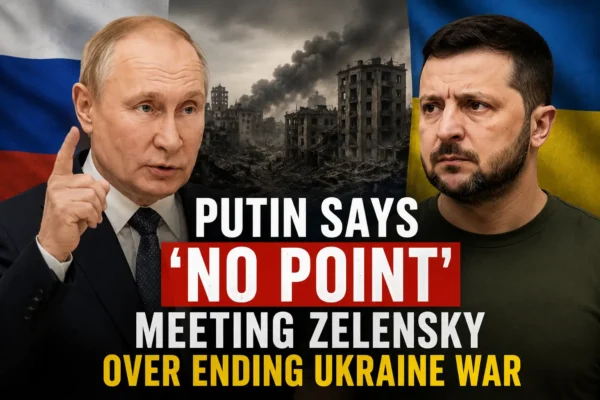
Russian President Vladimir Putin has declared that Russia would have no need to engage in further wars if Western nations treated Moscow with what he described as “basic respect” and acknowledged its security interests. Speaking at a public forum, Putin framed Russia’s recent confrontations with the West as the result of prolonged disregard for Russian concerns rather than deliberate expansionism. Putin argued that Russia has repeatedly sought dialogue on European security, NATO enlargement, and strategic stability, but said those efforts were dismissed or ignored. According to him, the continued expansion of Western military alliances toward Russia’s borders created an environment in which conflict became inevitable. He insisted that Moscow’s actions should be viewed as defensive responses to pressure rather than aggressive ambitions. The Russian leader emphasized that his government does not seek perpetual confrontation. He stated that Russia’s primary goal is stability, economic development, and predictable relations with major powers. “If Russia is respected and its interests are taken seriously, there will be no reason for wars,” Putin said, adding that cooperation would benefit both Russia and the wider international system. Western governments, however, remain skeptical of such assurances. Many argue that Russia’s actions in Ukraine and its broader military posture contradict claims of purely defensive intent. They maintain that respect in international relations must be grounded in adherence to sovereignty, territorial integrity, and international law. Despite these differences, Putin signaled that Moscow remains open to renewed dialogue, particularly on arms control and regional security arrangements. He suggested that a multipolar world order, where no single bloc dominates global decision-making, could reduce tensions and lower the risk of future conflicts. The remarks come at a time of heightened geopolitical strain, with relations between Russia and the West at their lowest point in decades. Whether Putin’s statement marks a genuine opening for diplomacy or a rhetorical effort to shift responsibility remains uncertain. Still, the message underscores Russia’s consistent position that recognition and respect, rather than pressure and isolation, are key to avoiding further wars.

Read More
Australian PM announces crackdown on hate speech after Bondi shooting

Australian PM announces crackdown on hate speech after Bondi shooting

Australian Prime Minister Anthony Albanese has announced a sweeping crackdown on hate speech following the deadly Bondi Junction stabbing, as authorities continue to investigate the attack and its broader social impact. The move reflects growing concern within the government about rising extremist rhetoric, misinformation, and online abuse, particularly in the aftermath of violent incidents that risk inflaming community tensions. Speaking after high-level security briefings, Albanese said the government would not allow acts of violence to be exploited to spread hatred or division. He emphasized that Australia’s multicultural society depends on mutual respect and that hate speech, whether online or offline, poses a direct threat to social cohesion and public safety. The prime minister stressed that freedom of expression does not extend to inciting violence or targeting communities based on race, religion, or ethnicity. The proposed crackdown is expected to involve tougher enforcement of existing laws alongside potential legislative reforms. These may include expanded powers for regulators to act against online platforms that fail to remove harmful content quickly, as well as stronger penalties for individuals and groups found to be promoting hate-based narratives. Government officials indicated that technology companies would be required to take greater responsibility for monitoring and moderating extremist material circulating on their services. The Bondi shooting has reignited debate in Australia over the role of social media in amplifying misinformation and hateful commentary during crises. In the hours following the attack, false claims and inflammatory posts spread rapidly, prompting police and community leaders to urge the public to rely on verified information. Albanese said such behavior not only disrespects victims but also risks inspiring further violence. Community leaders and advocacy groups have broadly welcomed the government’s stance, arguing that decisive action is necessary to protect vulnerable communities. However, some civil liberties organizations have cautioned that any new measures must be carefully designed to avoid overreach and to safeguard legitimate free speech. The prime minister acknowledged these concerns, stating that consultations would be held to ensure a balanced approach. In parallel with the hate speech crackdown, the government reaffirmed its commitment to mental health support, community policing, and counter-extremism programs. Albanese noted that preventing violence requires addressing underlying social issues, including isolation, radicalization, and access to support services. As investigations into the Bondi attack continue, the government’s response signals a broader effort to reinforce national unity and resilience. Albanese concluded that moments of tragedy must not be allowed to fracture society, adding that Australia’s strength lies in standing together against hatred, fear, and division.

Read More
Bondi shooting

Naveed Akram charged with 15 counts of murder over Bondi shooting

Australian authorities have formally charged Naveed Akram with 15 counts of murder in connection with the deadly Bondi shooting, marking a major development in one of the country’s most shocking acts of mass violence. Prosecutors allege that the attack unfolded in a crowded public area, triggering widespread panic and a rapid emergency response as police moved to secure the scene and protect civilians. According to investigators, the charges stem from a single, sustained incident in which multiple victims were killed. Law enforcement officials say extensive forensic work, witness testimony, and surveillance analysis were used to reconstruct the sequence of events and support the prosecution’s case. The scale of the charges reflects the number of victims involved and underscores the seriousness with which authorities are pursuing accountability. The Bondi shooting has reignited national debate over public safety, counter-terrorism preparedness, and the adequacy of existing threat-assessment mechanisms. Security experts note that incidents of this nature place extraordinary strain on emergency services and require seamless coordination between police, medical responders, and local authorities. In the immediate aftermath, hospitals were placed on high alert while specialized units conducted area sweeps to rule out additional threats. Legal analysts caution that the case will likely be complex and closely scrutinized, given the gravity of the allegations and the public interest involved. If convicted on all counts, Akram would face the most severe penalties available under Australian law. Court proceedings are expected to examine motive, intent, and the chain of events leading up to the shooting, as well as the response by authorities. For the Bondi community, the charges represent a step toward justice, though the emotional impact of the tragedy remains profound. Memorials and calls for reform continue as families seek answers and assurances that lessons will be learned to prevent future attacks.

Read More
Belarus prisoner release sanctions

Belarus frees 123 prisoners as US lifts sanctions

Belarus has freed 123 prisoners in a move that coincides with the United States lifting a set of sanctions, signaling a rare moment of diplomatic recalibration between Minsk and Washington. The prisoner release, confirmed by Belarusian authorities, has drawn cautious international attention, with officials and analysts debating whether the development marks a substantive policy shift or a tactical gesture aimed at easing external pressure. The freed individuals reportedly include political detainees, civil society activists, and people convicted on charges widely criticized by Western governments and human rights organizations as politically motivated. For years, Belarus has faced sustained sanctions from the United States and the European Union over its handling of protests, restrictions on media freedom, and the jailing of opposition figures following disputed elections. The release of such a significant number of prisoners is therefore viewed as an unusual and potentially strategic move by President Alexander Lukashenko’s government. Simultaneously, the United States announced the lifting of certain sanctions targeting Belarusian entities and individuals. US officials framed the decision as a calibrated response designed to encourage further steps by Minsk, rather than a full normalization of relations. The sanctions relief is understood to be limited in scope, focusing on specific economic and financial restrictions while leaving broader punitive measures in place. Diplomats familiar with the matter suggest the parallel timing of the Belarus prisoner release and sanctions easing reflects quiet negotiations conducted through intermediaries. Washington has long argued that sanctions are a tool to change behavior, not an end in themselves, and the latest development is being presented as evidence that pressure can yield concessions. However, US officials have emphasized that future engagement will depend on Belarus taking additional, verifiable actions, including halting new arrests and improving conditions for political expression. In Minsk, state media portrayed the releases as a humanitarian decision made in the national interest, rather than a concession to foreign demands. Belarusian officials reiterated claims that the country’s judicial system operates independently, a position consistently rejected by international rights monitors. Nevertheless, the government also welcomed the easing of sanctions, arguing that economic restrictions have harmed ordinary citizens more than political elites. Human rights groups responded with guarded optimism. While welcoming the freedom of the 123 prisoners, they stressed that hundreds of others remain behind bars and warned against interpreting the move as systemic reform. Activists argue that without legal changes and guarantees against future repression, the releases risk being temporary or symbolic. The Belarus prisoner release sanctions episode highlights the transactional nature of current US–Belarus relations. It underscores how geopolitical pressures, economic constraints, and diplomatic leverage intersect in shaping decisions by authoritarian governments. Whether this moment leads to sustained de-escalation or proves to be a short-lived tactical exchange will depend on the actions that follow on both sides.

Read More
Germany cyber-attack

Germany accuses Russia of air traffic control cyber-attack

Germany has sharply escalated its public warnings over alleged Russian state-backed cyber operations, accusing Moscow of conducting a coordinated cyber-attack targeting the country’s air traffic control infrastructure. According to German security officials, the incident was part of a broader pattern of hybrid aggression designed to disrupt critical systems and undermine public confidence in national institutions. The cyber intrusion reportedly focused on digital networks used to coordinate civilian air traffic operations. While German authorities confirmed that flight safety was never compromised, the attack forced temporary operational adjustments and triggered an extensive review of digital vulnerabilities. Cybersecurity teams from Germany’s Federal Office for Information Security and the Ministry of Transport moved quickly to isolate affected systems, restore normal functionality, and launch an in-depth investigation into the attack’s origins. Government analysts have assessed with high confidence that the attack was orchestrated by a well-resourced Russian threat actor linked to state intelligence services. Officials described the incident as “deliberate, targeted, and strategically timed,” noting that it aligned with Russia’s broader pattern of disruptive cyber activity across Europe. German leaders emphasized that the attempt to compromise air traffic control networks represented a dangerous escalation, given the essential role aviation plays in national security, trade, and emergency response. In Berlin, the Interior Ministry called the intrusion unacceptable and signaled that Germany is prepared to strengthen both defensive and retaliatory cyber measures. Senior officials argued that hybrid attacks are becoming central to Russia’s foreign policy toolkit, particularly as geopolitical tensions continue to deepen. The government also warned that cyber operations targeting critical infrastructure—whether transport, energy, or communications—must be treated with the same seriousness as traditional security threats. European partners have expressed support for Germany’s stance, with several EU member states highlighting similar attempts to breach aviation and logistics systems. Coordinated cyber defense and information-sharing mechanisms are expected to be reinforced in the coming weeks as part of a collective response to increasing digital aggression. Germany is now moving to accelerate investment in cyber resilience, including system redundancies, enhanced threat detection, and closer cooperation with private-sector technology providers. Experts note that air traffic control networks, while robust, rely on interconnected systems that must be constantly updated to counter emerging threats. The incident has reignited debate within Germany over broader national preparedness, as policymakers warn that hostile cyber activity will likely intensify. As investigations continue, Berlin has reiterated that it views the protection of critical infrastructure as a strategic priority and will take all necessary measures to deter future attacks.

Read More
Fabergé egg recovery

Police recover $19k Fabergé egg swallowed by NZ man

New Zealand police have recovered a $19,000 Fabergé egg after a man attempted to hide the valuable item by swallowing it during a botched theft. According to investigators, the suspect allegedly stole the decorative egg from a private collection before trying to evade capture by ingesting it. The unusual tactic quickly backfired, leading to his hospitalization under police supervision. Doctors carried out imaging tests to confirm the object’s location, and authorities waited for the egg to pass naturally to avoid causing internal injury. Despite concerns about potential damage, the Fabergé egg was retrieved intact, surprising both medical staff and police officers. The recovered piece has since been returned to its rightful owner. Police say the incident highlights the extreme lengths some individuals go to when attempting to conceal stolen goods. They also noted that the suspect is expected to face multiple charges, including theft and obstruction. Meanwhile, art experts emphasized the cultural and monetary value of such items, stressing the importance of proper security for collectible artifacts. The Fabergé egg recovery has sparked widespread curiosity, adding an unusual chapter to New Zealand’s record of art-related crime. Former EU top diplomat Mogherini accused in fraud investigation WabsTalk Spoken English and Public Speaking Institute

Read More
Mogherini fraud investigation

Former EU top diplomat Mogherini accused in fraud investigation

Federica Mogherini, the former European Union foreign-policy chief, is at the centre of a widening Mogherini fraud investigation that has shaken EU institutions and raised serious concerns about procurement integrity within the bloc. The case revolves around allegations of procurement fraud, corruption, conflict of interest, and unauthorized disclosure of confidential information linked to an EU-funded diplomatic training programme. Authorities say the investigation concerns a 2021–2022 tender issued by the European External Action Service for the creation of a new EU Diplomatic Academy. The contract was awarded to the College of Europe in Belgium, an elite postgraduate institution where Mogherini has served as rector since 2020. Investigators are examining whether privileged information was improperly shared with the College before the tender officially opened, potentially giving it an unfair competitive edge. Belgian federal police, acting on instructions from the European Public Prosecutor’s Office, conducted coordinated raids on multiple locations. These included the EEAS headquarters in Brussels, the College of Europe campus in Bruges, and private homes belonging to the suspects. During the operation, Mogherini and two other senior officials — one from the European Commission and one from the College — were detained for questioning. Following interrogation, all three individuals were formally informed of the allegations against them. They were released the same day, as investigators determined none of them posed a flight risk. Despite the gravity of the accusations, each of the suspects remains presumed innocent while the inquiry proceeds. The case has triggered significant alarm within EU leadership circles. The diplomatic academy programme was intended to strengthen the EU’s global diplomatic capacity by providing high-level training to early-career diplomats. The possibility that such a flagship initiative may have been compromised by irregularities has sparked criticism about transparency, oversight, and the use of EU public funds. Within academic circles, the investigation is also viewed as a reputational crisis for the College of Europe, an institution long regarded as a cornerstone of European policy education. Critics argue that the situation exposes broader structural vulnerabilities in how the EU awards contracts to institutions with deep political connections. As the Mogherini fraud investigation continues, prosecutors are working to determine whether procurement rules were deliberately manipulated and whether corrupt practices were employed to influence the tender’s outcome. The findings could carry significant political consequences and may prompt reforms aimed at tightening accountability within EU bodies. For now, the investigation remains ongoing, and no formal charges have been proven in court. The case is expected to develop further in the coming weeks as investigators analyse seized documents and communications

Read More
Putin-Witkoff talks

Putin and Trump’s envoy set for key Ukraine talks in Moscow

Vladimir Putin and Steve Witkoff, the special envoy appointed by Donald Trump, are set to hold critical discussions in Moscow aimed at shaping the next phase of efforts to end the war in Ukraine. The meeting is being described as one of the most consequential diplomatic engagements since Russia’s full-scale invasion began, as both sides look to test the possibilities of a negotiated settlement while maintaining hardline positions. Witkoff’s trip to Moscow follows intensive discussions in the United States between American and Ukrainian officials, who have been working to evaluate and revise a U.S.-backed peace framework. That framework has been controversial, with Ukrainian officials expressing deep concern that certain elements appear overly accommodating to Russian demands. Key sticking points include the status of contested territories and security guarantees—issues that have repeatedly derailed previous diplomatic attempts. Moscow has signaled openness to dialogue but has avoided offering any clear concessions. Russian officials have described this meeting as a preliminary review rather than a decisive moment, suggesting that a long negotiation process may lie ahead. Analysts believe Russia’s strategy is to gauge the extent to which the U.S. envoy might be willing to adjust Washington’s position, particularly regarding sanctions and recognition of Russian control over occupied regions. For his part, Witkoff has maintained a cautiously optimistic tone, noting that a “permanent peace” could be possible if both sides show flexibility. He has hinted that economic incentives and long-term security arrangements could form part of a broader settlement package. However, Ukrainian leaders remain adamant that territorial integrity cannot be compromised, especially regarding regions such as Crimea, Donbas, Kherson, and Zaporizhzhia. Complicating the environment further, Putin recently issued a stark public warning to European nations, declaring that Russia is “ready” for war if Europe chooses confrontation. This declaration is widely interpreted as an attempt to strengthen Russia’s negotiating leverage ahead of the talks. At the same time, European leaders have reiterated their support for Ukraine, signaling that they will resist any diplomatic solution that weakens Ukraine’s sovereignty. The stakes of the Putin-Witkoff talks extend far beyond the battlefield. The outcome may influence the future of European security, Washington’s role in regional stability, and the potential for diplomatic engagement at a time when both sides are digging in. While the meeting does not guarantee immediate breakthroughs, it represents a rare opening in a conflict that has largely resisted negotiation. Whether this window leads to progress or entrenches positions further will become clearer in the coming days, but expectations remain measured amid significant geopolitical uncertainty.

Read More
US asylum pause

US halts all asylum claim decisions after National Guard shooting

The United States has announced a nationwide halt on all asylum claim decisions following the fatal shooting of two National Guard soldiers near the White House. The move marks one of the most sweeping pauses in the country’s modern asylum system and comes as federal officials launch an extensive security review into how the suspect — reportedly an asylum recipient — was vetted before entering the country. According to officials, the US asylum pause affects every category of affirmative asylum processing. Asylum officers have been instructed to continue reviewing files but may not approve, deny, or close any cases until further notice. All upcoming decision-related appointments have been canceled, leaving thousands of applicants in legal limbo. The freeze extends to individuals from all nationalities, including those who arrived through special programs created for vulnerable populations. Authorities say the temporary suspension is intended to ensure that vetting and background-check procedures meet the “highest security standards.” The shooting has intensified political debate in Washington, with lawmakers demanding tougher immigration controls and clearer screening protocols for individuals seeking protection through the asylum system. For applicants, the pause introduces uncertainty into an already backlogged process. Many asylum seekers rely on timely decisions to secure work authorization, reunite with family members, and stabilize their lives in the United States. Advocacy groups have raised concerns that the indefinite nature of the freeze could result in prolonged hardship and undermine protections for those fleeing persecution. Trump says US will pause migration from ‘third-world countries’ The federal government has not indicated when the pause will be lifted. Officials have stated only that decisions will resume once the review is complete and new guidance is in place. As the investigation into the shooting continues, the announcement signals a broader shift toward tightened immigration policies and heightened scrutiny of asylum claims nationwide.

Read More
Trump migration pause

Trump says US will pause migration from ‘third-world countries’

Donald Trump has announced that the United States will “permanently pause migration from all ‘Third World Countries’,” a move he claims is essential to give the “U.S. system time to fully recover.” His declaration, widely circulated through his social media post, marks one of the most sweeping immigration positions taken during his presidency. In his late-night statement, Trump outlined a set of hardline measures aimed at reshaping the immigration system. He said he intends to eliminate “all federal benefits and subsidies to noncitizens,” arguing that only individuals who contribute economically and culturally should remain in the country. He further stated that he would strip legal status and deport anyone he considers “not a net asset to the United States” or “incapable of loving our country.” The announcement followed a fatal shooting near the White House that was allegedly carried out by an Afghan national. The incident fueled political debate over national security and immigration enforcement. Trump’s response signals a significant escalation in his administration’s longstanding crackdown on migration, which has included tightened border controls, travel restrictions, and expanded deportations. He also warned that his administration would move to “denaturalise migrants who undermine domestic tranquility,” while expanding criteria for deportation to include foreign nationals deemed security risks or “non-compatible with Western civilisation.” The broad and undefined language of these criteria has triggered concern among legal experts and civil rights groups, who argue that such proposals could lead to inconsistent or discriminatory enforcement. One of the most notable gaps in Trump’s announcement is the absence of a clear definition of what constitutes “Third World Countries.” No list was provided, leaving observers to speculate about how broadly the policy could be applied. This ambiguity raises fears that immigrants from large portions of Asia, Africa, Latin America, and the Caribbean could face unprecedented barriers. Critics say the proposal lacks legal clarity, implementation details, and constitutional grounding. Past attempts by the Trump administration to impose similar restrictions — including travel bans and tightened visa rules — frequently faced court challenges and resistance from Congress. Analysts warn that a sweeping “migration pause” could be tied up in legal battles for months or years. If implemented as described, the plan could disrupt existing refugee admissions, family reunification petitions, employment visas, and Green Card processes. It may also create uncertainty for millions of immigrants already living in the United States, many of whom fear the potential expansion of deportation criteria. Trump’s proposal has intensified the national conversation on immigration, setting the stage for renewed political conflict as policymakers, advocates, and courts assess the legality and impact of such an unprecedented halt to migration.

Read More