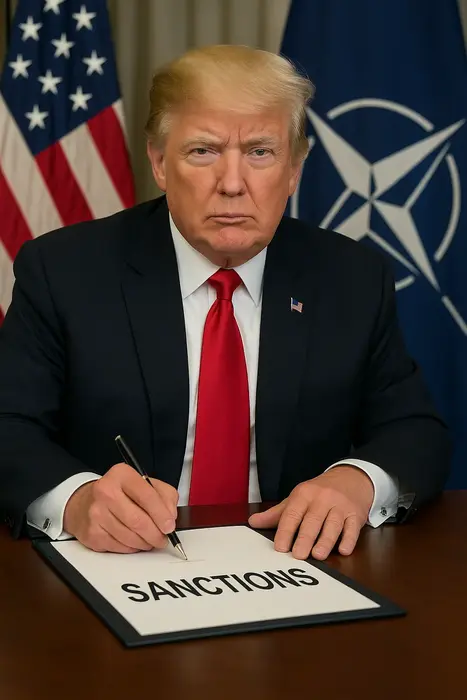
Former U.S. President Donald Trump has issued a strong warning that he is prepared to impose new sanctions on Russia if NATO member states agree to cut down on their purchases of Russian oil. The statement underscores Washington’s ongoing efforts to reduce Moscow’s economic influence amid its prolonged war in Ukraine.
Speaking to reporters, Trump said the West must present a united front against Russia’s use of energy exports as a financial weapon. He emphasized that NATO nations remain heavily dependent on Russian oil and gas, which continues to provide the Kremlin with billions in revenue despite existing sanctions. According to him, the only way to significantly weaken Russia’s war chest is by targeting its oil trade more aggressively.
Trump’s remarks come at a time when European countries are divided on how to handle their energy needs. While some NATO members have made strides in reducing Russian imports, others remain reliant due to geographic proximity, infrastructure limitations, and economic concerns. Analysts note that this split has weakened the overall impact of Western sanctions and left Moscow with a steady stream of income.
Trump’s proposed sanctions could include restrictions on financial transactions, secondary sanctions on companies doing business with Russia, and penalties aimed at shipping firms that transport Russian crude. These measures, he argues, would not only pressure Moscow but also push NATO allies to accelerate their energy diversification plans.
Critics, however, caution that such a move might trigger an energy crisis in parts of Europe, especially ahead of winter. Some NATO nations have already faced rising fuel prices, which have strained households and businesses. Experts warn that further disruptions could cause political backlash within European governments that are already under pressure from domestic voters.
Despite the risks, Trump insists that decisive action is necessary. He framed the issue as not only an economic matter but also a strategic one, suggesting that every barrel of oil purchased from Russia effectively funds the continuation of the war in Ukraine.
The Kremlin has yet to officially respond to Trump’s comments, but Russian officials have previously dismissed Western threats as “economic blackmail.” Moscow has sought to expand its oil exports to Asian markets, particularly China and India, in an effort to offset declining sales to Europe.
As the debate intensifies, NATO faces a crucial test of unity. Whether member states will align behind Trump’s push for tougher energy sanctions remains uncertain. What is clear, however, is that the issue of Russian oil remains central to the broader struggle over the future of Europe’s security and stability