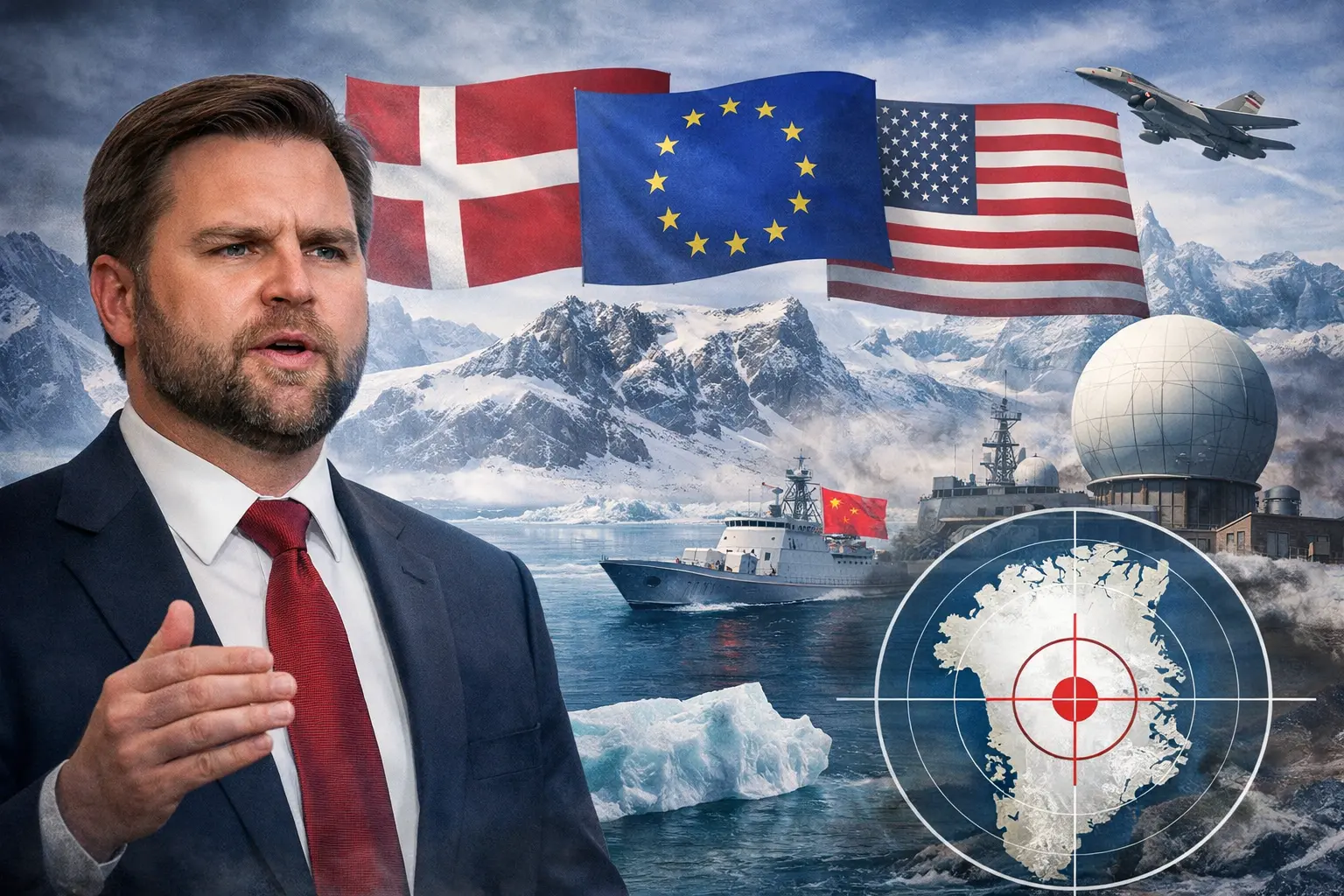
US Vice President JD Vance has criticised Denmark and other European countries over what he described as a failure to adequately manage and protect the “critical” strategic interests surrounding Greenland, reigniting debate over Arctic security and transatlantic responsibility. Speaking at a policy forum in Washington, Vance argued that Europe has underestimated Greenland’s growing importance at a time of rising geopolitical competition in the Arctic.
Vance said Greenland occupies a central position in global security, citing its location between North America and Europe and its relevance to missile defence, satellite tracking, and emerging Arctic shipping routes. He warned that increased Russian and Chinese activity in the region demands a more serious and coordinated response, adding that “complacency from European capitals” risks leaving strategic gaps that adversaries could exploit.
While stressing that the United States respects Denmark’s sovereignty over Greenland, Vance questioned whether Copenhagen and its European partners have invested sufficiently in defence infrastructure and economic resilience on the island. He pointed to ageing military facilities, limited surveillance capacity, and social challenges in Greenlandic communities as issues that, in his view, require urgent attention rather than symbolic commitments.
European officials pushed back on the remarks, with Danish representatives noting that Denmark has increased defence spending in the Arctic and works closely with NATO allies, including the US, on security planning. They argued that Greenland’s future must be shaped with the consent of its population and warned against framing the issue solely through a military lens.
Greenland’s government responded cautiously, welcoming international cooperation but emphasising autonomy and local development. Leaders in Nuuk reiterated that economic investment, climate adaptation, and respect for indigenous priorities are as important as defence considerations.
Vance’s comments reflect a broader shift in US foreign policy rhetoric, which increasingly links Arctic strategy to global power competition. As climate change accelerates ice melt and opens new routes and resources, Greenland is likely to remain a focal point of debate between Washington, Copenhagen, and European allies over how to balance sovereignty, security, and regional stability.
Trump says US will ‘run’ Venezuela until ‘safe transition can take place’