
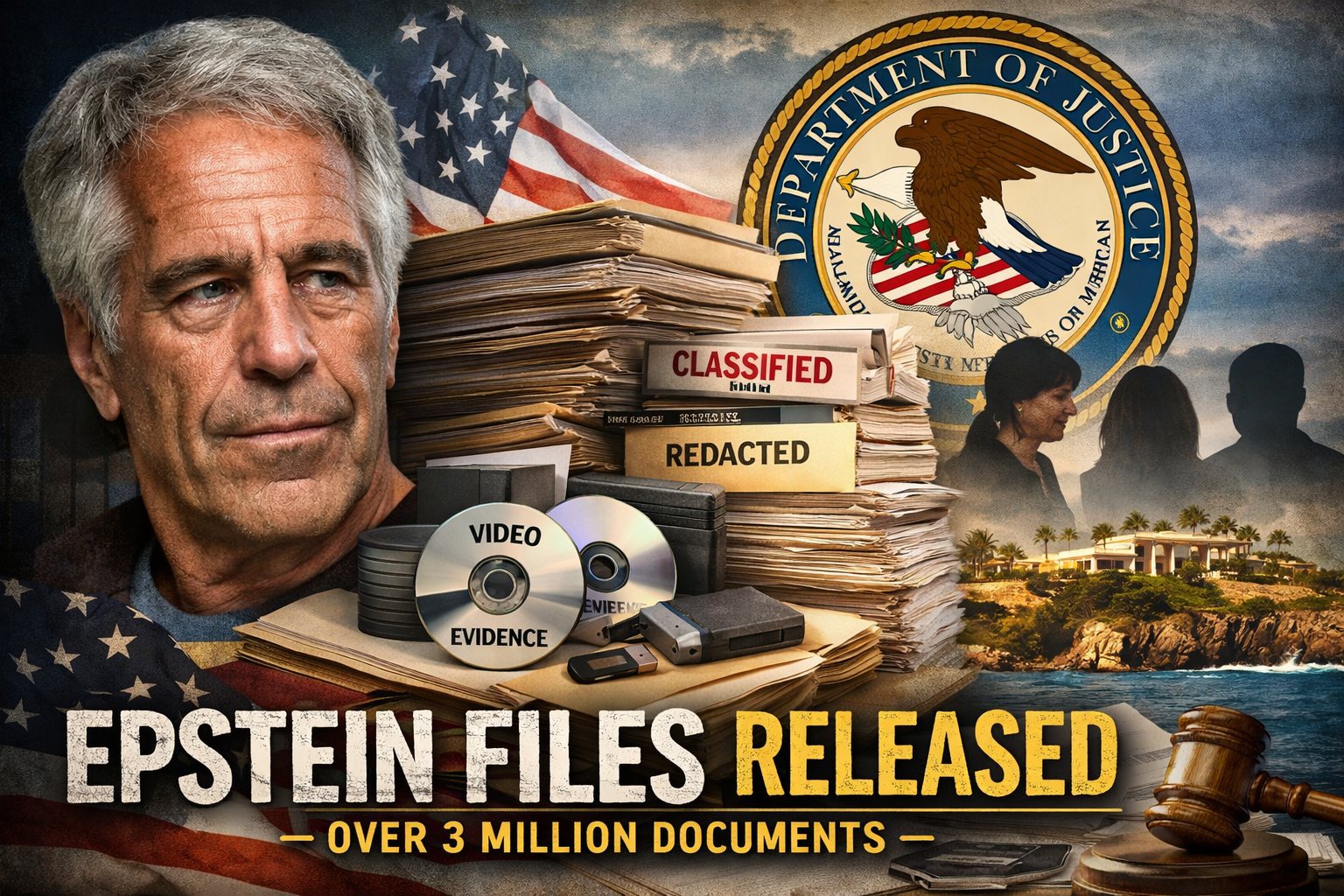
On January 30, 2026, the U.S. Justice Department announced a major disclosure of documents in its ongoing probe into convicted sex offender Jeffrey Epstein, releasing more than three million pages of records as part of a mandated transparency effort under the Epstein Files Transparency Act.
Deputy Attorney General Todd Blanche said the release includes a large volume of material — over 2,000 videos and about 180,000 images — drawn from the department’s investigations, which span more than two decades of probes in Florida and New York, as well as related inquiries into Epstein’s network and activities.
Although the law required all unclassified documents to be made public by December 19, 2025, the Justice Department missed that deadline due to the enormity of the review and redaction process. Hundreds of attorneys were tasked with examining the material to properly redact personally identifying information of victims, sensitive law enforcement details, and content that could jeopardize ongoing investigations.
Blanche emphasized that while extensive redactions were necessary — including removing the identities of all women in images except Ghislaine Maxwell — the department did not withhold records for political reasons, dismissing claims of shielding any individual from scrutiny.
The released files add to previously disclosed batches and represent a significant step in fulfilling the department’s legal obligations under the new transparency law, even as some material remains subject to further review or restricted access by Congress.
The surge of public attention around the case — driven by both the scale of the release and the high-profile figures referenced in some records — follows widespread criticism from lawmakers and advocacy groups who had pressed the Justice Department for a more complete disclosure of Epstein-related materials.