
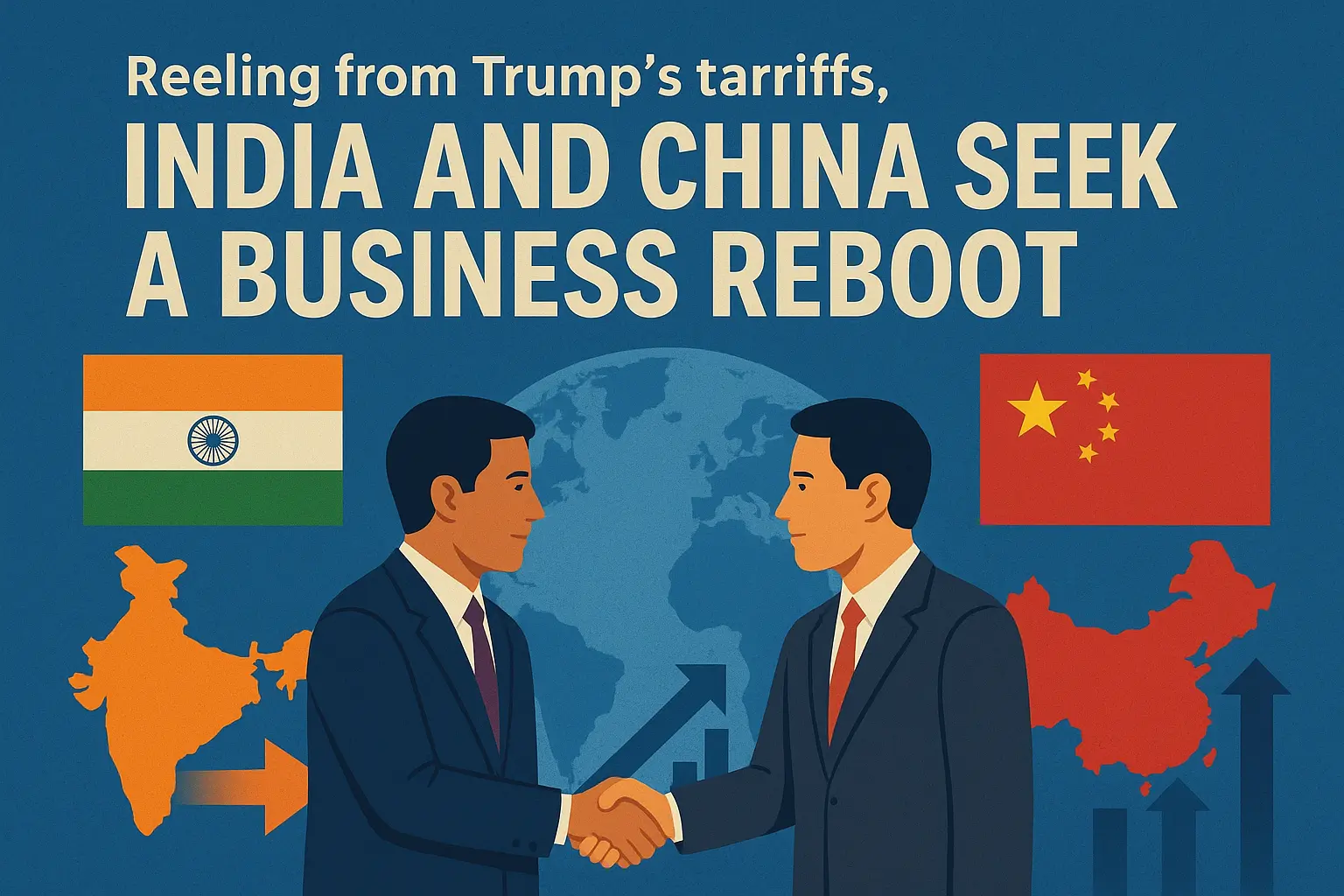
The ripple effects of former U.S. President Donald Trump’s tariff policies are still being felt across global trade corridors. India and China, two of the world’s largest emerging economies, have been particularly impacted. Both nations faced higher costs of exports, reduced market access, and increasing uncertainty during the years when Trump’s administration placed steep tariffs on a wide range of imports. Now, in the aftermath, New Delhi and Beijing are exploring ways to reboot their business and trade strategies to secure more sustainable economic growth.
During Trump’s tenure, Washington implemented aggressive protectionist measures under the “America First” policy, targeting China with tariffs on hundreds of billions of dollars’ worth of goods. India was not spared either. Tariff hikes on steel, aluminum, and other exports forced Indian businesses to look for alternative markets while raising costs for U.S. importers. These moves strained the economic ties of both Asian giants with the United States, compelling them to rethink their global positioning.
In recent months, India and China have signaled renewed interest in fostering trade ties—both bilaterally and with other key partners. China, still the world’s largest exporter, has been trying to diversify away from U.S.-centric markets by strengthening supply chain links with Southeast Asia, Africa, and Europe. India, meanwhile, has pushed forward with initiatives like “Make in India” and Production Linked Incentives (PLIs) to boost domestic manufacturing while actively seeking free trade agreements (FTAs) with the EU, the UK, and the Gulf states.
Despite ongoing border tensions and strategic rivalry, both India and China recognize that collaboration in specific business sectors could offer mutual benefits. For instance, technology, renewable energy, and pharmaceuticals are areas where cross-border cooperation could help both economies counterbalance Western trade barriers.
Global analysts also note that the lingering aftershocks of Trump’s tariffs have reshaped supply chains. Many multinational companies are adopting a “China + 1” strategy, diversifying operations by investing in India alongside their Chinese bases. This trend has created new competition but also opportunities for collaboration between the two countries.
Ultimately, the tariff wars initiated by the Trump administration have underscored the risks of overdependence on any single market. For India and China, the challenge lies in recalibrating their strategies—reducing vulnerabilities while expanding global influence. The next phase of their business reboot will depend not only on bilateral diplomacy but also on how effectively they can integrate into shifting global trade dynamics.
‘The most ingenious stunt since the Trojan Horse’: The Soviet artwork that spied on the US