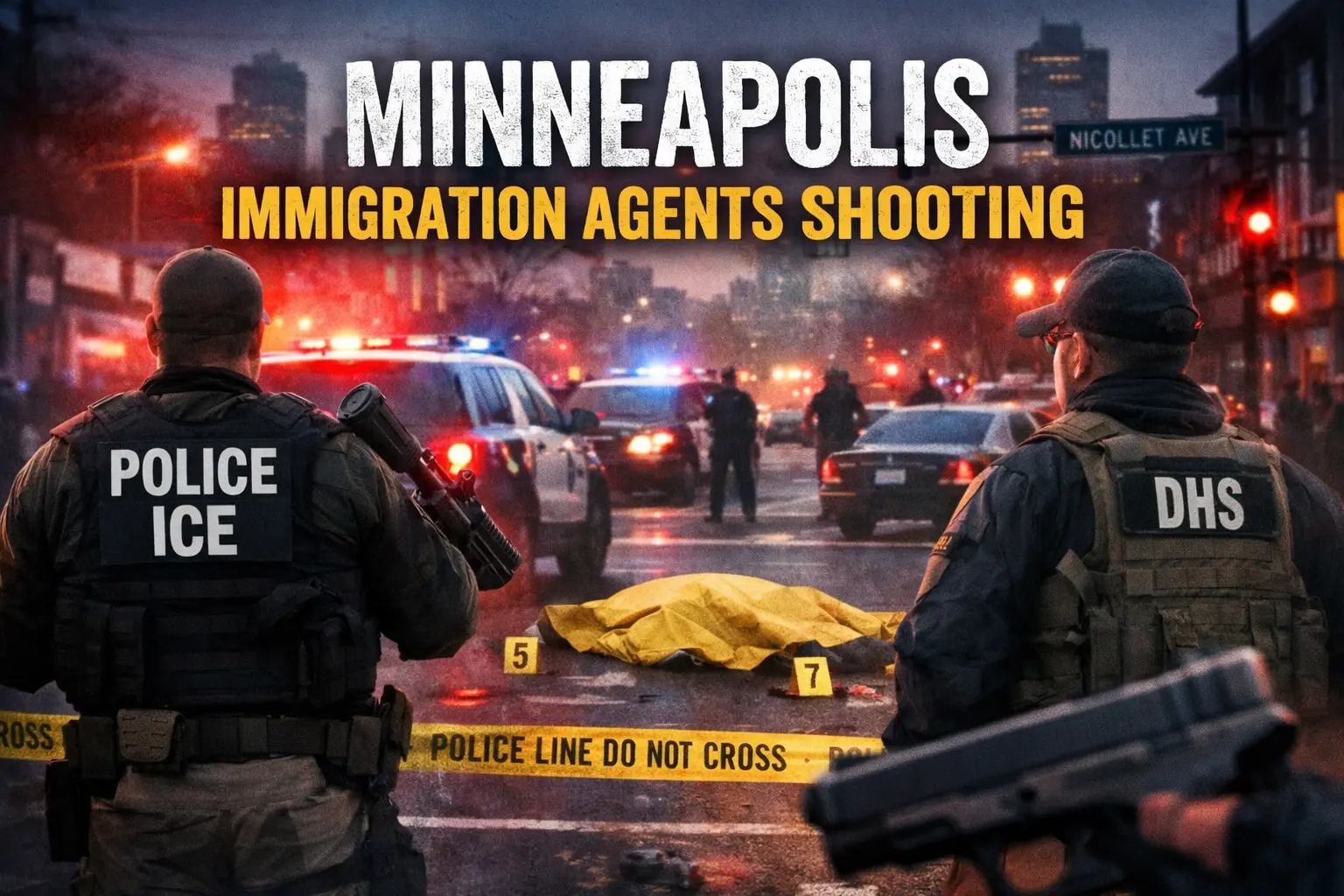
A fatal shooting in Minneapolis, Minnesota, involving U.S. federal immigration agents has resulted in the death of one person, according to multiple media reports and hospital records. The incident occurred on January 24, 2026, at the intersection of East 26th Street and Nicollet Avenue South during a broader immigration enforcement operation led by U.S. Immigration and Customs Enforcement (ICE) agents. A 51-year-old man who was shot in the chest by an ICE agent was taken to a local hospital and later pronounced dead, marking another deadly encounter in the city amid heightened federal enforcement activity.
Local law enforcement sources and eyewitness accounts indicate that federal agents were engaged in a mission tied to expanded immigration operations when the confrontation occurred. Officials from the Department of Homeland Security later stated that the man was armed and that a firearm with two magazines was recovered at the scene. This assertion has been cited in official statements as justification for the use of deadly force, though further details have not yet been independently confirmed.
The shooting follows earlier controversial incidents involving immigration officers in Minneapolis. On January 7, 2026, an ICE agent fatally shot Renée Nicole Good, a 37-year-old U.S. citizen and mother, during an encounter on Portland Avenue South. Accounts from local authorities and federal officials have sharply differed over whether she posed an imminent threat at the time of the shooting, adding to public concern and scrutiny.
Both deaths have intensified unrest in the city, prompting protests and renewed calls from Minnesota officials for federal immigration enforcement actions to be paused. Governor Tim Walz condemned the January 24 shooting as “sickening” and urged the Trump administration to halt the current enforcement campaign in the state, arguing that it endangers community safety and undermines public trust.
The situation remains fluid, with investigations ongoing and community reactions continuing. The incidents have reignited a national debate over the use of force by federal agents in densely populated urban areas and the level of oversight applied to immigration enforcement operations.