
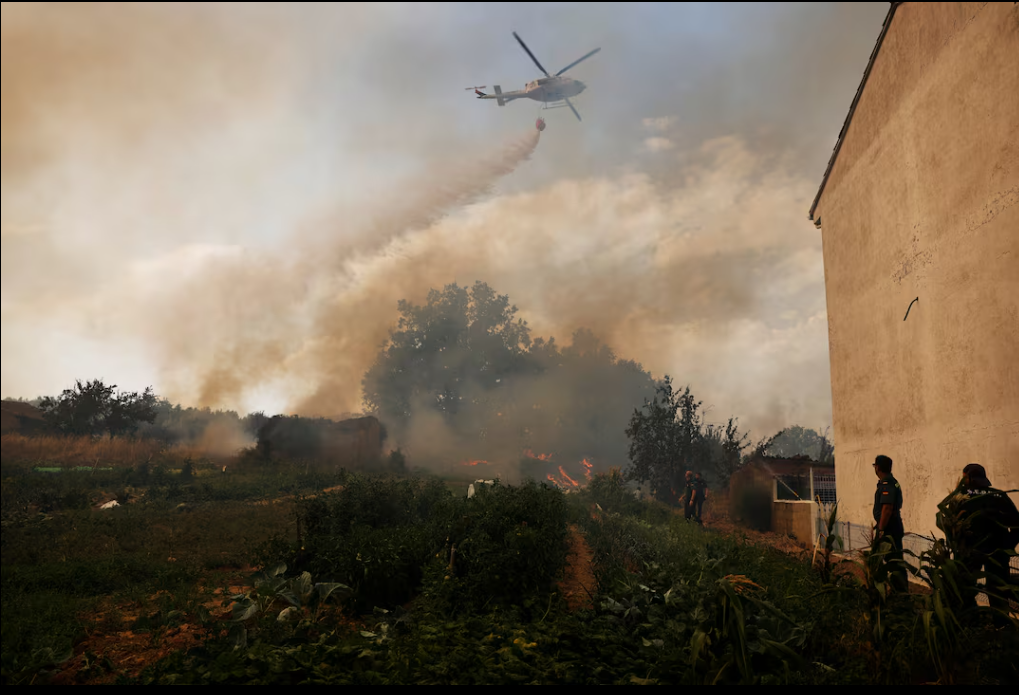
Southern Europe is grappling with a sweeping heatwave that has pushed daytime temperatures above 40°C in many areas and helped spark a new wave of destructive wildfires across the Mediterranean. Blazes have ignited in Spain, Portugal, France, Greece and parts of the Balkans, forcing thousands of people from their homes, overwhelming local fire services and grounding some firefighting aircraft when conditions become too dangerous.
In Spain, fierce fires produced rare and terrifying “fire whirls” — spinning columns of flame driven by extreme heat and turbulent winds — that forced firefighters to withdraw in several areas and prompted mass evacuations near UNESCO-listed sites and coastal resorts. Emergency services reported multiple fatalities and numerous injuries in different countries as flames raced through dry brush and forests made tinder-dry by weeks of intense heat. Wabstalk
Portugal and France have been particularly hard hit: Portugal deployed thousands of firefighters and dozens of aircraft to battle large blazes in the north and centre of the country, while southern France saw one of its largest recent wildfires scorch tens of thousands of hectares and prompt long-term evacuations and state-level emergency responses. Officials warned that high winds and record-setting daytime highs — reaching into the low-to-mid 40s Celsius in some pockets — could re-ignite contained fires or drive fresh outbreaks.
Greece, meanwhile, reported multiple simultaneous outbreaks across islands and coastal regions popular with tourists, heightening concerns about summer visitors’ safety and the knock-on effect for local economies. Authorities in several countries have said arson and negligent human activity appear to have played a role in some fires, compounding the natural risk from heat and drought. Cross-border mutual aid — including extra aircraft, crews and equipment — has been mobilised in an attempt to contain the worst incidents.
Climate scientists and emergency planners are warning that these extreme heat episodes are becoming more frequent and severe as the atmosphere warms: hotter, drier summers increase fire risk, lengthen fire seasons and make suppression more difficult and dangerous. As firefighters battle current blazes, governments face urgent questions about land management, prevention, and long-term investments in resilience to reduce the scale and human cost of future fire seasons.
Explosion reported at U.S. Steel plant, multiple people injured