
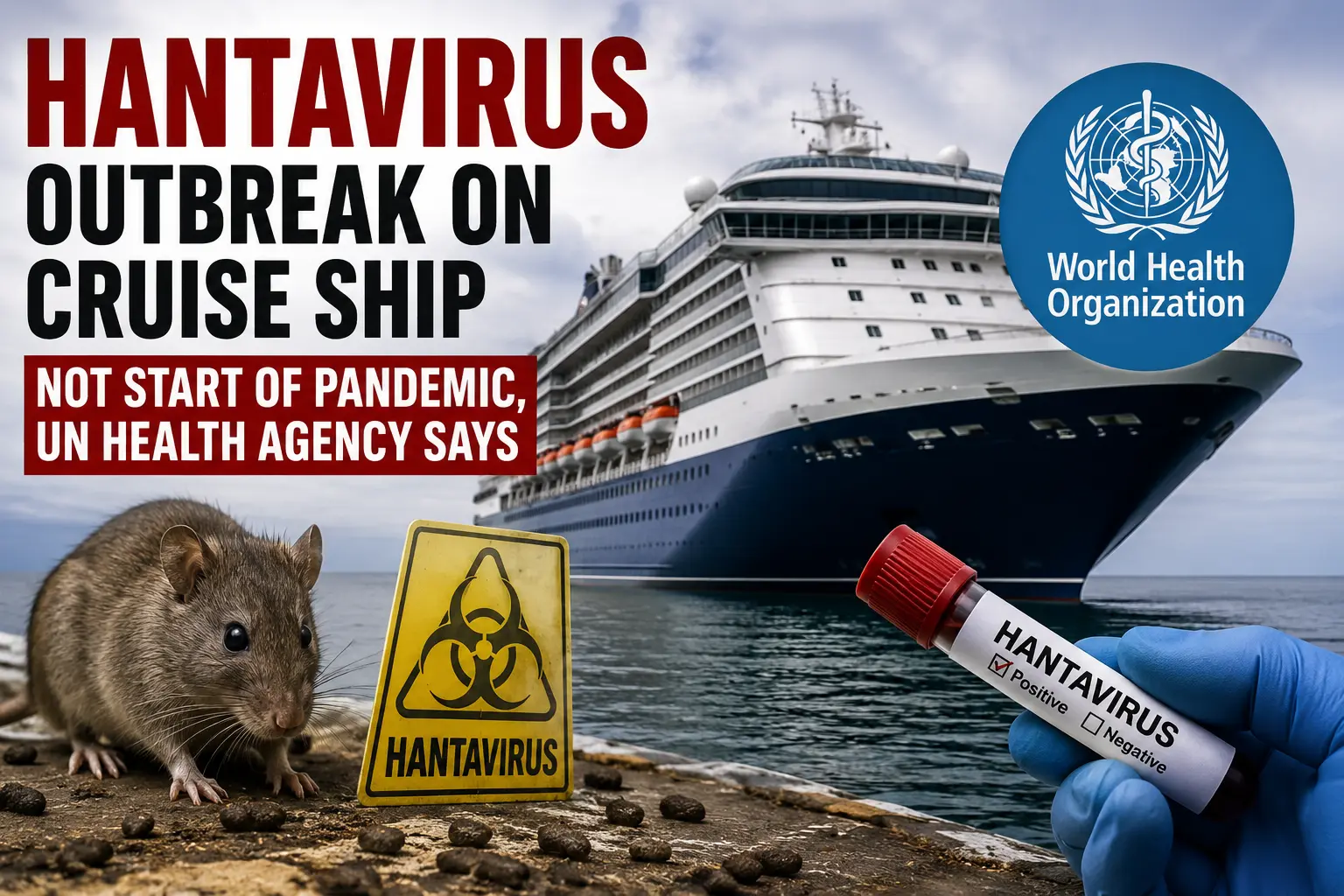
The World Health Organization has said a recent hantavirus outbreak linked to a cruise ship should not be viewed as the beginning of a global pandemic, seeking to calm public fears after several passengers fell ill during a voyage in Asia. Health officials stressed that hantavirus infections are rare and are typically spread through exposure to rodents or their droppings rather than through sustained human-to-human transmission.
According to the agency, investigators are examining sanitation conditions aboard the vessel after passengers reported flu-like symptoms including fever, fatigue, and respiratory complications. Several individuals were hospitalized for observation, while close contacts were monitored as a precaution. Authorities emphasized that there is currently no evidence the virus is spreading widely among travelers or communities beyond the ship.
Hantavirus can cause severe respiratory disease in humans, but outbreaks are generally localized. Experts noted that unlike highly contagious viruses such as COVID-19, hantavirus does not usually spread easily between people. Most infections occur when individuals inhale particles contaminated by infected rodents. Public health officials therefore believe the incident can be contained through isolation measures, sanitation procedures, and medical monitoring.
Cruise operators have reportedly increased cleaning operations and health screenings as investigations continue. Travelers were also advised to maintain hygiene precautions and report symptoms immediately if they experience fever or breathing difficulties after recent travel.
The UN health agency urged the public not to panic or spread misinformation online, warning that exaggerated claims about a “new pandemic” could create unnecessary fear. Officials added that global surveillance systems remain active and that international health authorities are coordinating closely to monitor developments surrounding the outbreak.