
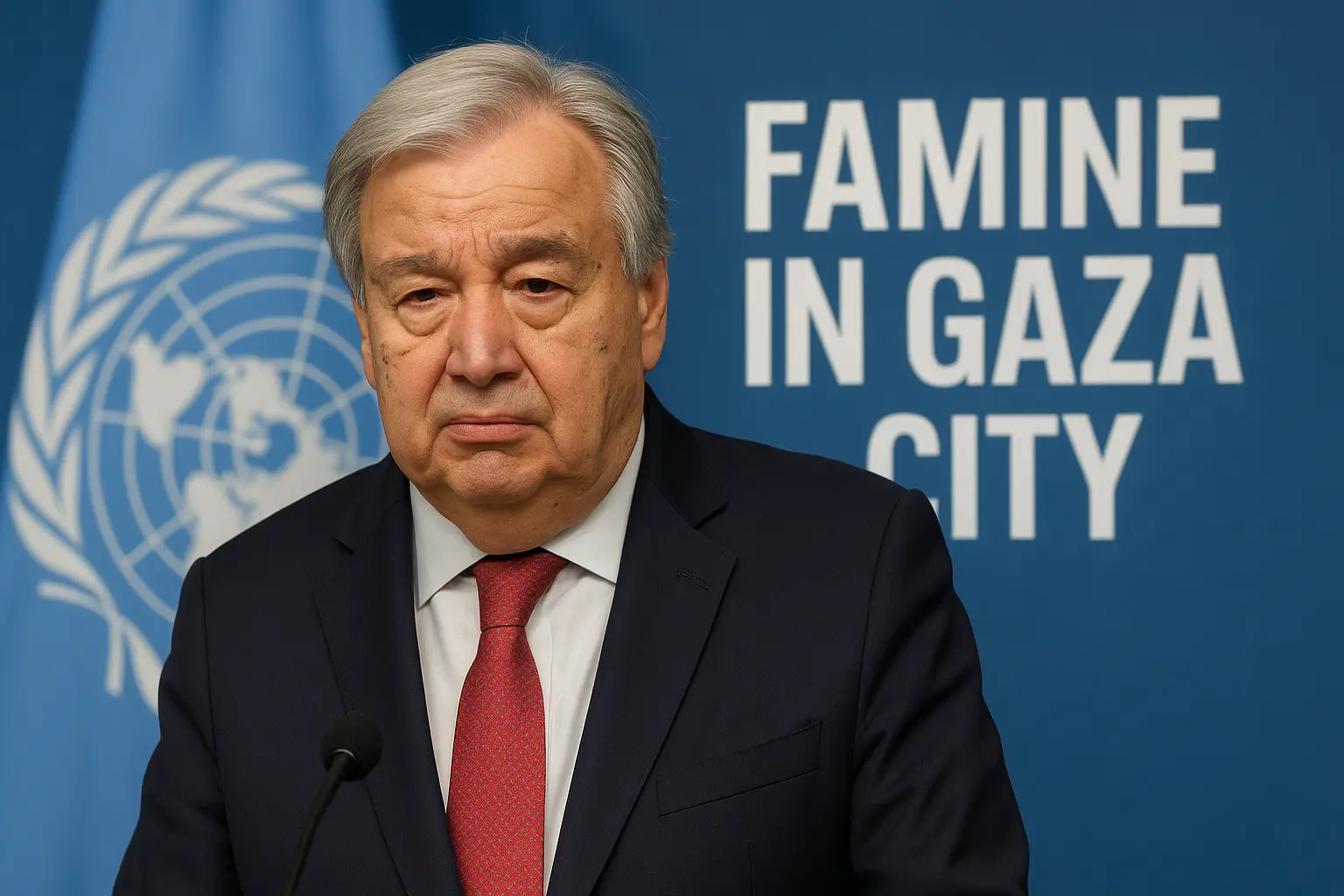
The United Nations has confirmed that famine is now taking hold in Gaza City, with Secretary-General António Guterres calling it a “failure of humanity” and an urgent wake-up call for the international community. The declaration follows weeks of mounting evidence of widespread hunger, collapsing food systems, and mass displacement in the war-torn territory.
According to the UN’s latest food security assessment, more than half of Gaza’s population is experiencing catastrophic levels of food insecurity. In Gaza City, the devastation is most acute, with children and vulnerable groups facing the brunt of starvation. Humanitarian organizations report that many families have gone days without food, relying on unsafe water and whatever scraps they can find for survival.
Guterres described the situation as both “entirely preventable” and “man-made,” stressing that aid convoys have faced repeated blockages, delays, and security risks. “This famine in Gaza City is not the result of drought or natural disaster—it is the result of relentless conflict, restrictions, and a breakdown in basic humanitarian law,” he said during a press briefing in New York.
Aid agencies have long warned that Gaza was on the brink of famine due to continued military operations, damaged infrastructure, and restricted access to life-saving supplies. The confirmation by the UN’s Integrated Food Security Phase Classification (IPC) means the crisis has reached the most severe level on its scale, indicating extreme hunger and high mortality rates.
The World Food Programme (WFP) has called for immediate and unrestricted humanitarian access, while UNICEF has warned of irreversible consequences for children, including stunted growth, disease, and death. “Children are paying the highest price of this war,” said Catherine Russell, UNICEF’s Executive Director.
International reaction has been swift but divided. Some world leaders have urged for an immediate humanitarian ceasefire to allow aid deliveries, while others maintain that security conditions must be addressed first. Human rights groups argue that political disagreements cannot justify the starvation of civilians.
Meanwhile, health officials in Gaza City report that hospitals are overwhelmed with malnourished patients, many of whom arrive too late to receive effective treatment. Medical supplies remain critically low, compounding the crisis and increasing preventable deaths.
The famine declaration underscores the urgent need for coordinated international action. The UN chief reiterated his call for an immediate ceasefire, safe humanitarian corridors, and accountability for those obstructing aid. “History will judge us harshly if we fail to act,” Guterres warned.
As famine grips Gaza City, the world faces a defining moral test: whether to prioritize political agendas or the survival of millions trapped in an unfolding humanitarian catastrophe.