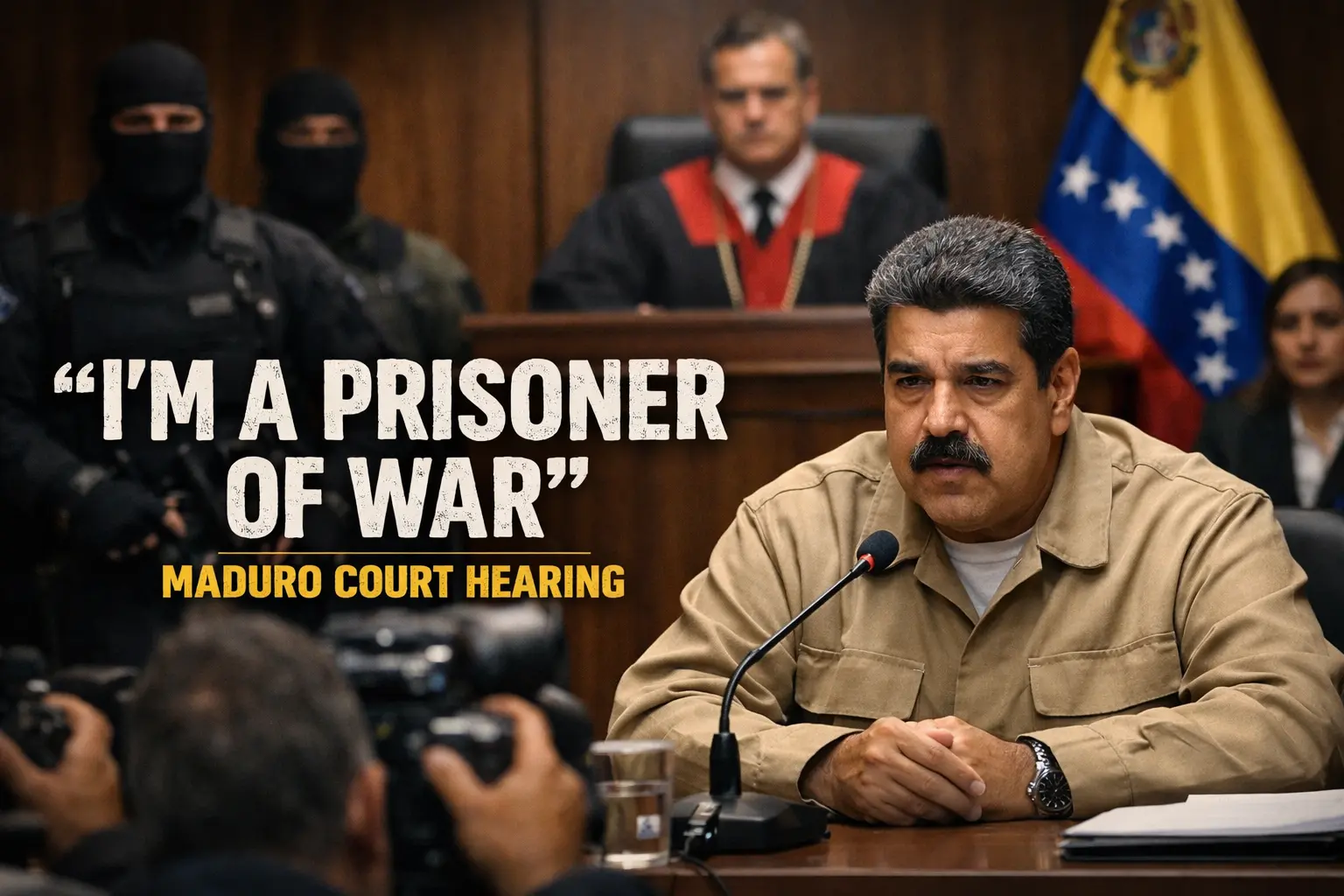
Venezuela’s political tensions reached a dramatic peak as President Nicolás Maduro appeared before a court in a hearing that quickly became a stage for defiance, symbolism, and international messaging. Declaring “I’m a prisoner of war,” Maduro framed the proceedings not as a legal process but as part of a broader geopolitical confrontation, casting himself as a target of foreign pressure rather than a defendant subject to judicial scrutiny.
Inside the courtroom, the atmosphere was tightly controlled. Security was heavy, access was restricted, and the audience was carefully selected, underscoring the sensitivity of the moment. Maduro, composed yet combative, used his remarks to reinforce a narrative long central to his leadership: that Venezuela is under siege from external forces seeking regime change. His words were clearly aimed beyond the room, intended for supporters at home and observers abroad.
The Maduro court hearing unfolded against a backdrop of economic strain, sanctions, and ongoing disputes over legitimacy and governance. For critics, the spectacle reinforced concerns about the independence of Venezuela’s judiciary and the blurring of lines between political power and legal institutions. For supporters, Maduro’s rhetoric reaffirmed his image as a leader resisting what he describes as imperial interference.
Observers noted that the hearing was less about legal arguments and more about political positioning. Maduro’s “prisoner of war” statement echoed past claims that sanctions and diplomatic isolation amount to collective punishment, a theme frequently invoked by his government to rally domestic backing and justify hardline policies.
International reaction has been cautious but attentive. The courtroom drama is likely to influence ongoing negotiations, sanctions discussions, and regional diplomacy. Whether the hearing marks a turning point or merely another chapter in Venezuela’s prolonged crisis remains unclear.
What is certain is that the Maduro court hearing was designed to be seen and remembered—not just as a legal event, but as a political message crafted for a global audience.